Chocolate Making
Every year, I make a batch of chocolates over Thanksgiving. The size of the batch varies from year to year (one year it was a whopping 133 pounds!), but it’s generally at least thirty pounds. I send them to friends, family, and AIDS Lifecycle sponsors.
I’ve been at this since my sophomore year of college, so I’ve been doing this for 20+ years now. I would describe myself as “semi-pro”; I spent one winter working weekends with Richard Donnelly, who was named one of America’s top 10 artisan chocolatiers by Chocolatier Magazine. I learned a LOT about chocolatemaking from Richard, and have since studied quite a few books on chocolatiering. I spent an entire month experimenting with flavors, textures, and recipes before doing the “production batch” the week of Thanksgiving, so I’ve put a lot of effort into learning. I am very proud to say that recipients compare my work favorably with the best artisan chocolatiers!
The 2008 Chocolate Extravaganza!
In 2008 I teamed up with Michael, a fellow chocolatier, to produce 133 lbs of chocolates, about half made in my home kitchen, half made in a commercial candy kitchen that we rented for the occasion. It was a week of nonstop chocolatiering – fun, but exhausting!
You can read the saga in my blog, starting here. The saga runs through Dec 1 or so.
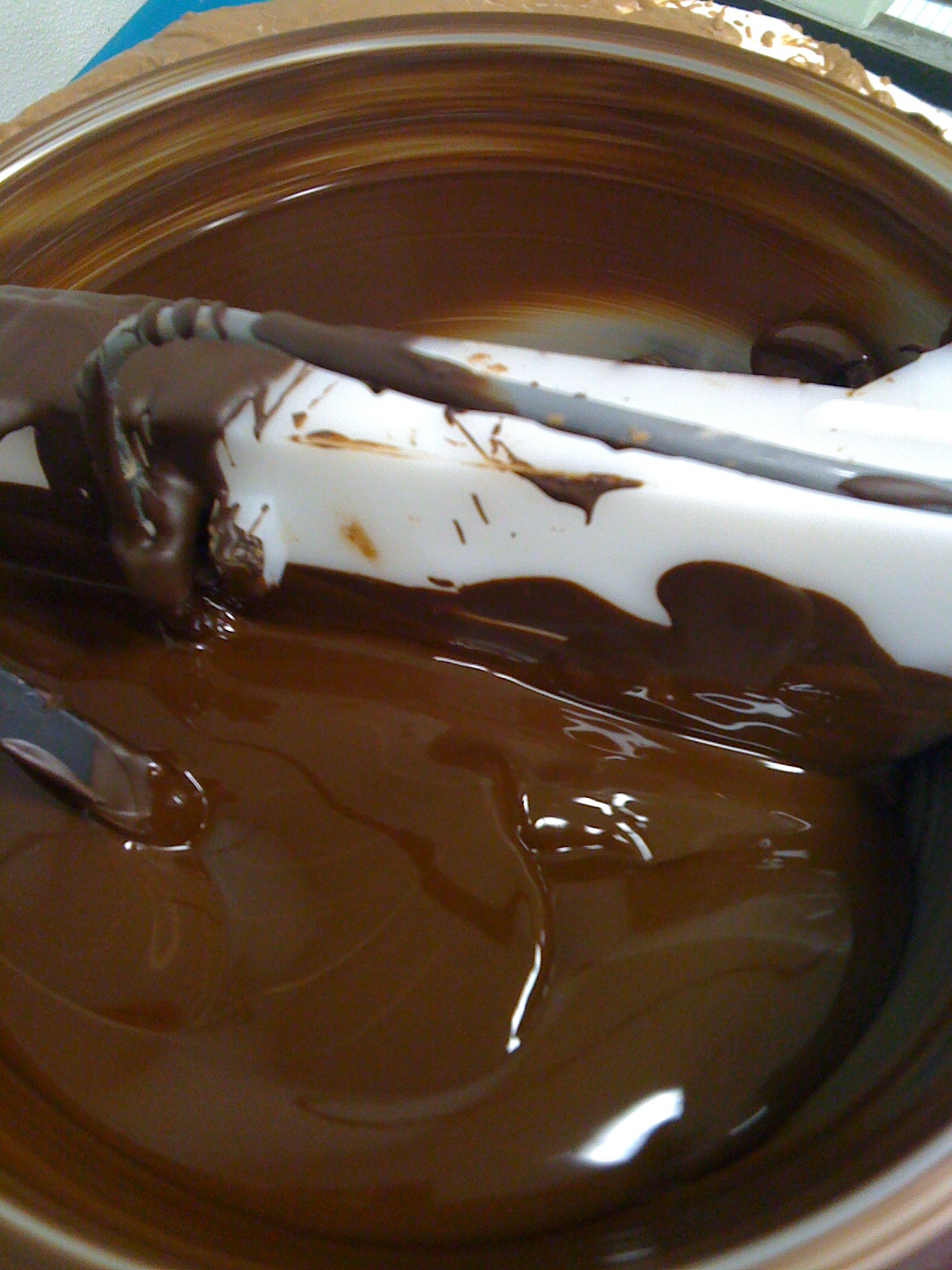
My newly acquired chocolate tempering machine, set up with about 6 lbs of tempered chocolate, ready to go. Yum!
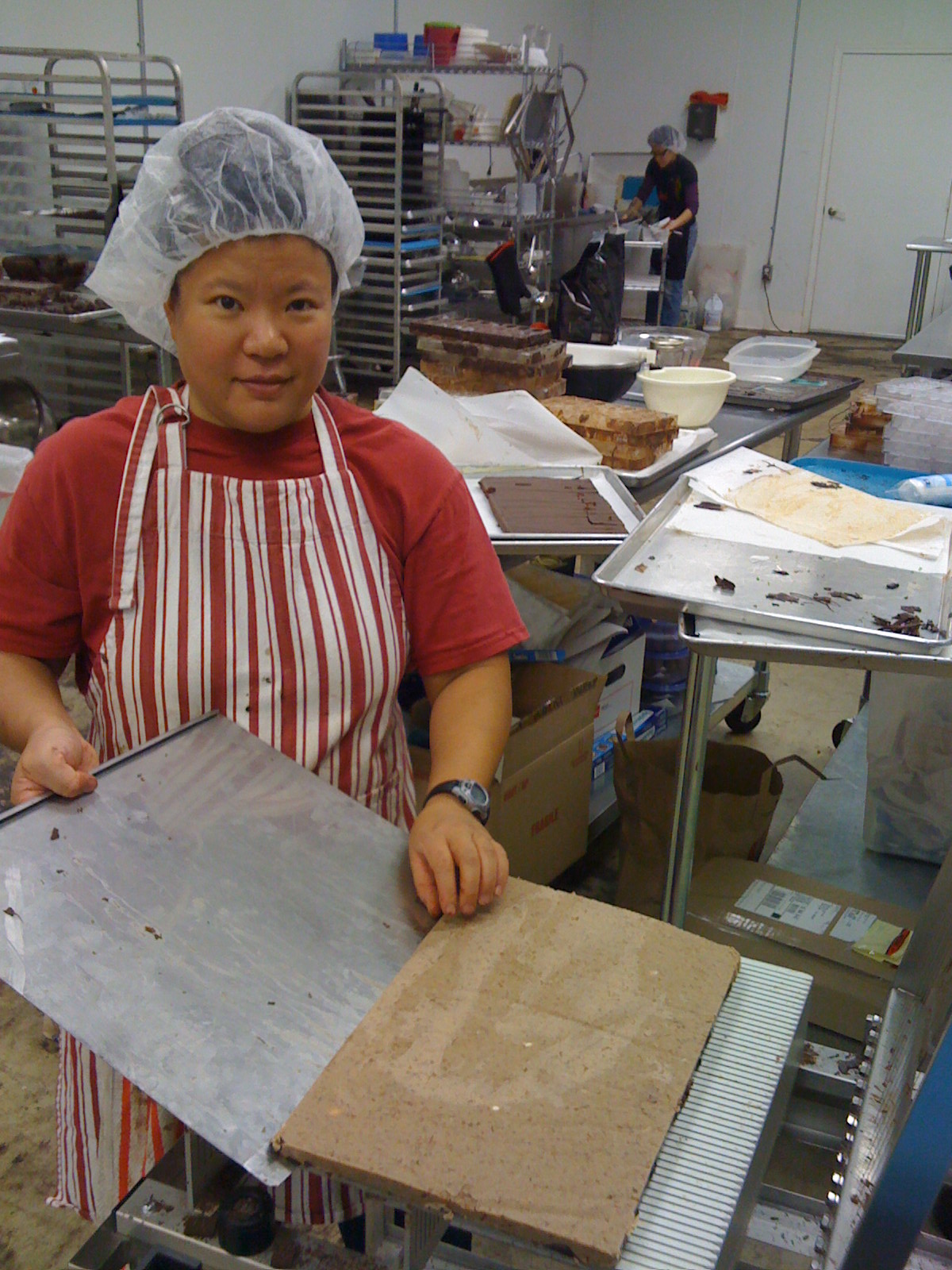
Here I am prepping ganache centers to be cut with a confectionery guitar.The sheet is a mixture of approximately 2:1 dark chocolate and cream (with a little butter and glucose thrown in), to produce a ganache firm enough to cut. The bottom is coated with a thin sheet of tempered chocolate to prevent it from sticking to the guitar and to aid dipping later.
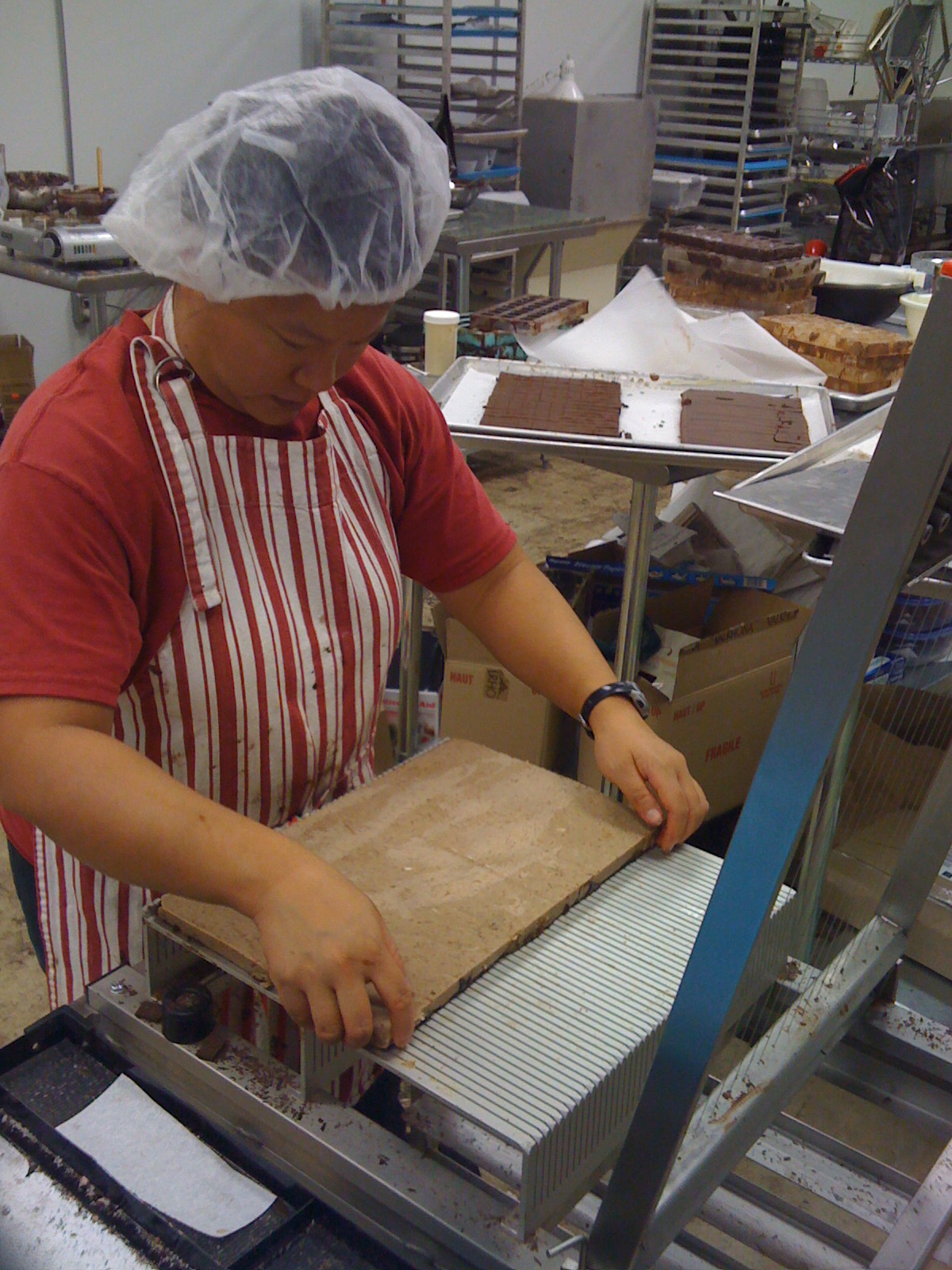
Here I am lining up the sheet to ensure a clean cut. The guitar is a machine with parallel wires to cut perfect squares or rectangles; to avoid waste, one should line up the edges of the sheet with the lines of the wires.
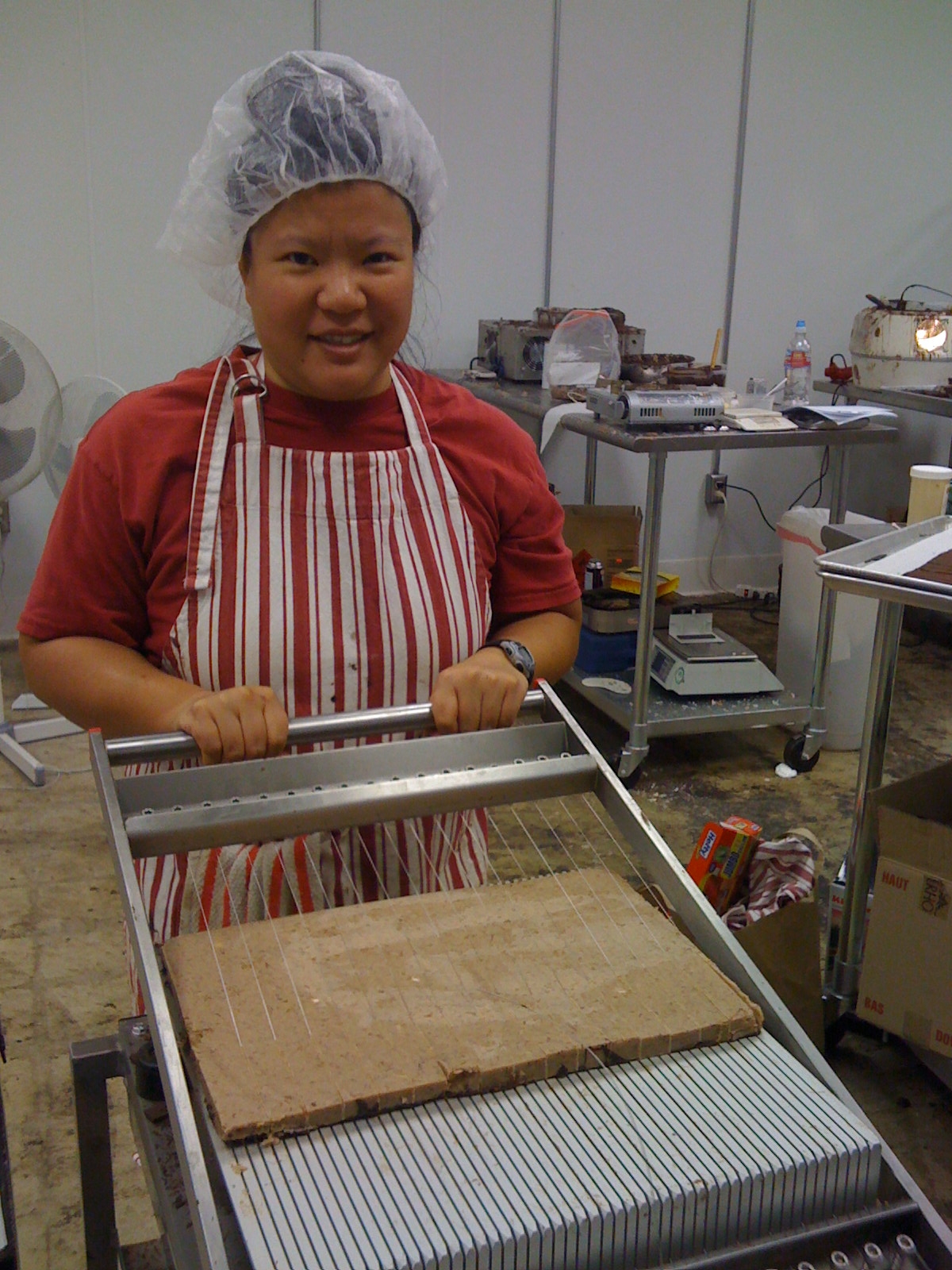
Cutting with the guitar. Fun, although somewhat nervewracking since I was concerned about breaking the wires.
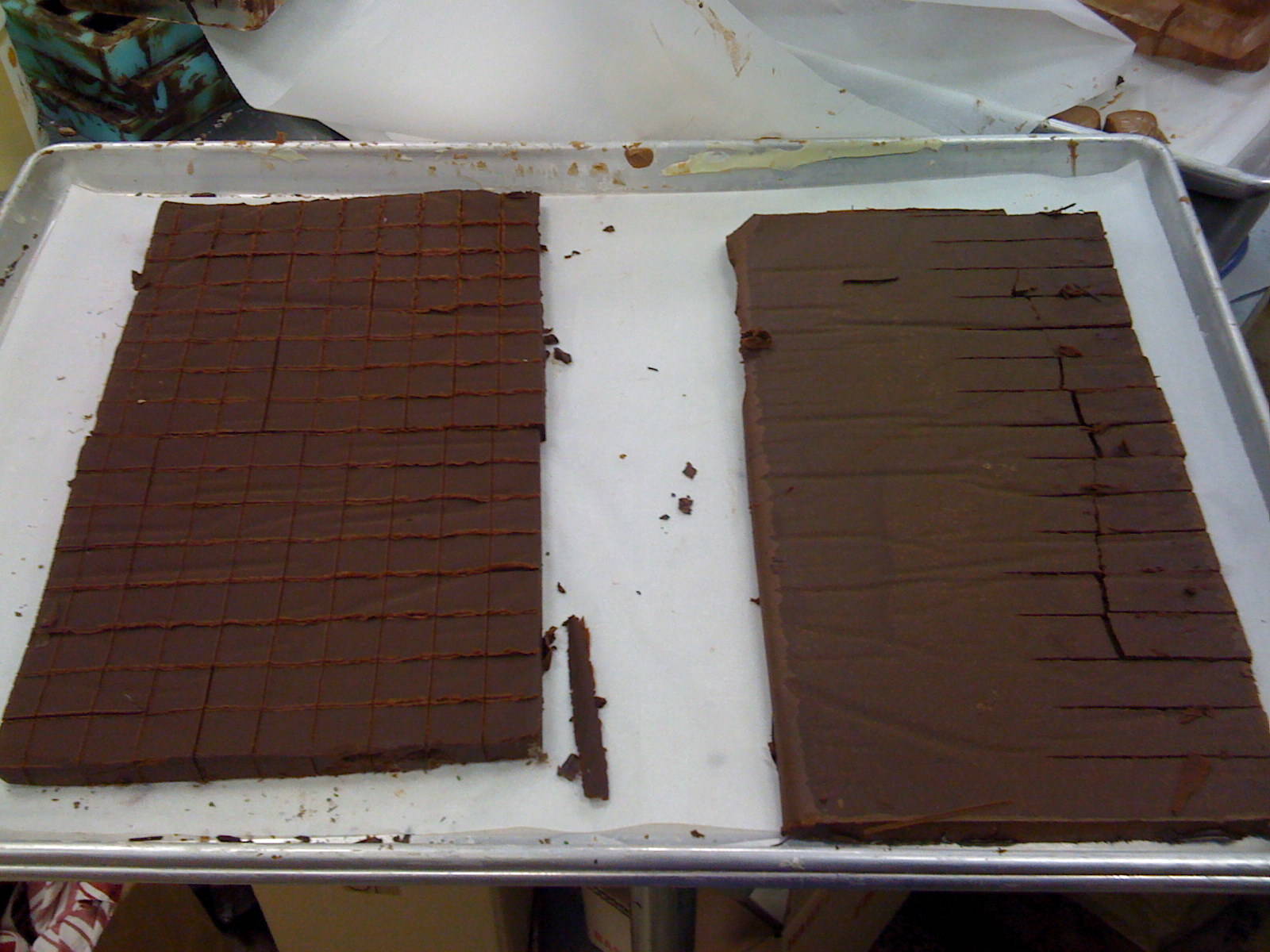
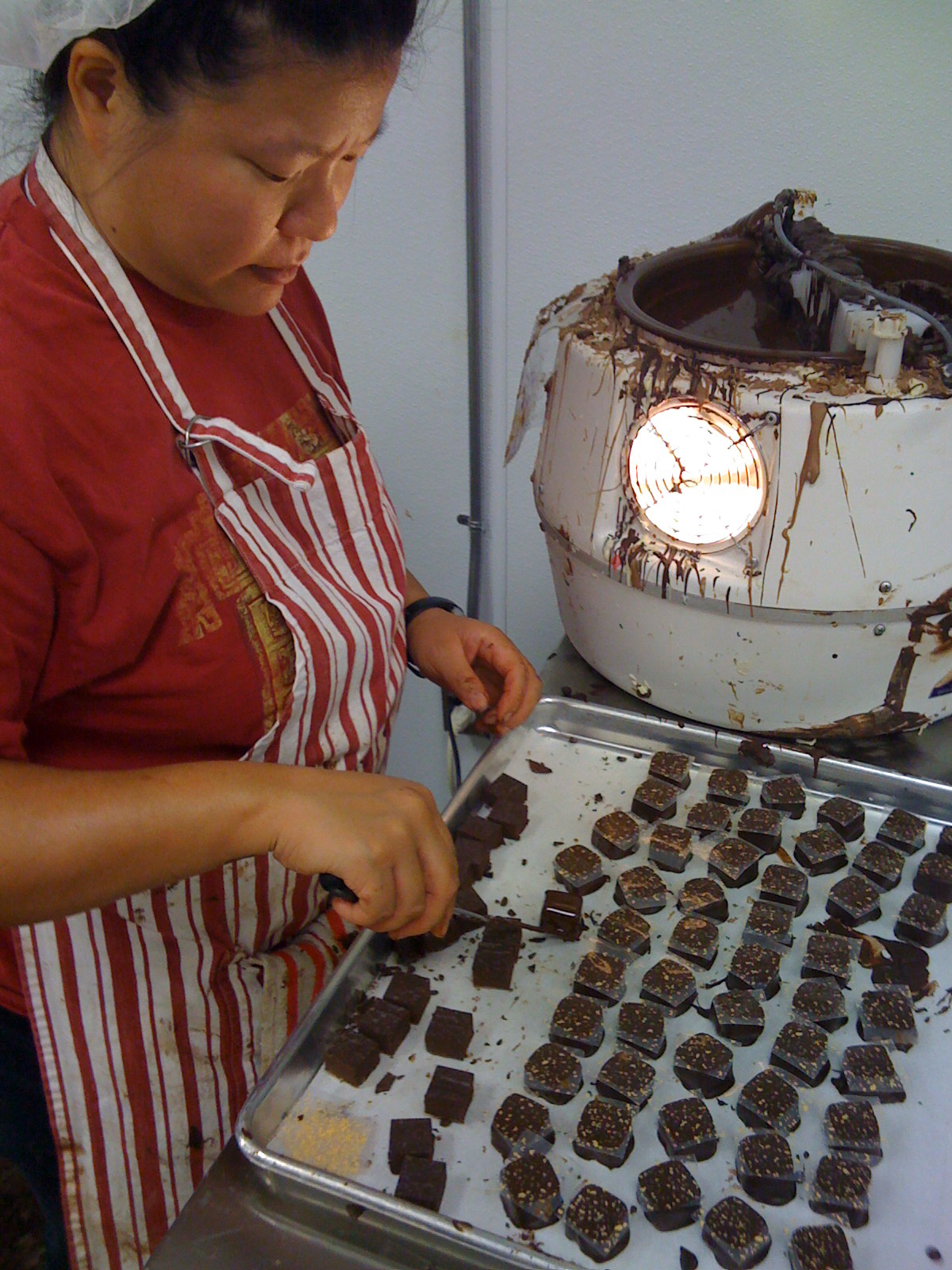
Cut ganache centers (left), ready for dipping. Notice how it's cut in perfect squares.
The ganache on the right had too thick a coating of chocolate on the bottom, so the guitar wouldn't cut it. We had to recut by hand.
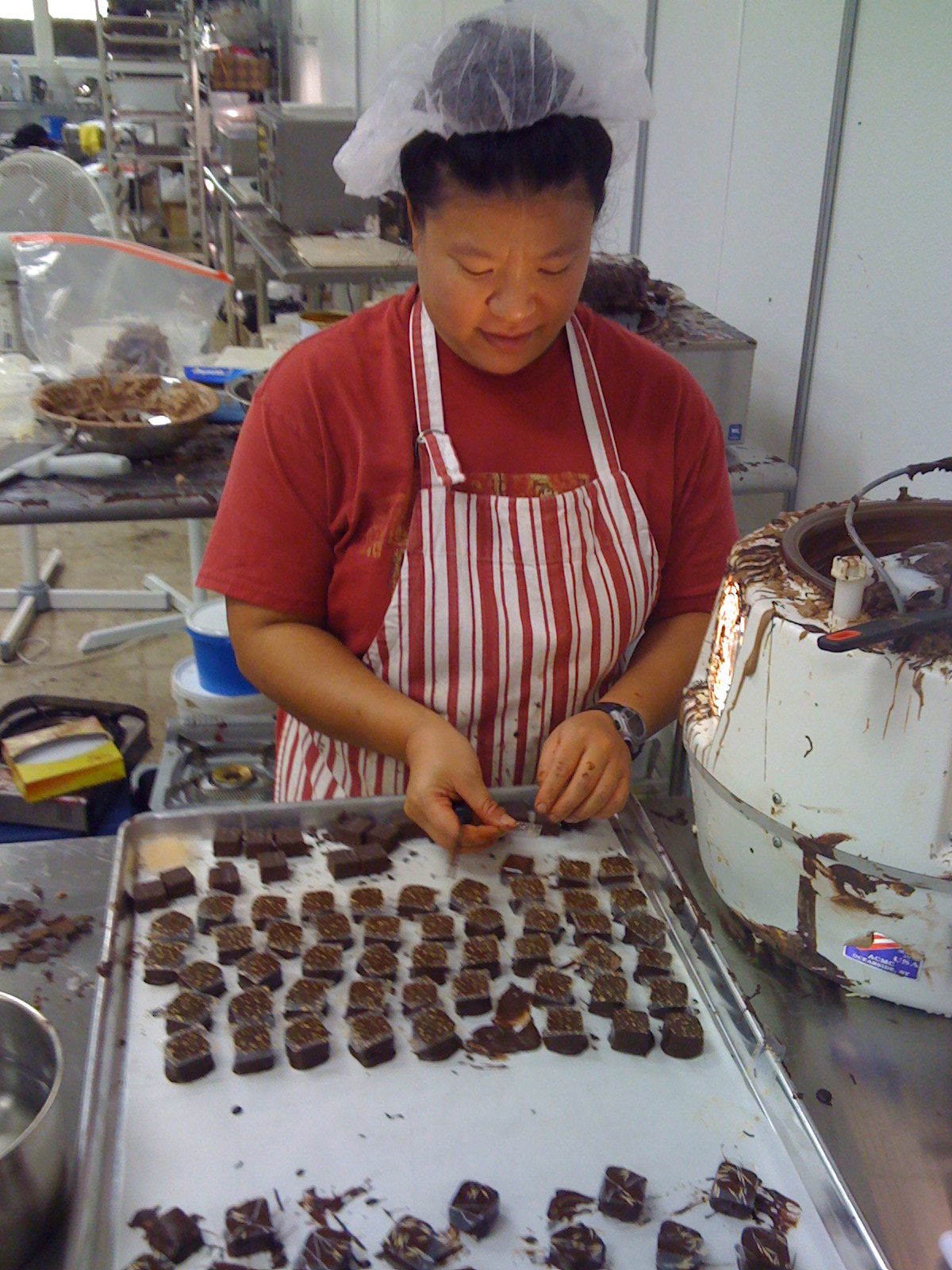
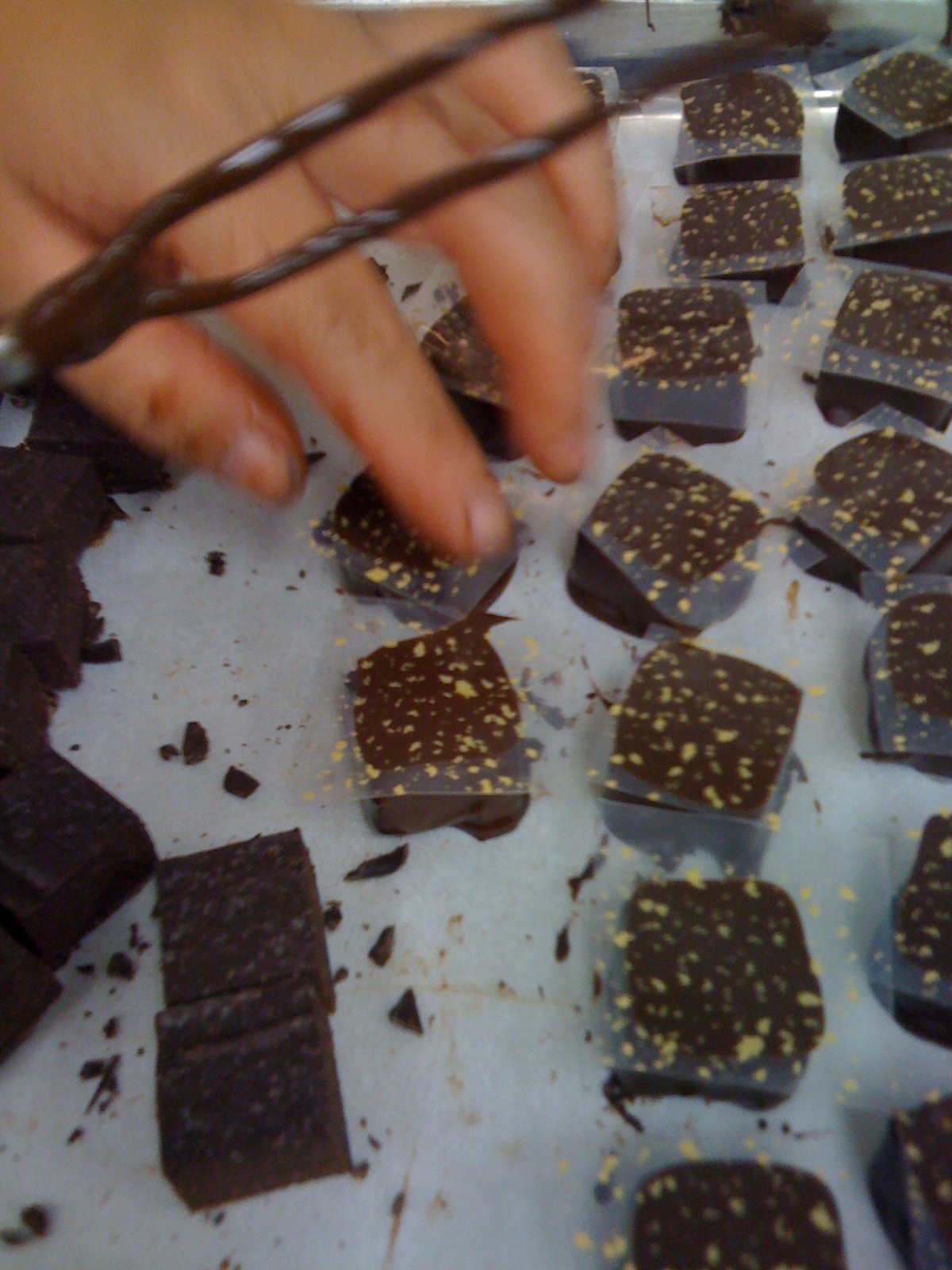
Here I am dipping a series of chocolates. The chocolates are dipped in chocolates, then decorated with a chocolate transfer sheet.
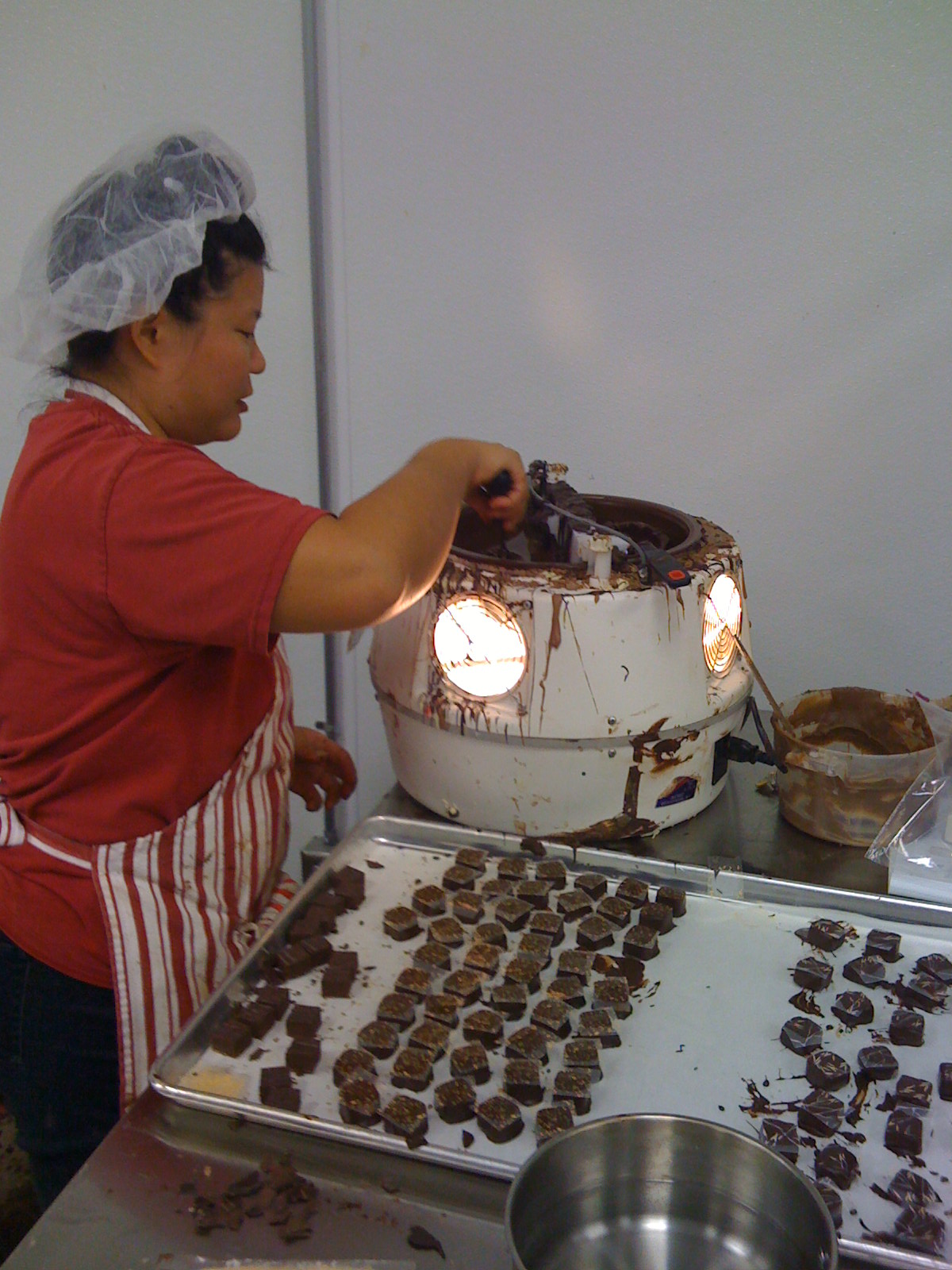
Dipping the chocolate in the tempering machine. This machine not only tempers chocolate, but holds it at the correct working temperature.
Depositing a freshly dipped chocolate on the tray. This is trickier than it looks; you have to tap off most of the excess chocolate, scrape the bottom LIGHTLY against the edge of the bowl, and then gently slide the chocolate forward as you are putting it onto the tray. Otherwise you get an unattractive "foot" at the bottom as the excess chocolate forms a pool.
Another shot of me depositing a freshly dipped chocolate.
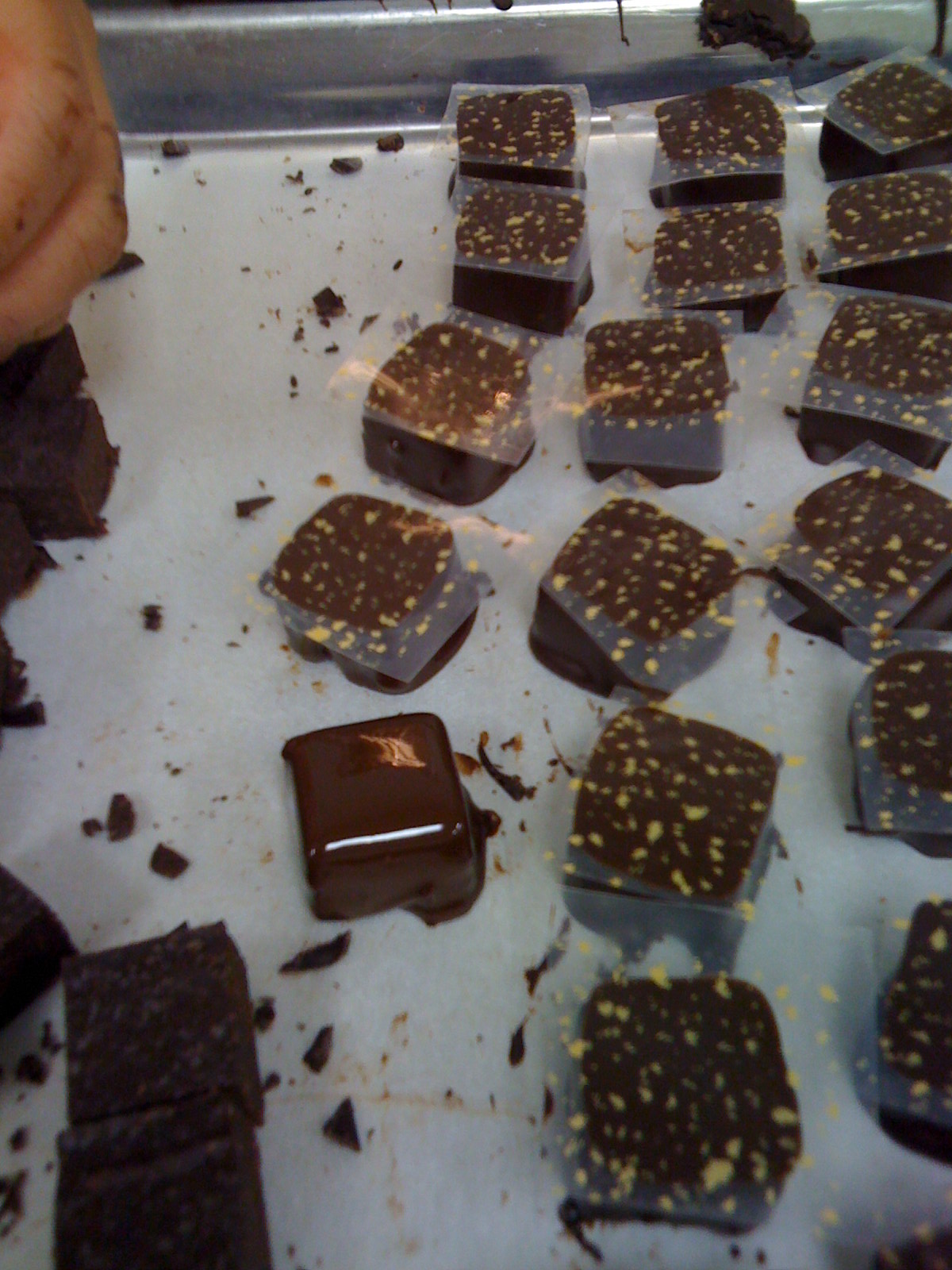
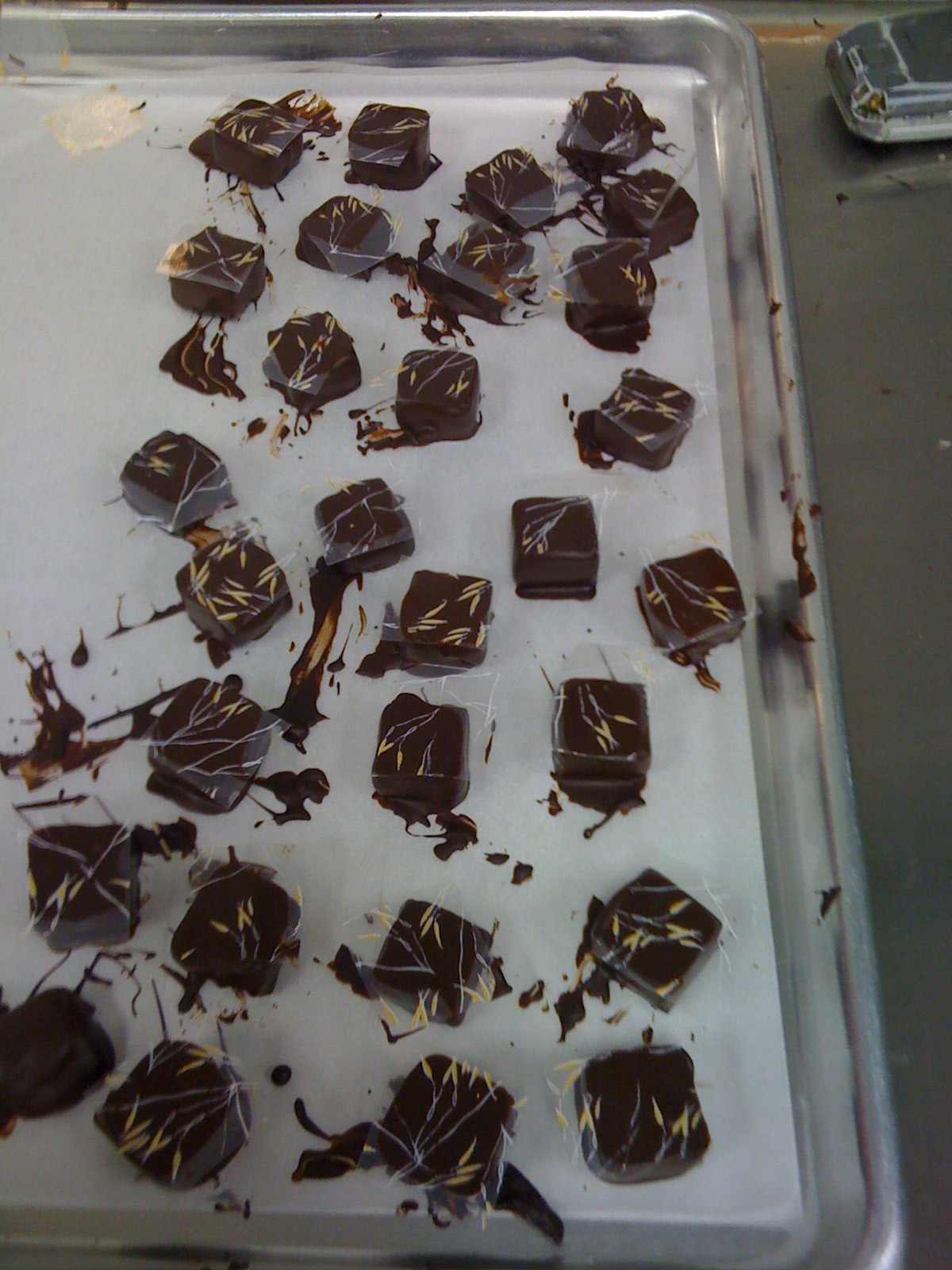
Here you can see the acetate transfer sheets on the chocolate. These are small squares of acetate (cut from a larger sheet) with patterns printed on the sheet in colored cocoa butter....
Applying a transfer sheet to the freshly dipped chocolate. When put on melted chocolate, the colored cocoa butter melts into the chocolate, producing a printed chocolate.
Some dipped chocolates with a different transfer sheet pattern. These can have great detail.
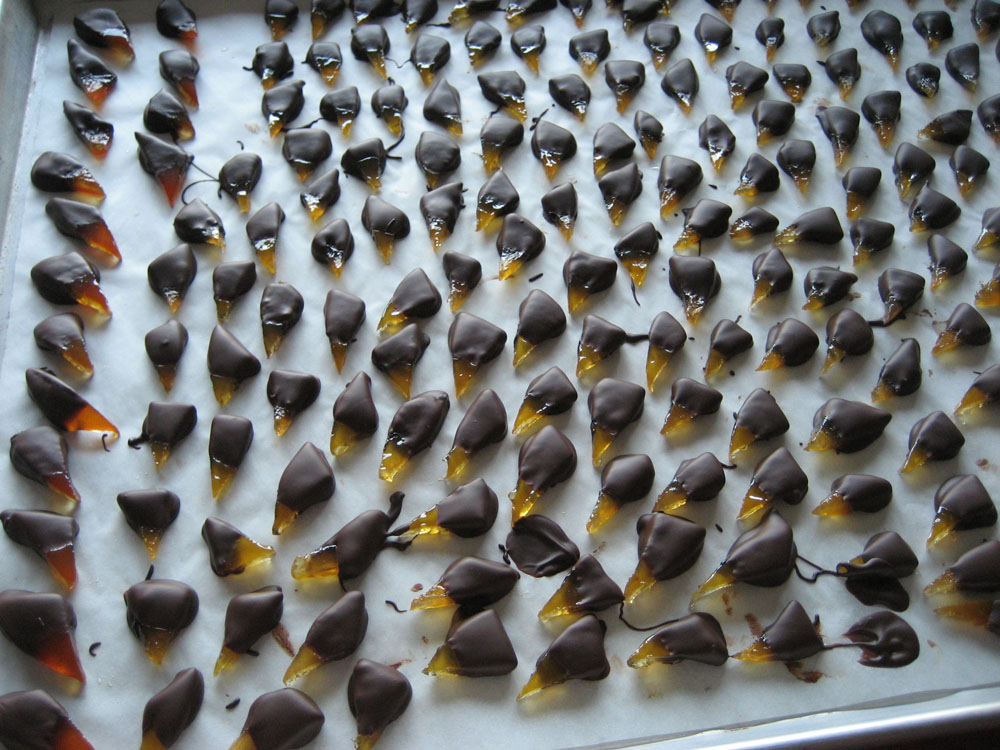
A tray of chocolate covered candied bergamot peel. This is one of my favorite items, as the flavor is excellent.
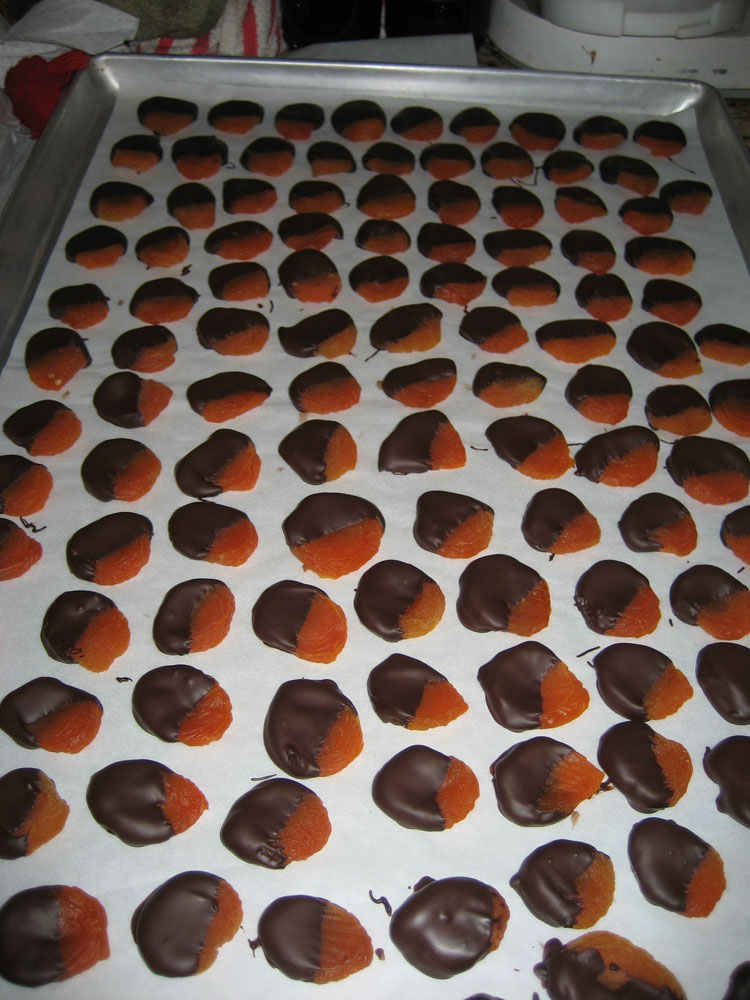
A tray of chocolate dipped dried apricots. I drive 40 miles to get these apricots every year from a vendor at the farmer's market in Mountain View - they're that good.
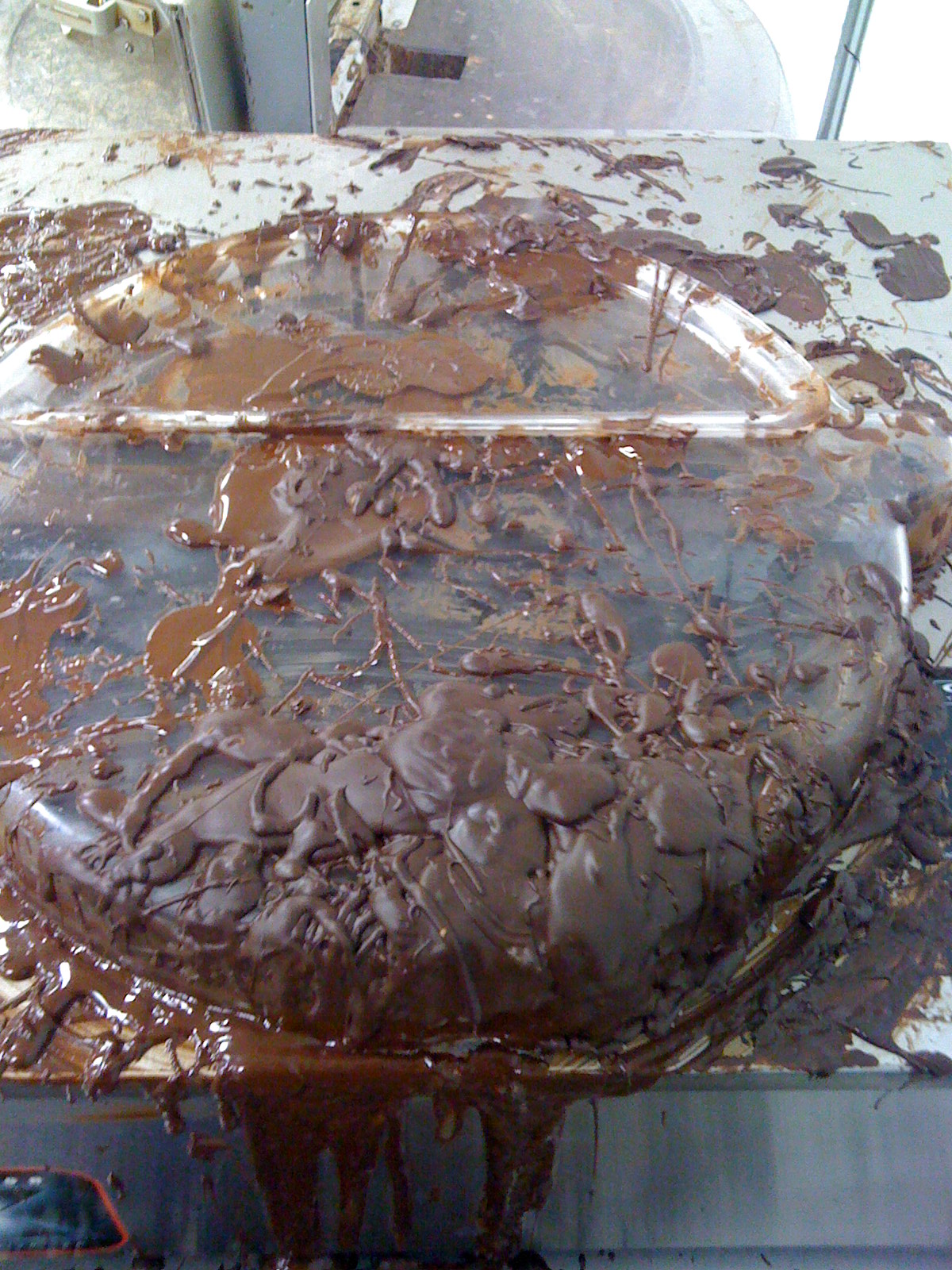
Chocolate does seem to get everywhere during the dipping process...this is the lid of a chocolate tempering machine after heavy use.
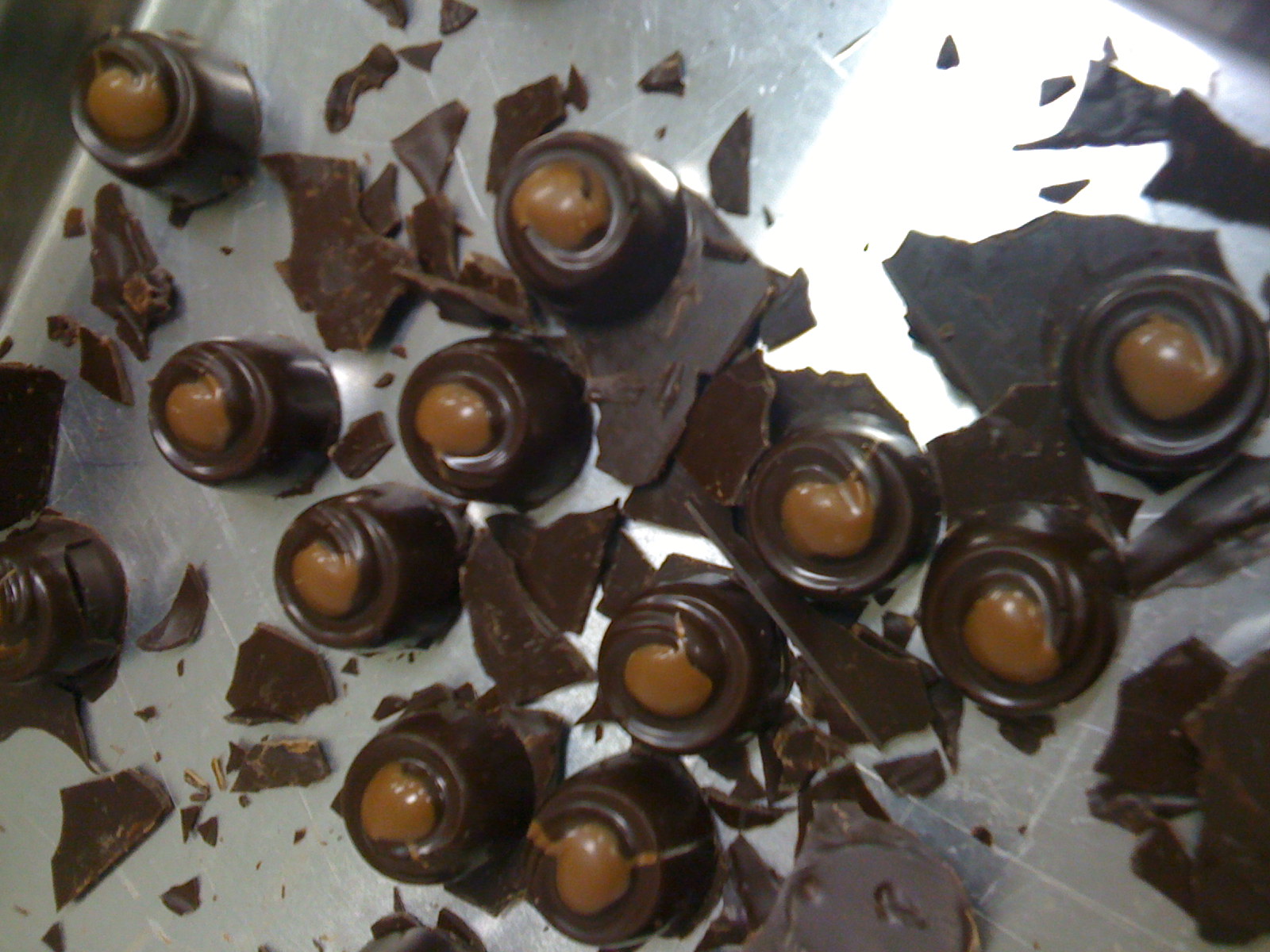
Some freshly unmolded chocolates. These are cast in professional polycarbonate chocolate molds, in a three step process. First you cast the shells, then you pipe in the ganache centers, then you seal the molds. Time consuming but pretty!
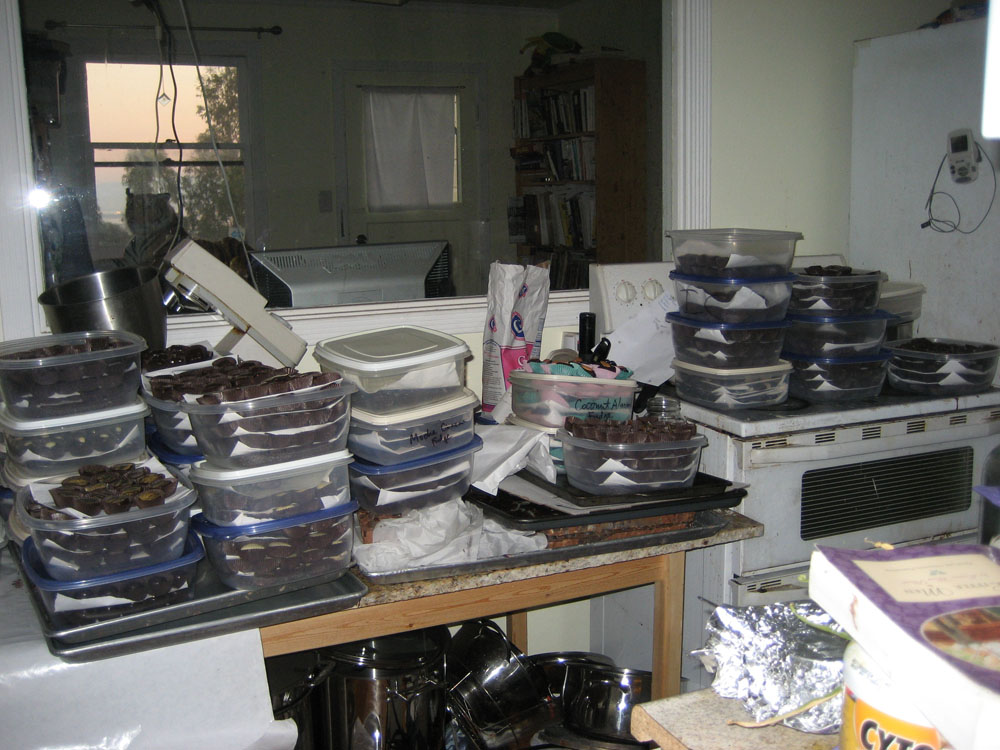
133 pounds (yes, I said 133 pounds!) of finished chocolates in my kitchen. Note that you are looking at my entire working space in my home kitchen, and I made at least 60 lbs of those chocolates there! You don't need a lot of space to work with chocolate, just a lot of determination.
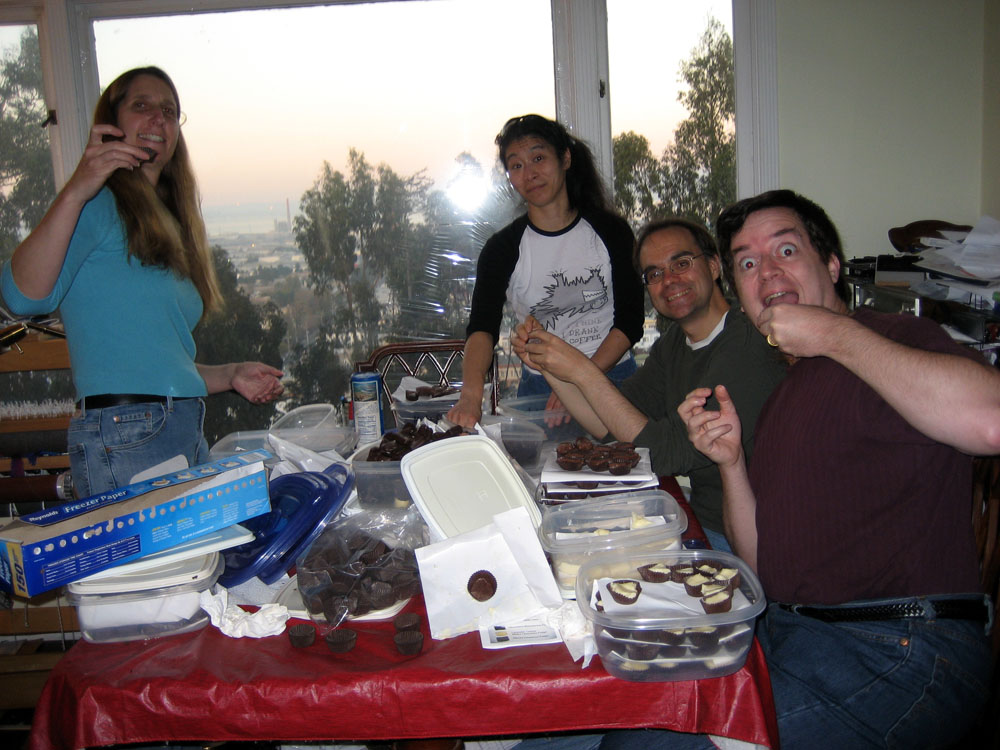
I invited over seven or eight friends to help box the chocolates. I offered them free chocolates to munch on, plus all the leftover chocolates they wanted.
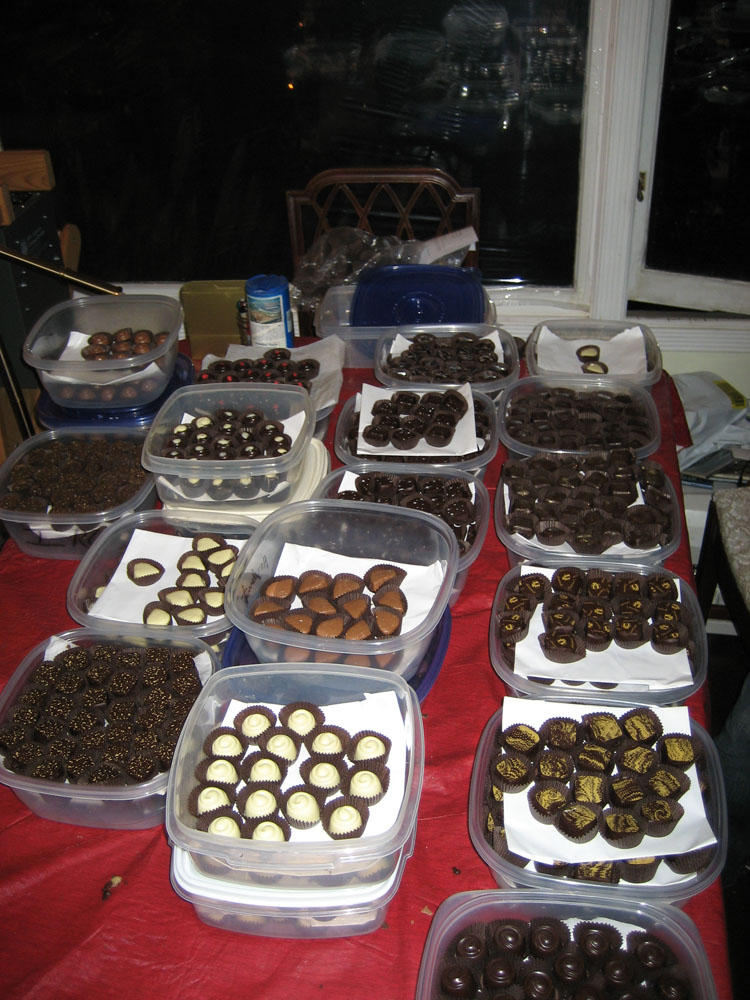
Here are about half the chocolates, ready to be put into boxes. Yes, there were a lot of them - we put over 3000 candies into candy cups to reach this point!
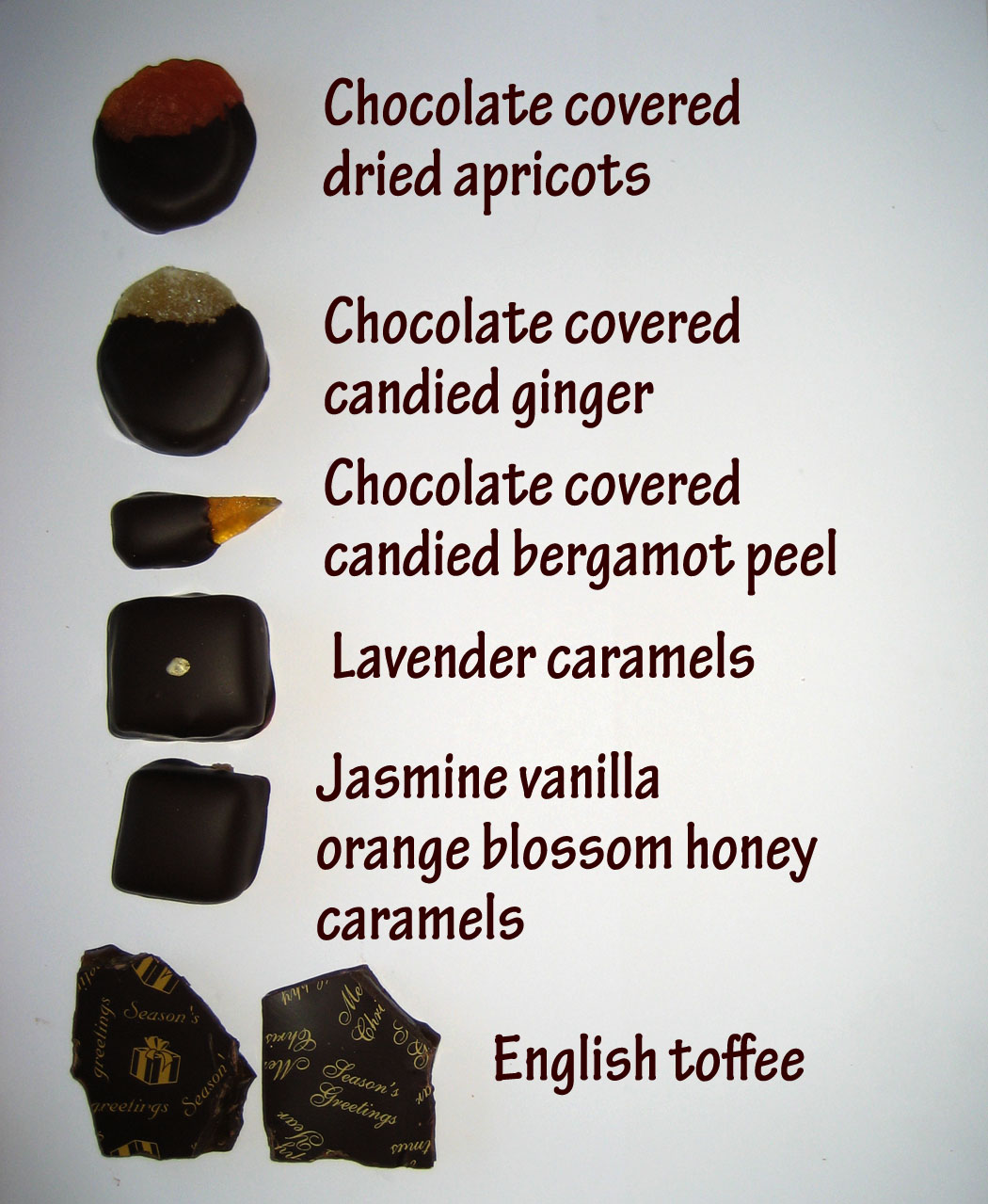
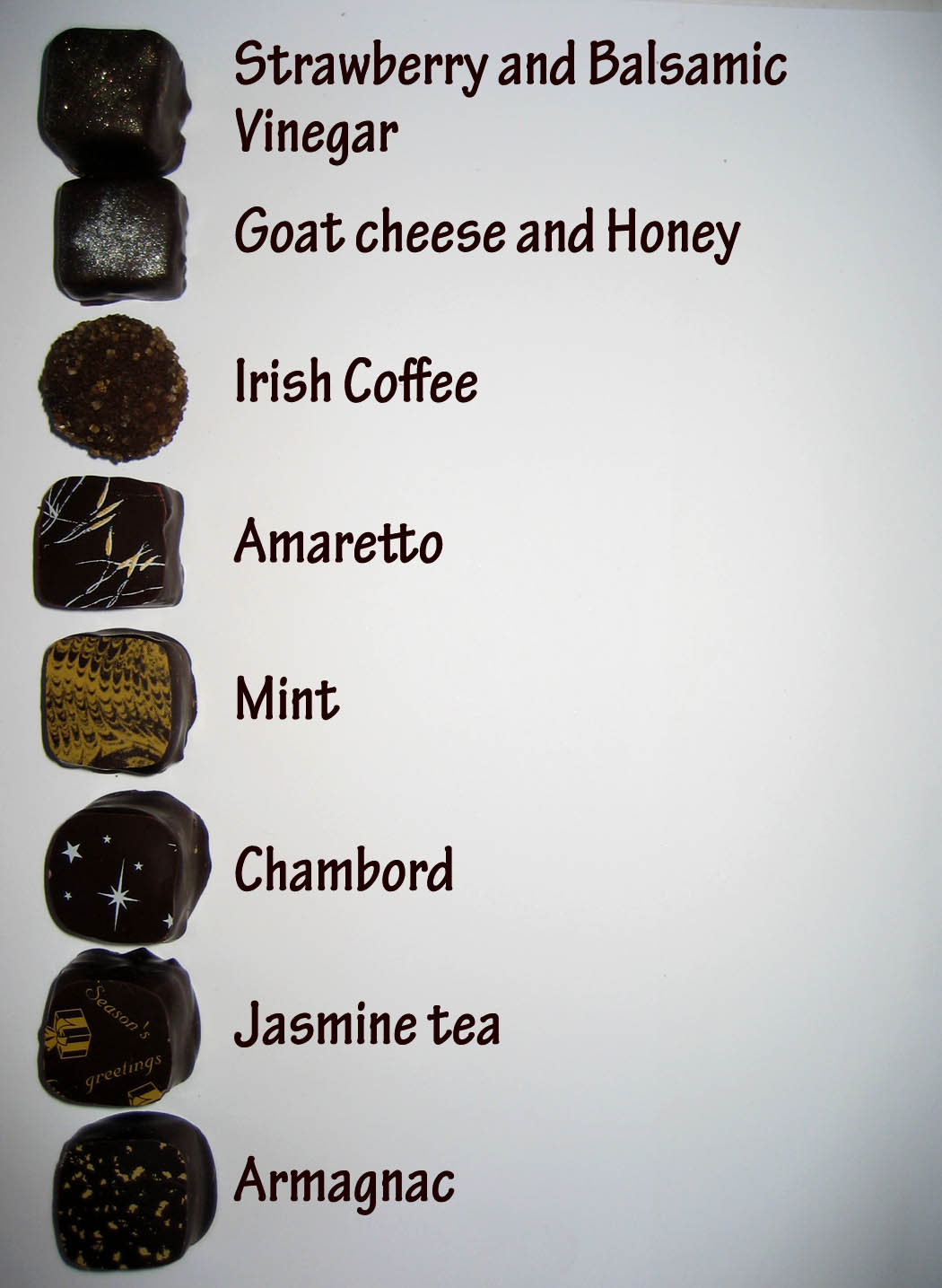
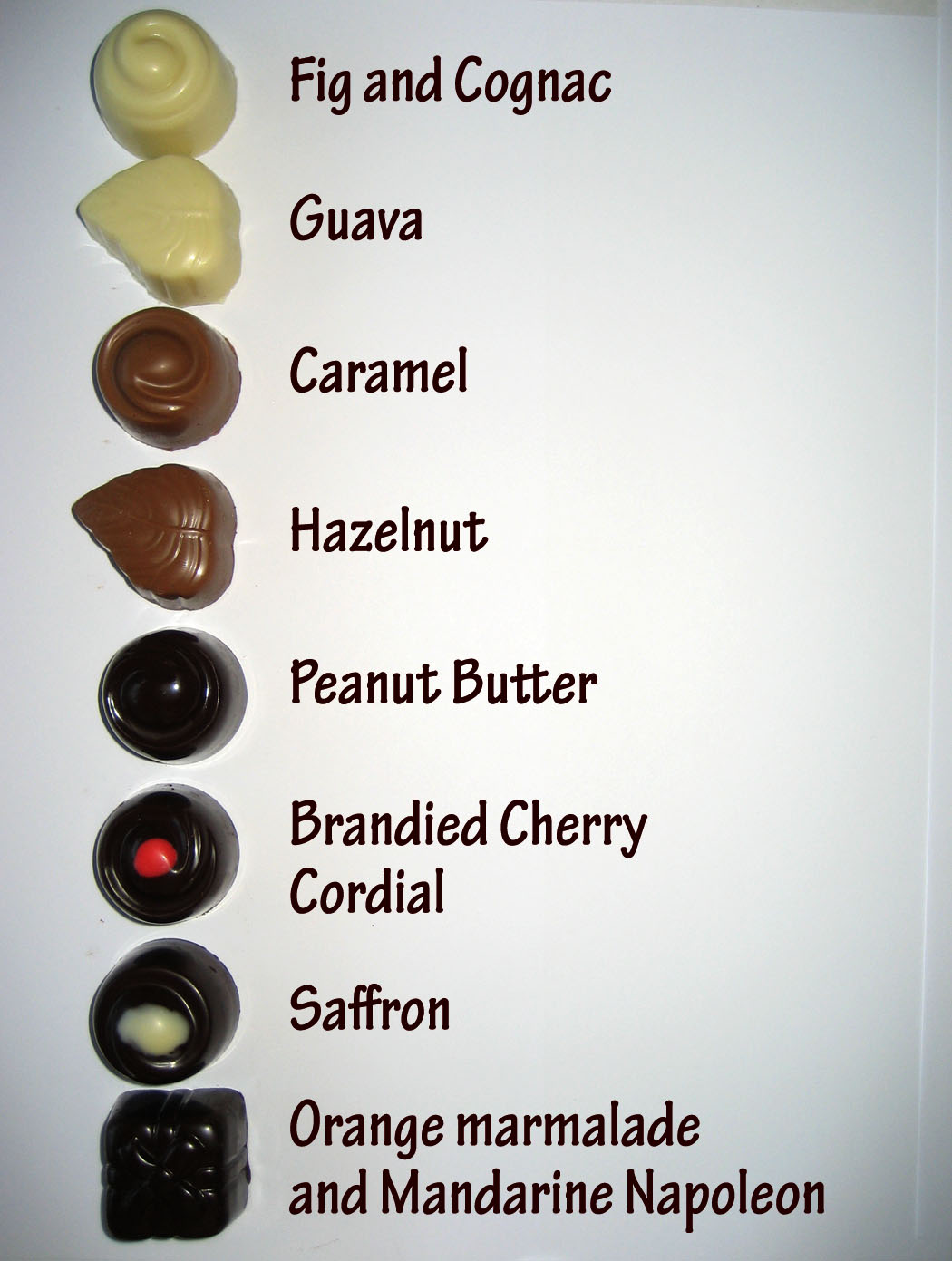
I made a photographic index to the chocolates and tucked one into every box. There were 28 kinds of chocolate goodies, including six fudges...
...six kinds of chocolate covered dried/candied fruits, caramels, and English toffee...
...8 kinds of dipped chocolates...
...and 8 kinds of molded chocolates, including homemade brandied cherry cordials!
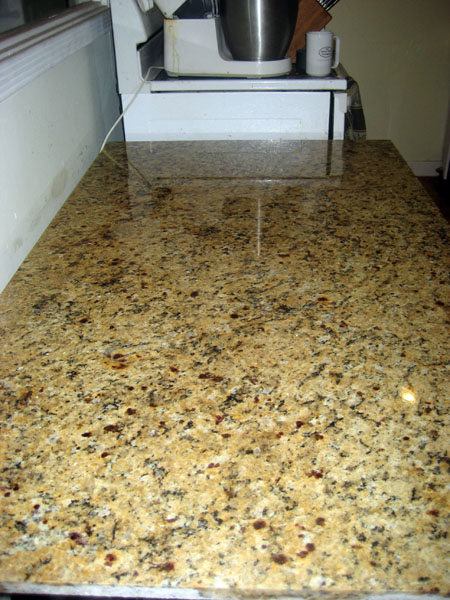
The granite slab (about 2.5 x 4.5 feet) that I used to temper chocolate, before I bought a chocolate tempering machine.
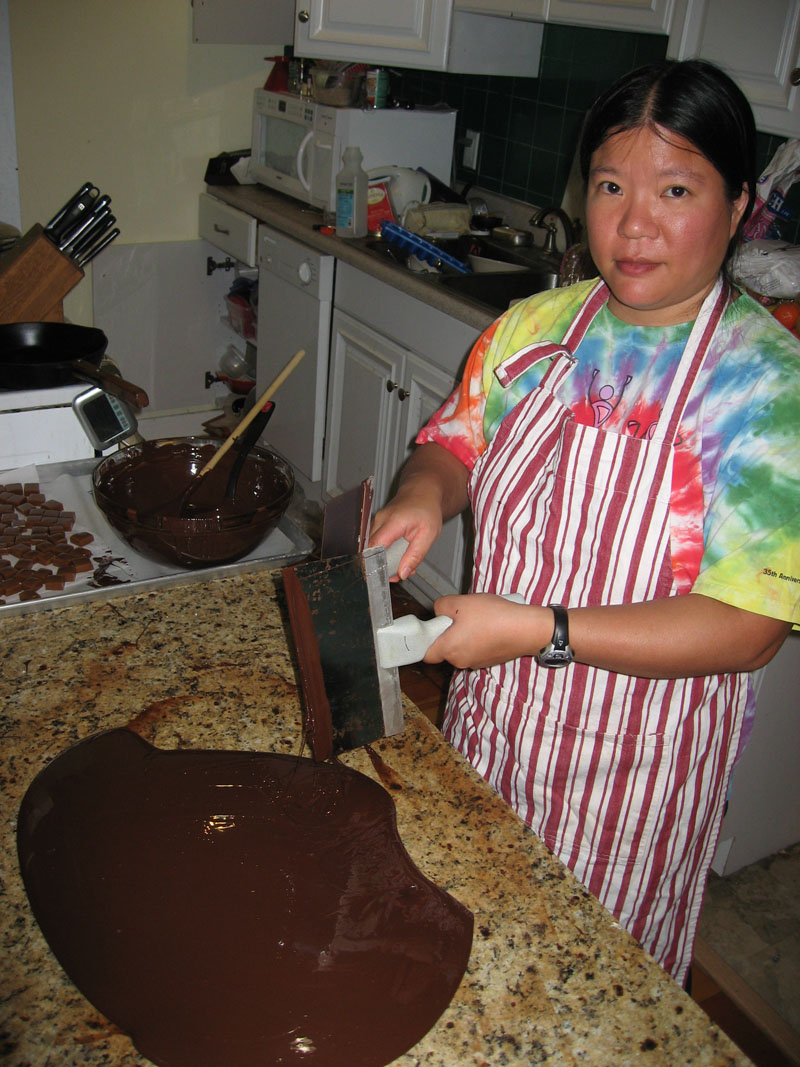
Me tempering chocolate on the slab. You heat chocolate to 115+ F, then quickly cool it on the marble to about 83 F, then raise the temperature to 90F. It's lots of fun, if messy!
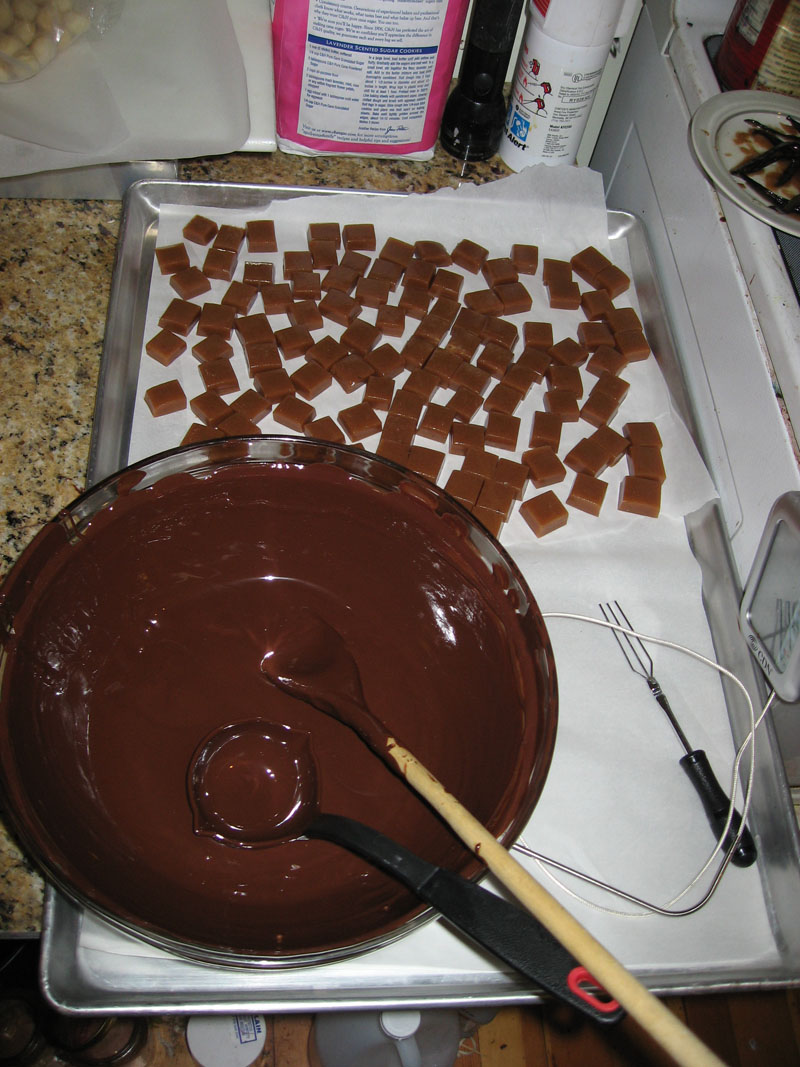
My work station at home. Here we have a bowl full of melted, tempered chocolate, a dipping fork (right), a pile of caramels ready to be dipped, and a probe thermometer for checking the temperature.
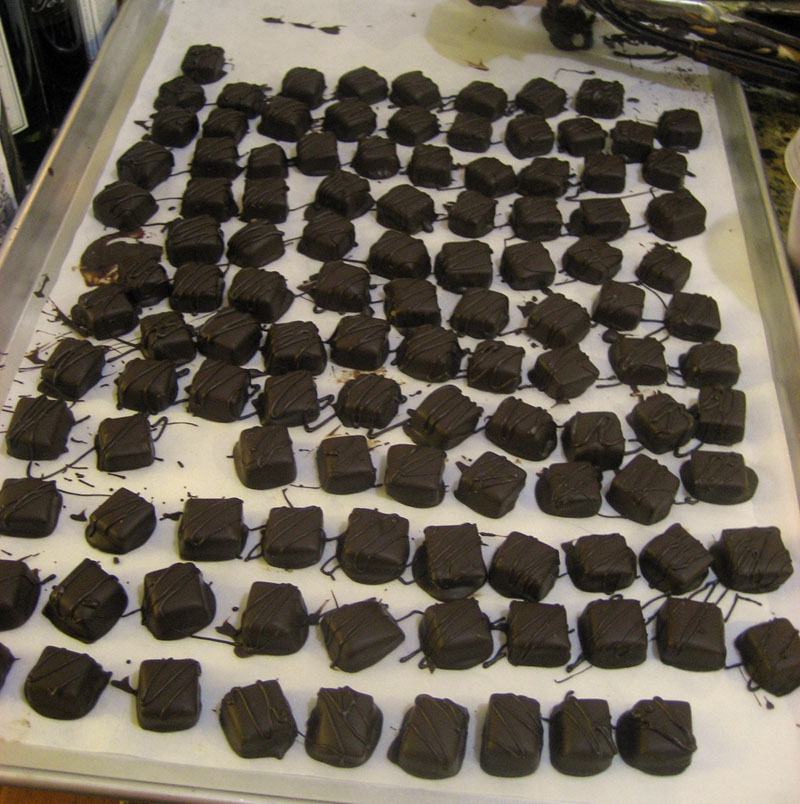
The dipped caramels.
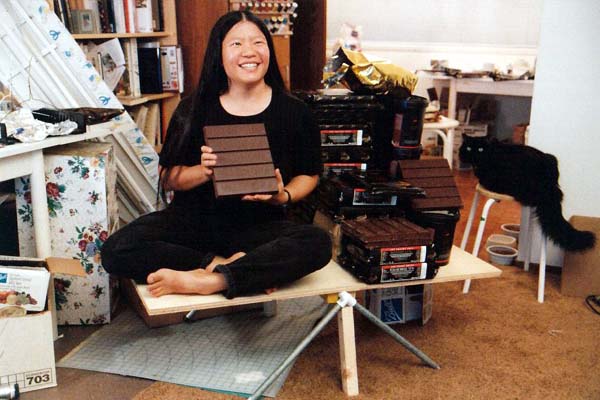
A photo from 1998 or thereabouts. Me with more than my weight in Valrhona chocolate, one of the finest chocolates in the world!