Join the Weavolution!
Blog posts
Travel blog posts
Archives
Tags
advancing twill aids lifecycle outfits beading blue to fuchsia warp bobbin lace bookmarks cashmere coat Cinderella Century collapse weave color changes doubleweave electronics gradual color changes jewelrymaking knitted blanks laura fry mohair coat MySQL network drafted jacket/shawl project network drafted shawls network drafting painted warp pre-weavolution project weaving drafts weaving study group web design web redesign website redesign wedding dress woven iridescence
My Favorite Websites


Adinkra stamping in Ghana
Adinkra, or stamped fabric, is one of the textile arts of Ghana. I was fortunate enough to visit an adinkra stamper in his workshop; here are the photos from my visit.
You can read more about my experiences in Ghana in the Ghana section of my travel blog.
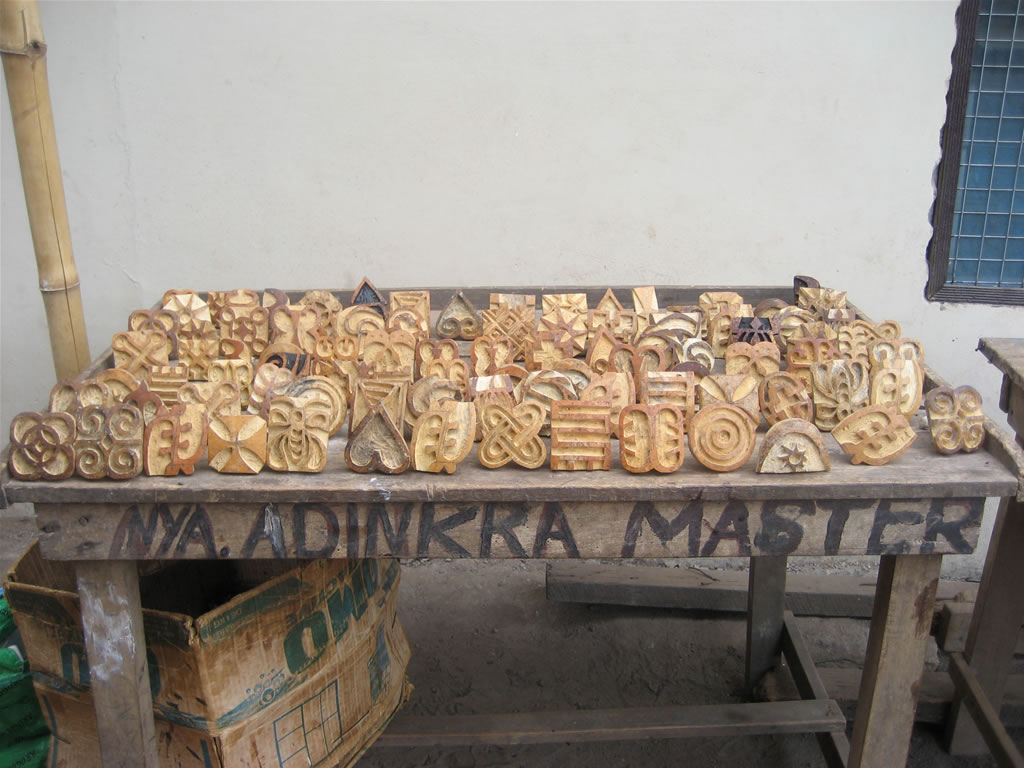
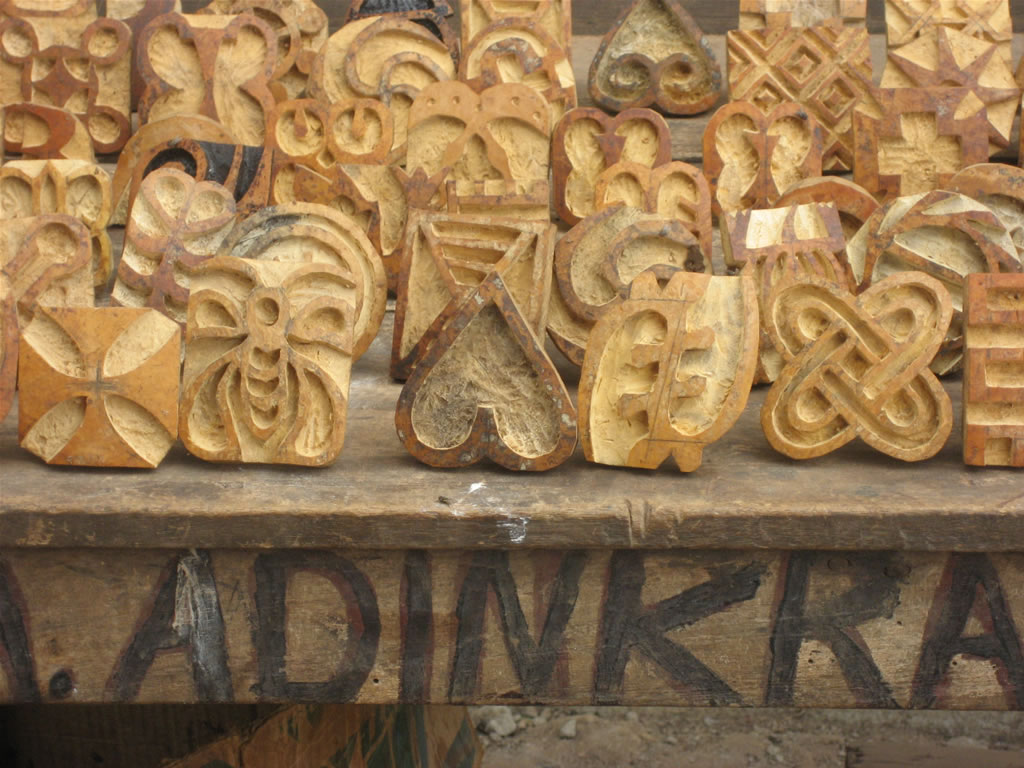
We start with some stamps. These are carved out of calabash gourd, in a process shown in the next few photos.
Every stamp has a symbolic meaning, and there are over 150 different symbols in adinkra. The second one from the right, for example, symbolizes the omnipotence of God, and is the most popular of the symbols. It's emblazoned on the gate of the presidential palace, and appears numerous times throughout Ghana.
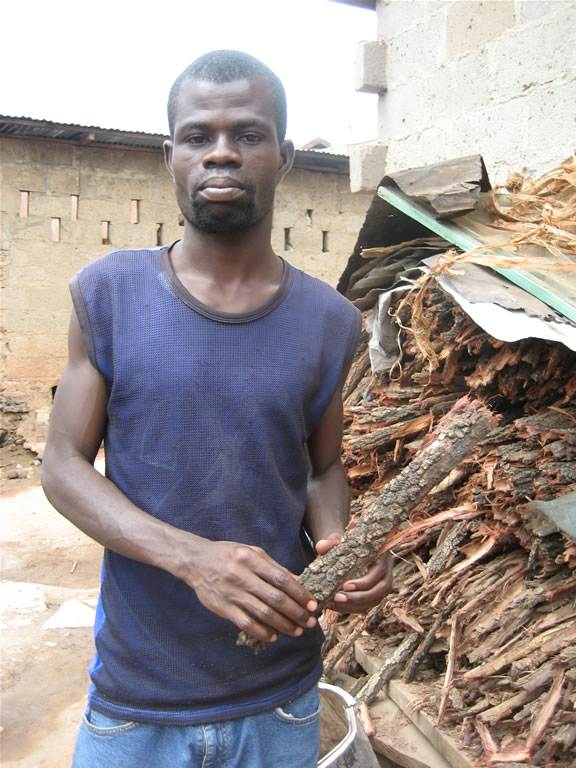
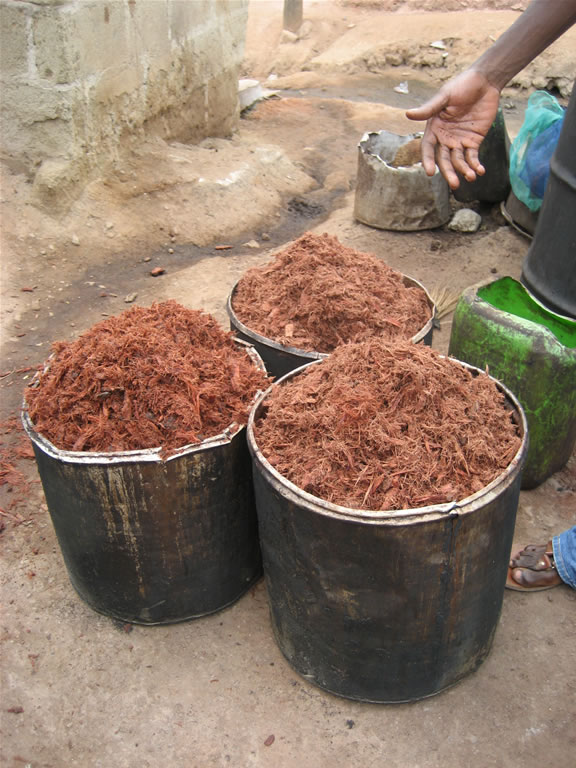
David Badie, the adinkra artist I visited. He's holding some of the bark used in making adinkra ink.
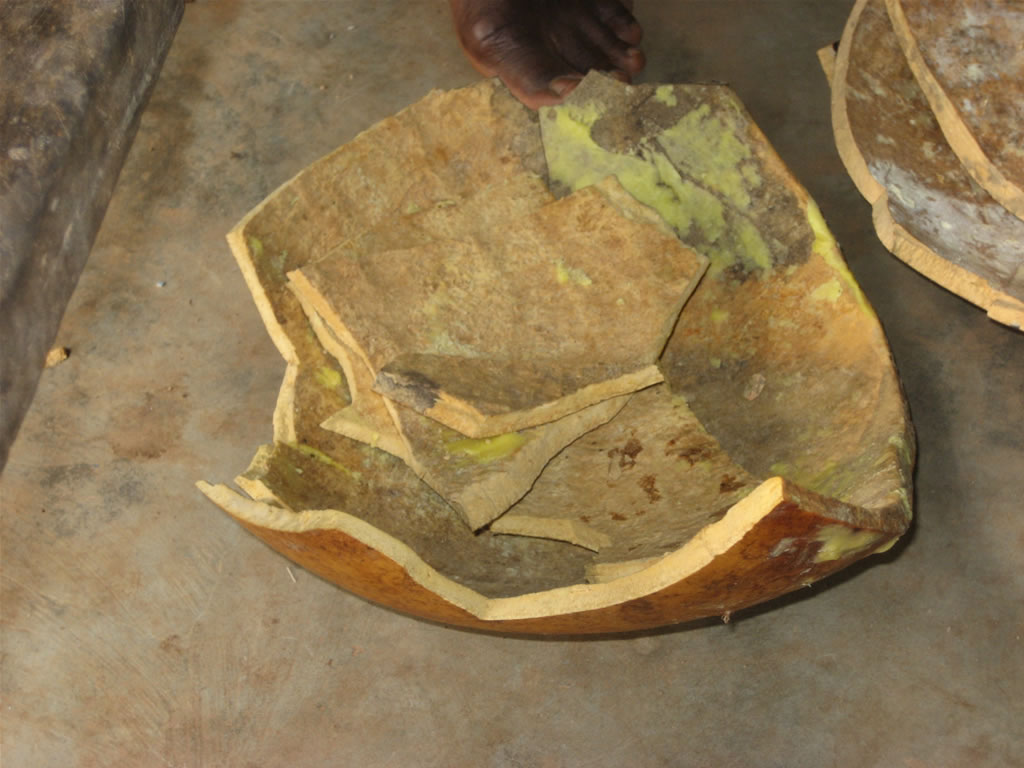
Calabash gourds. The yellow stuff inside is shea butter - the calabashes are brought down from northern Ghana by shea butter merchants, who store shea butter in them. They then sell the empty calabashes to adinkra stampers for a nominal sum.
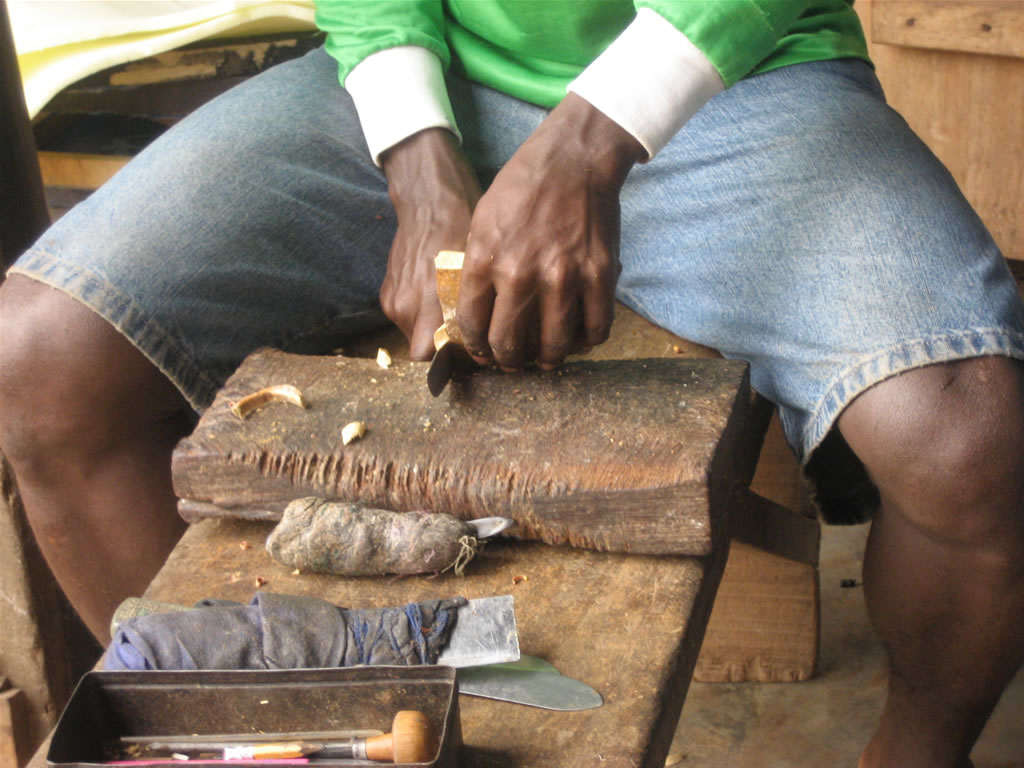
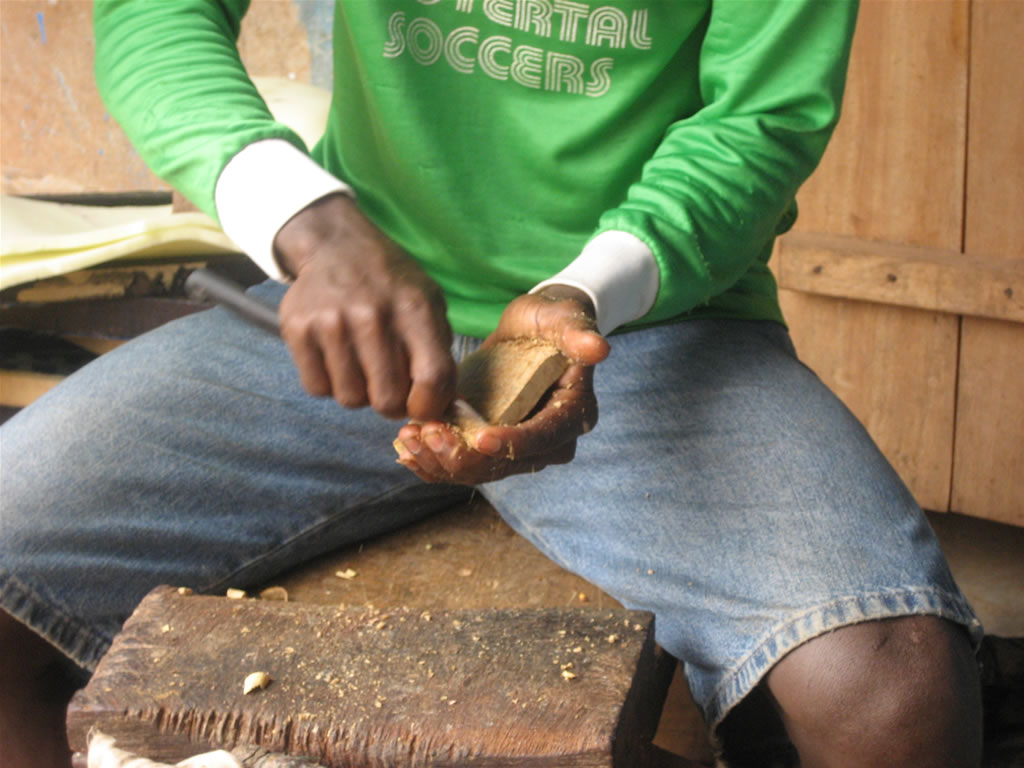
First the calabash is scored and broken to give a roughly square blank. Then (as shown) it's carved into the final square blank.
The blank is scraped with a knife to remove the waxy covering of the calabash gourd.
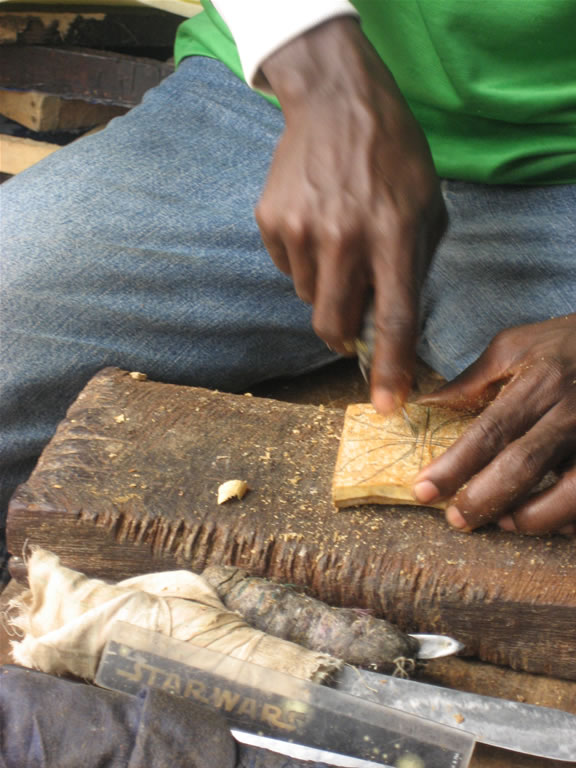
Next, a design is sketched on the piece of gourd.
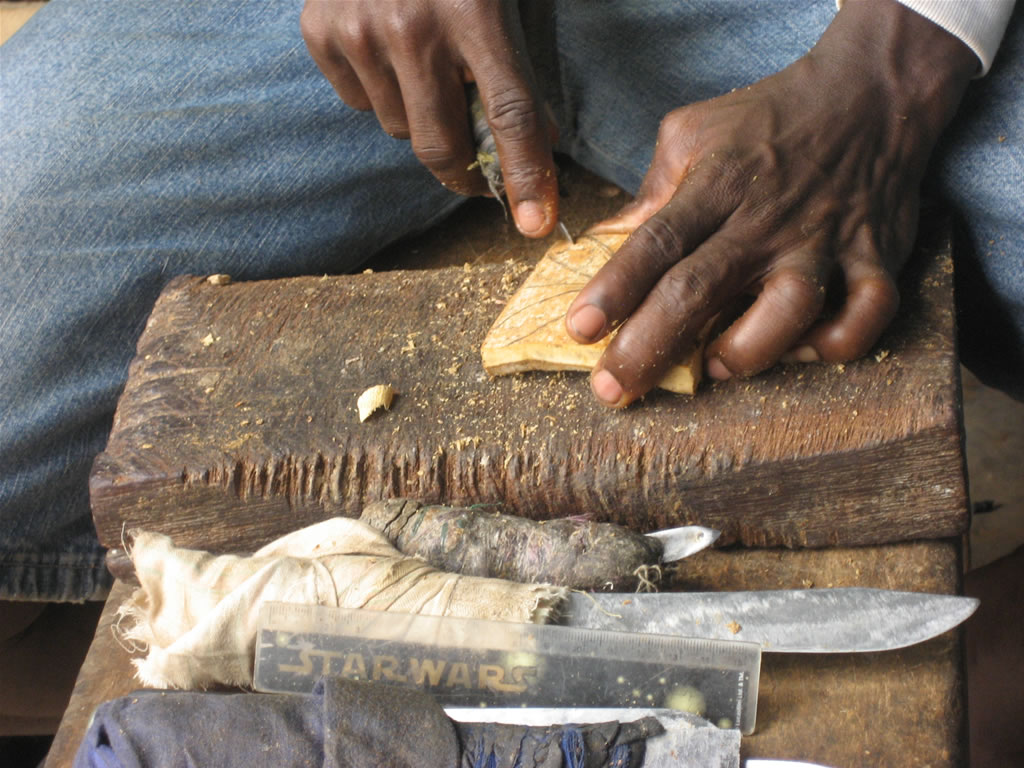
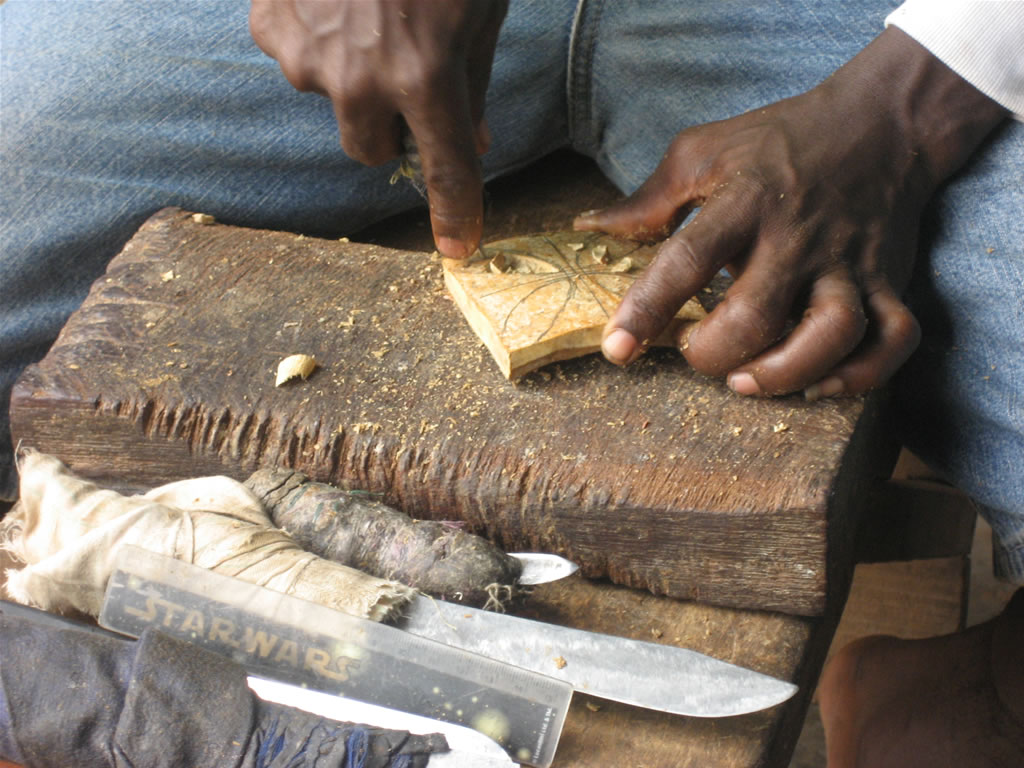
The lines are incised with a short, sharp knife...
.which is also used to gouge out the center. A linoleum carving tool is used to smooth out the center portions.
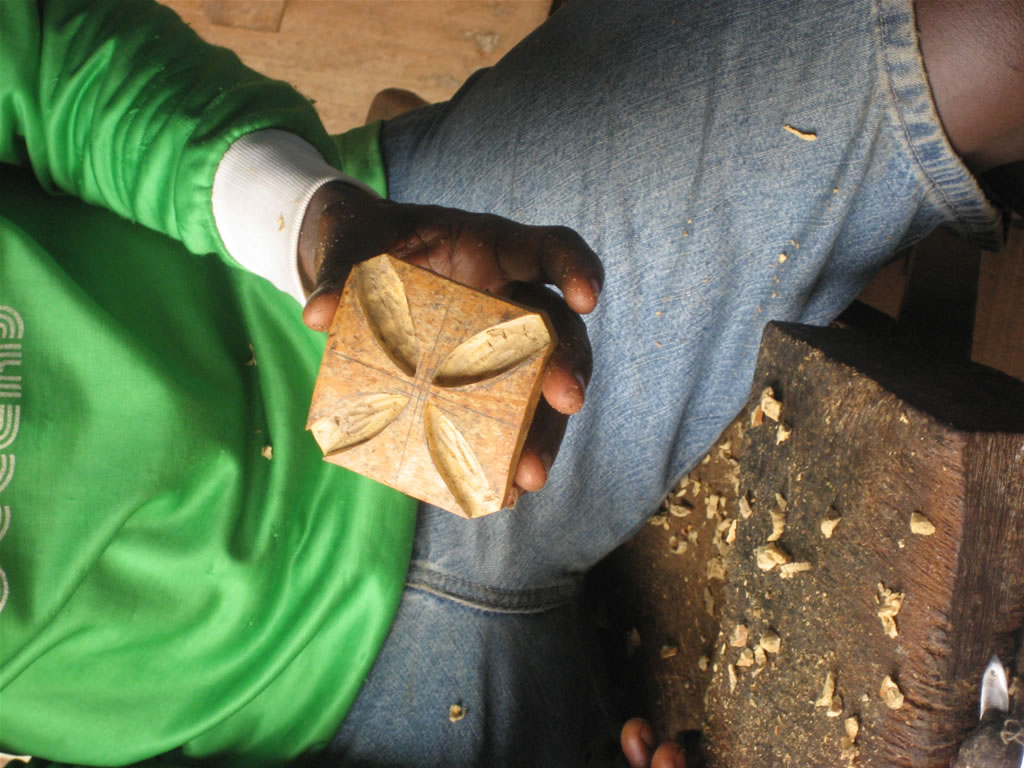
The carved stamp.
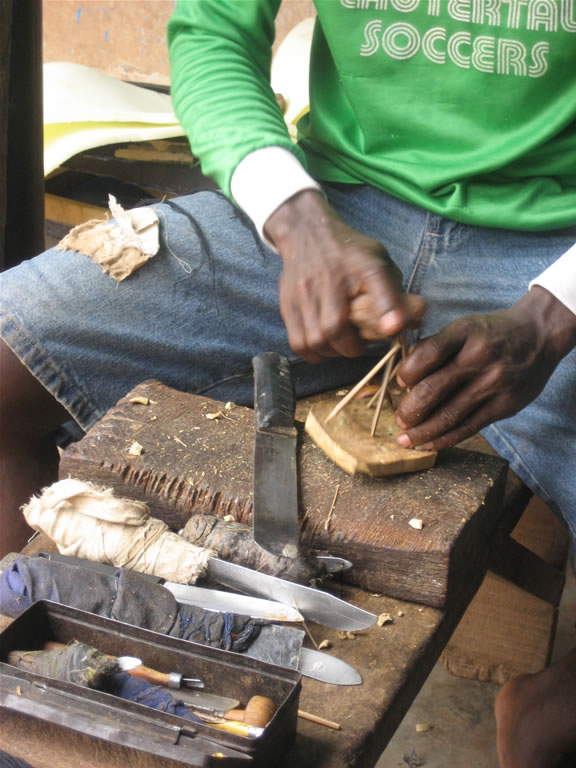
Slivers of raffia stick are pounded into the base...
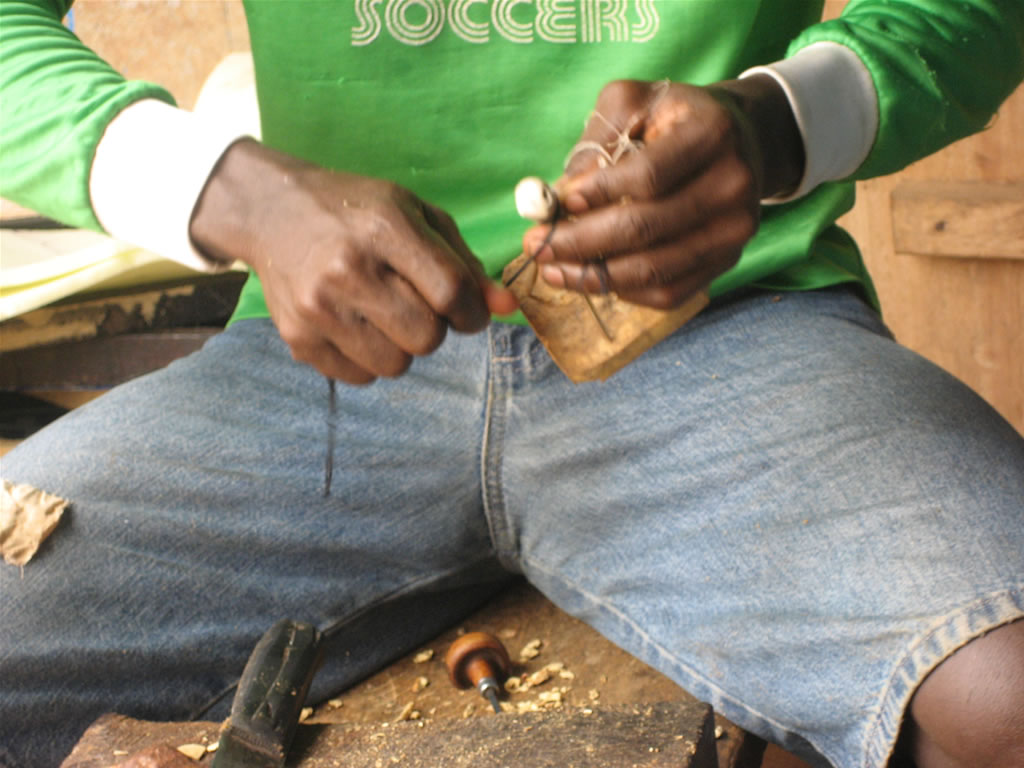
...and wrapped in a bit of cloth to give the stamp a handle.
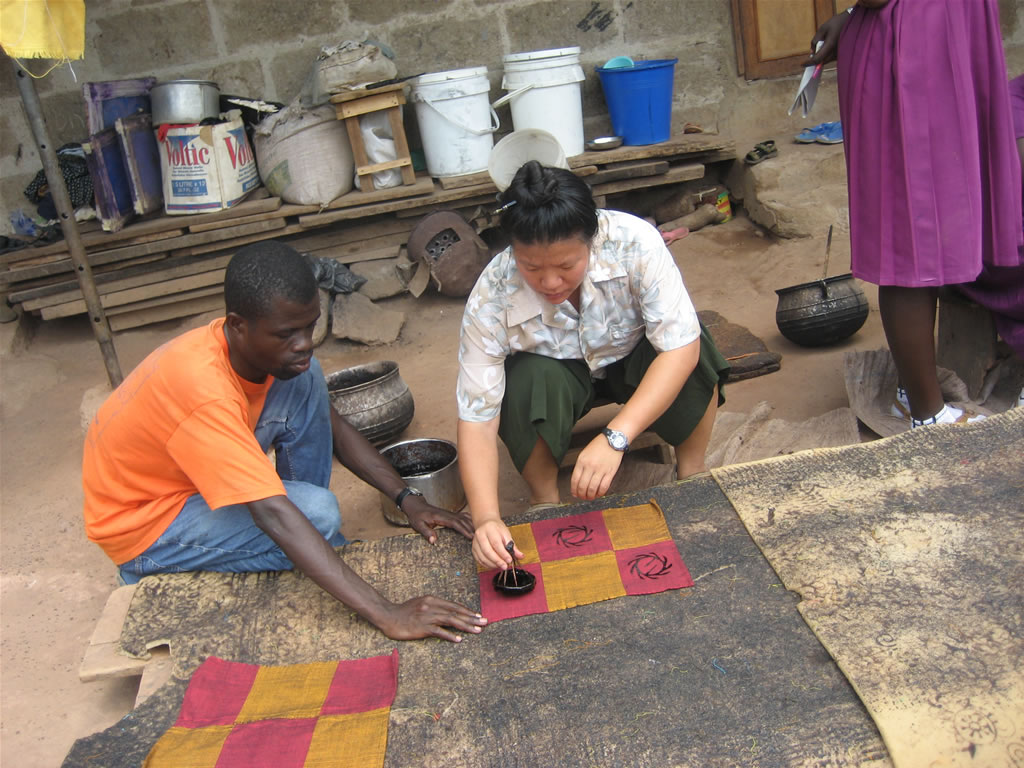
Printing with adinkra stamps. The only tricky part is that calabash gourds curve, so you have to rock the stamp back and forth to make sure everything gets stamped.
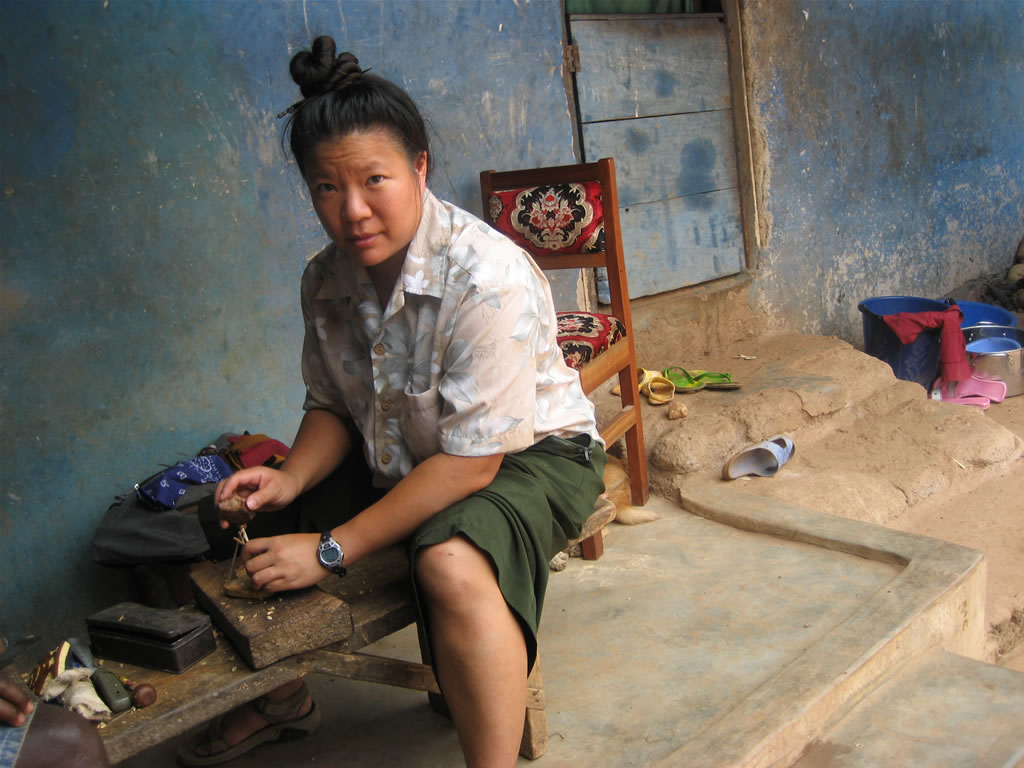
I made my own stamp. Here is me sketching the design.
...and here is me carving the design.
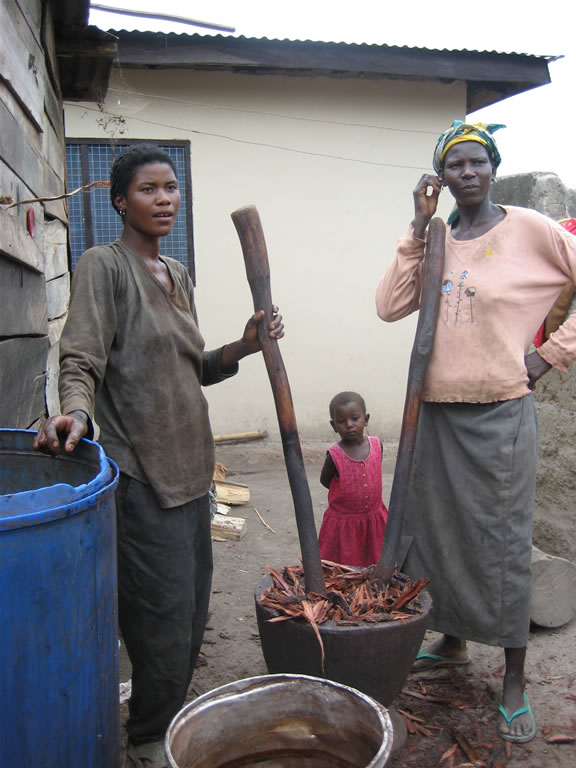
Adinkra dyes are made in part by pounding the bark of a tree into shreds...
...like this...
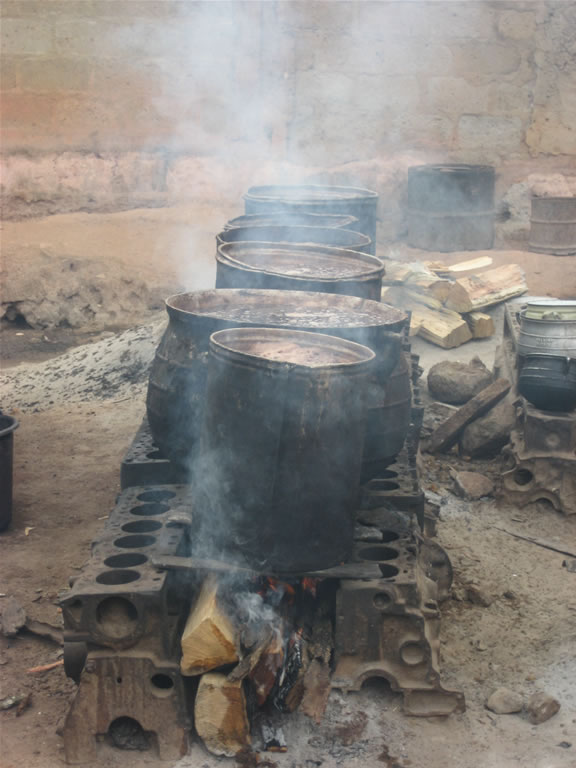
...and boiling, sometimes for days
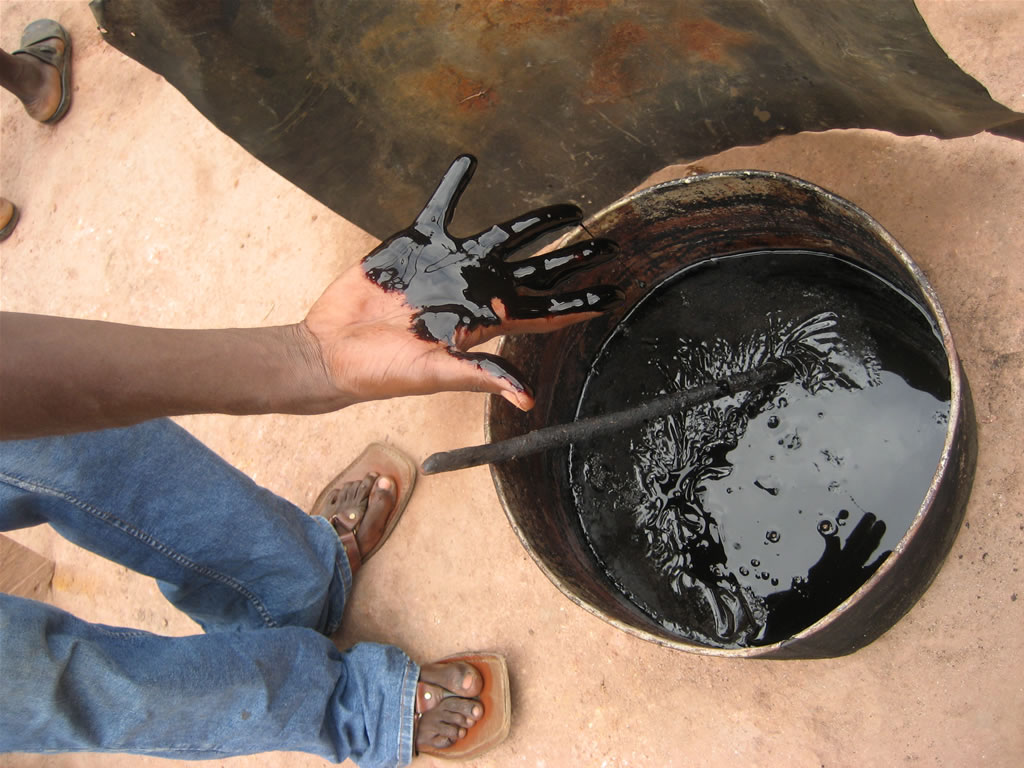
The finished dye. It's thick, a little like motor oil.