While in Vientiane, I went to Carol Cassidy’s shop, Lao Textiles. Lao Textiles was founded 14 years ago and was the first foreign business in Laos…it produces museum quality textiles designed by Carol Cassidy, based on traditional Lao patterns and woven by some very skilled weavers. They were kind enough to let me take photos in their workshop…they also introduced me to a natural dyer named Dong, who was kind enough to do a natural dye demo for me.
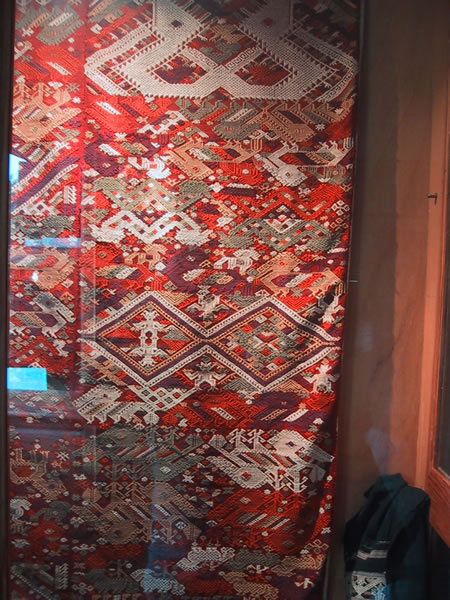 Textiles from a small textile collection. Take a closer look--the intricacy is amazing.
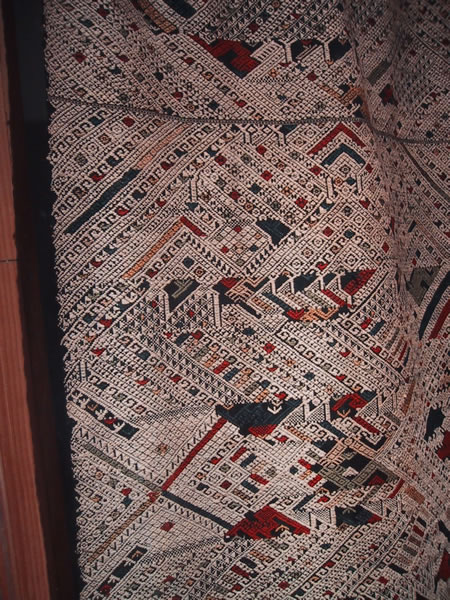 Another textile from the same exhibit.
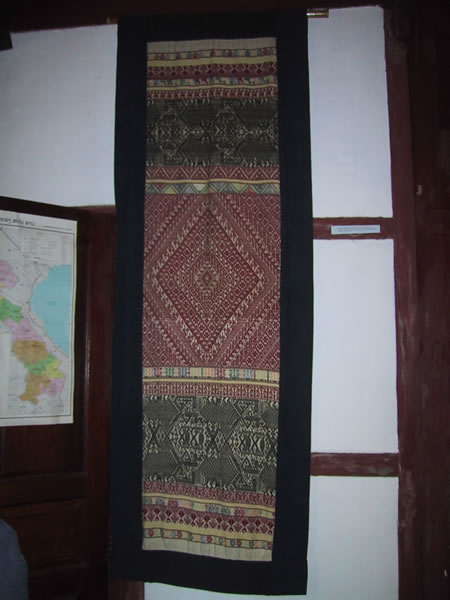 Woman's blanket from Huaphanh Province. The red diamond is typical of the Tai tribes...Lao has something like 56 different groups of hilltribes.
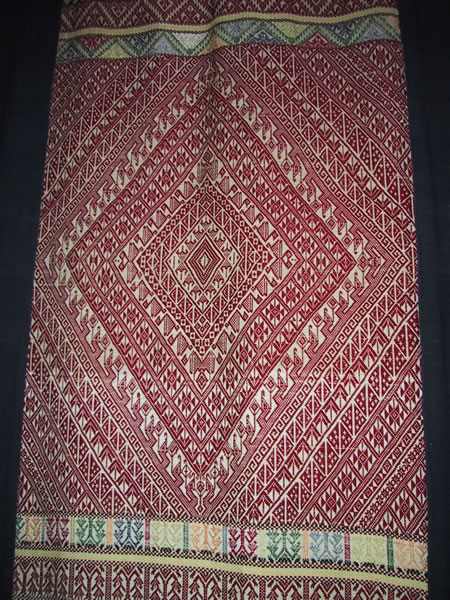 Closeup of the diamond pattern. Intricate work like this is all over Laos, usually at very cheap prices ($12 for cotton, $30-80 for silk).
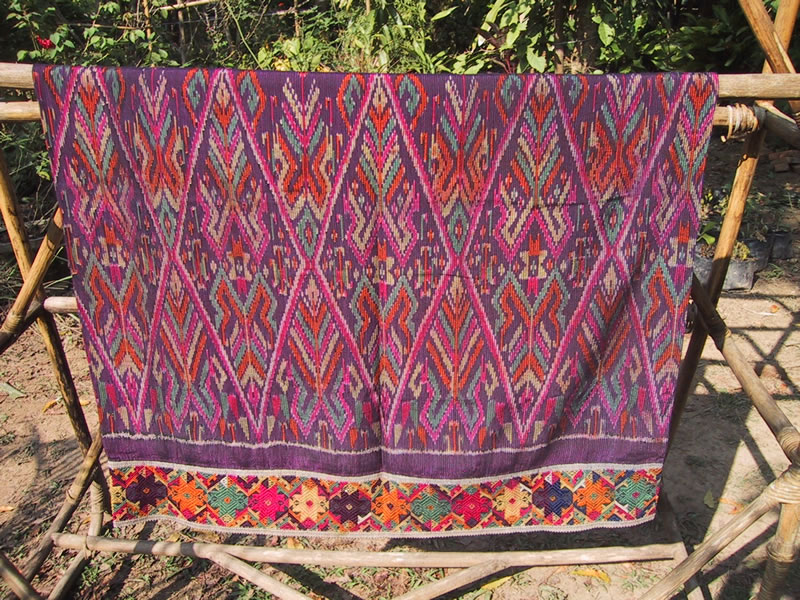 A stunningly beautiful mudmee piece. The weft was ikat-dyed before weaving, which makes the accuracy absolutely astonishing. Some old and very experienced Lao weavers tried to reproduce this--but could not.
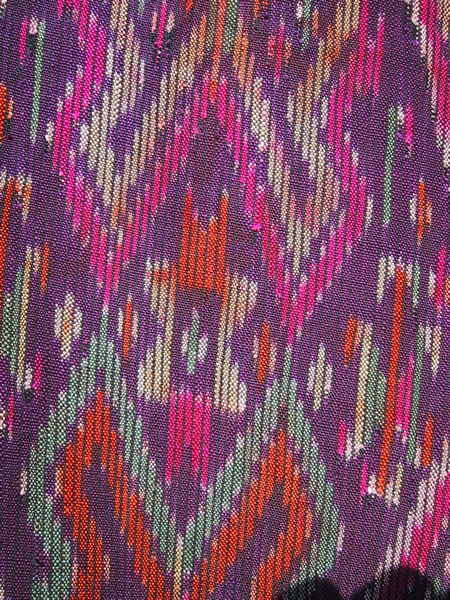 A closeup of the mudmee piece. Each of the little bands of color is about 1/16" across--and the accuracy is within 1/32". Considering that this is weft-dyed, and not warp-dyed, this is just amazing. Remember that most of these weavers are illiterate, too!
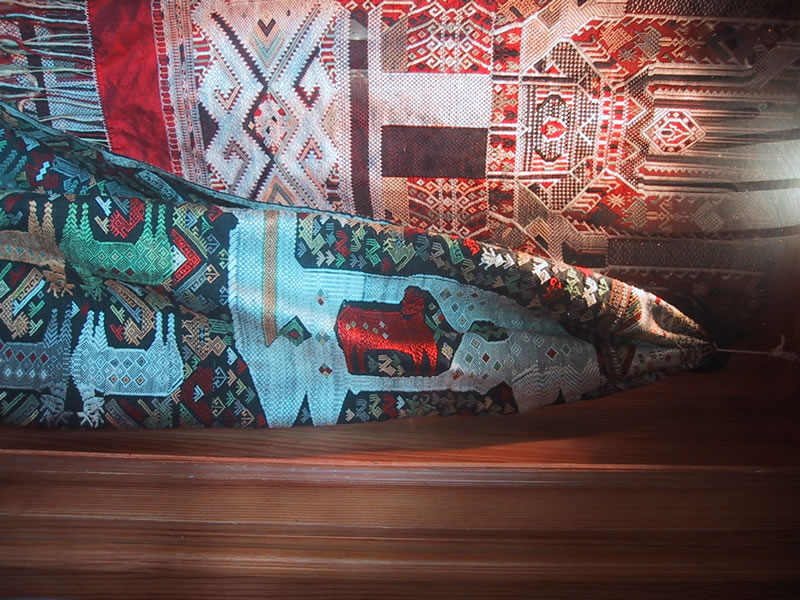 A modern design (foreground)--a pregnant deer (one deer inside another).
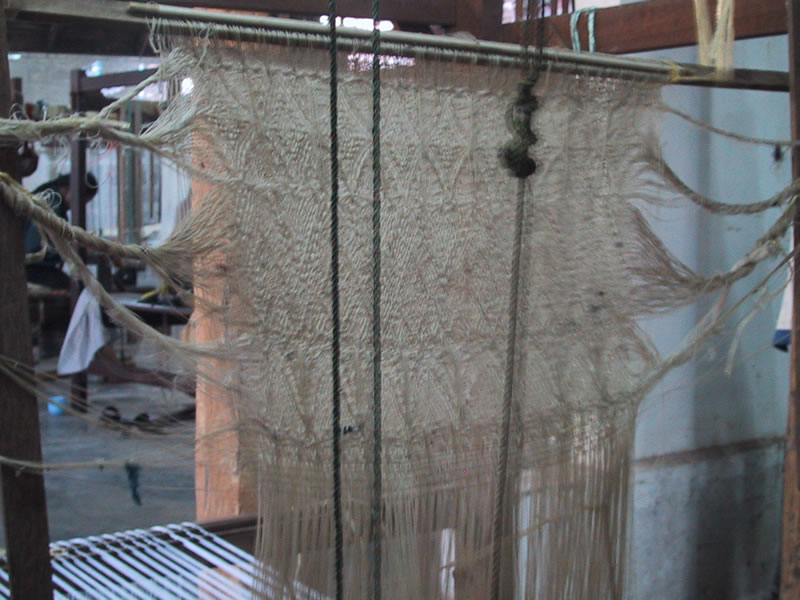 Here's how these exquisite textiles are woven. First, a set of string heddles are strung from floor to the top of the loom. Then, pattern-strings are inserted, one string for each "pattern pick", recording the correct pattern.
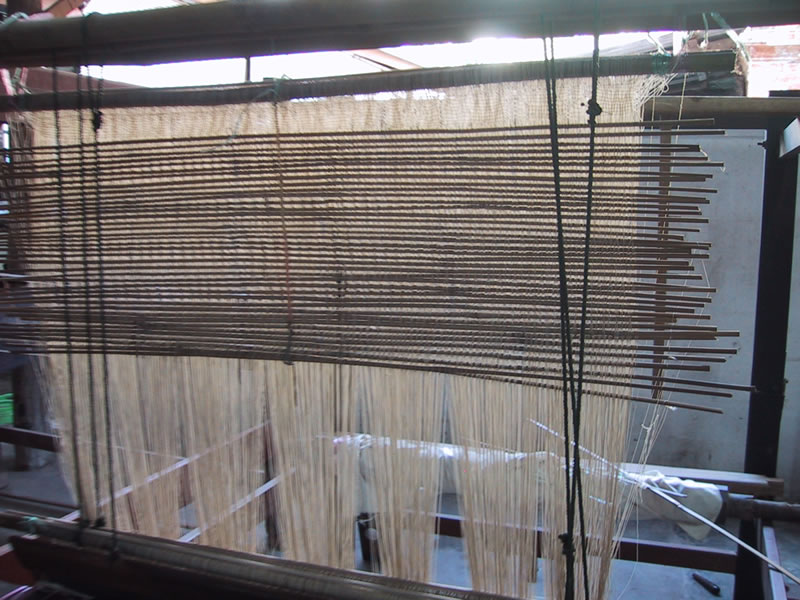 Pattern-sticks are actually more traditional than pattern-strings, but allow for fewer patterns...
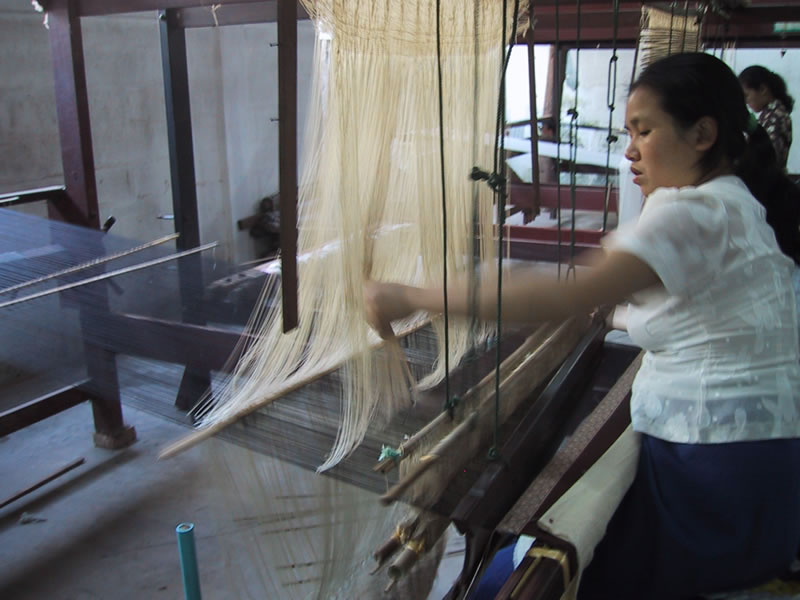 The weaver pulls on a single pattern-thread, bringing forward all the threads that will be lifted up in this throw of the shuttle.
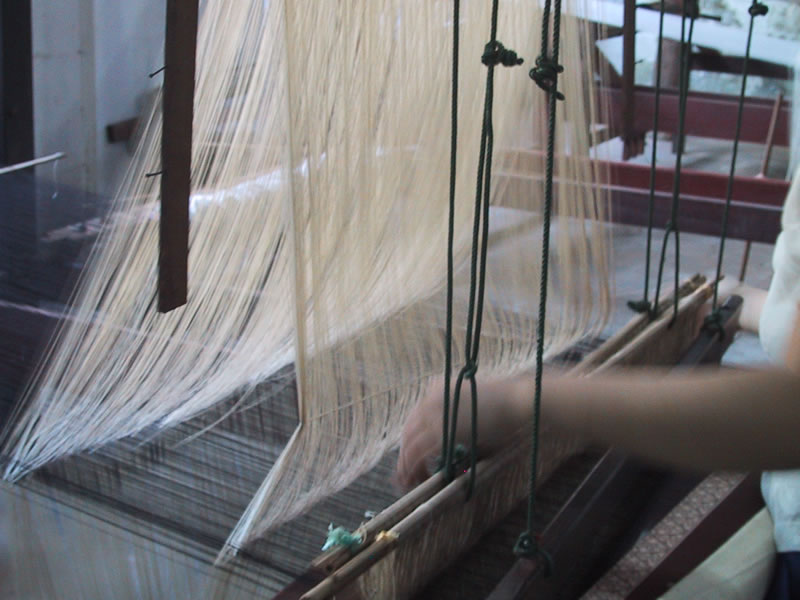 She then tugs up all the forward threads while inserting a flat bamboo stick. This stick, when turned edgewise, will raise all the forward threads, thus translating the pattern from the string to the warp.
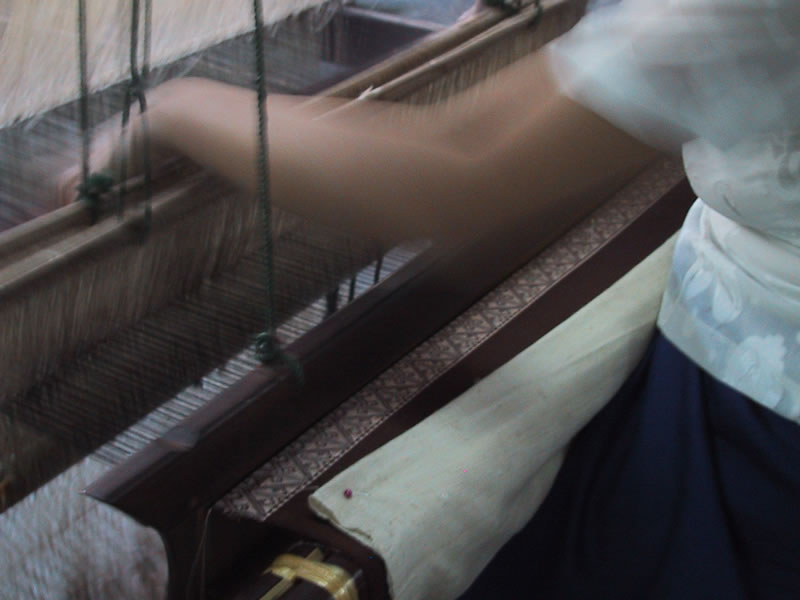
The emerging fabric. Once she finishes this throw of the shuttle, she takes the pattern thread out of the top, reinserts it below the loom, and continues with the next pattern thread.
The beauty of this method is that it allows a given pattern to be reused multiple times--so the weaver need only pick out the pattern once. After that, it's recorded in the pattern-strings and can be transported from loom to loom.
These textiles take a very long time to weave...a highly skilled weaver can weave between 1.5" and 9" in a day, depending on the complexity of the pattern.
...so, a 2-yard piece can easily represent a month of a weaver's time. The end results are glorious, though.
 Woman embroidering outside the Hmong Market, Luang Prabang.
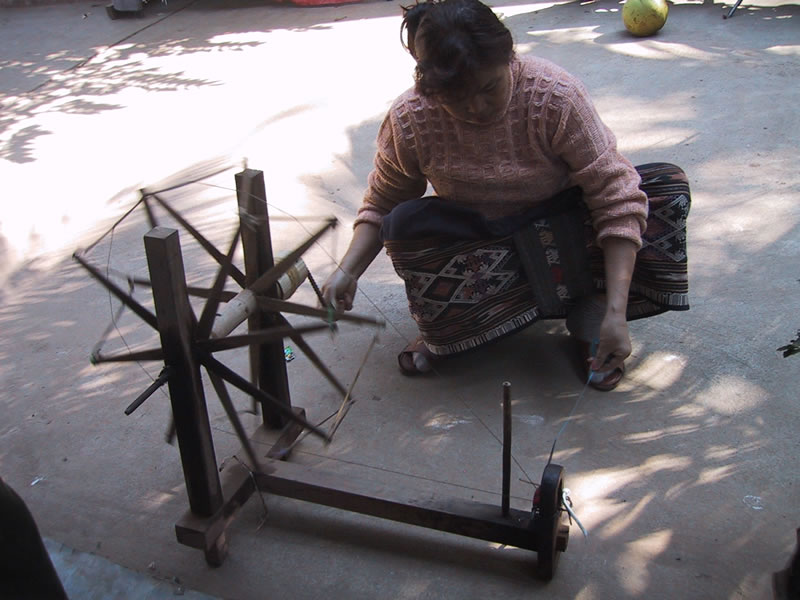 Woman spinning silk (yes, from my travel shawl project ;-) ) on a charkha, in Luang Prabang.
 Woman weaving using supplementary-weft technique in Luang Prabang.
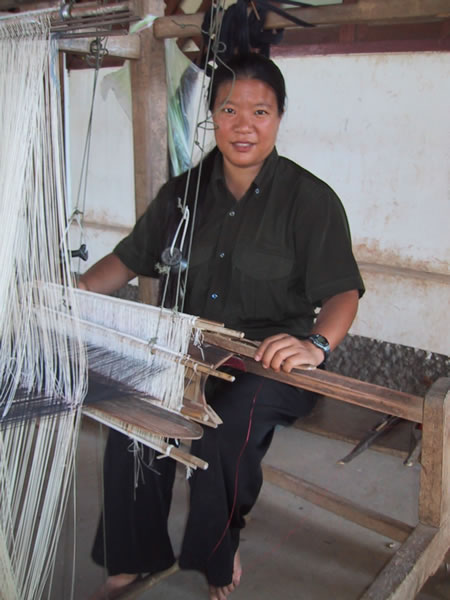 Me weaving using supplementary-weft technique, in Luang Prabang.
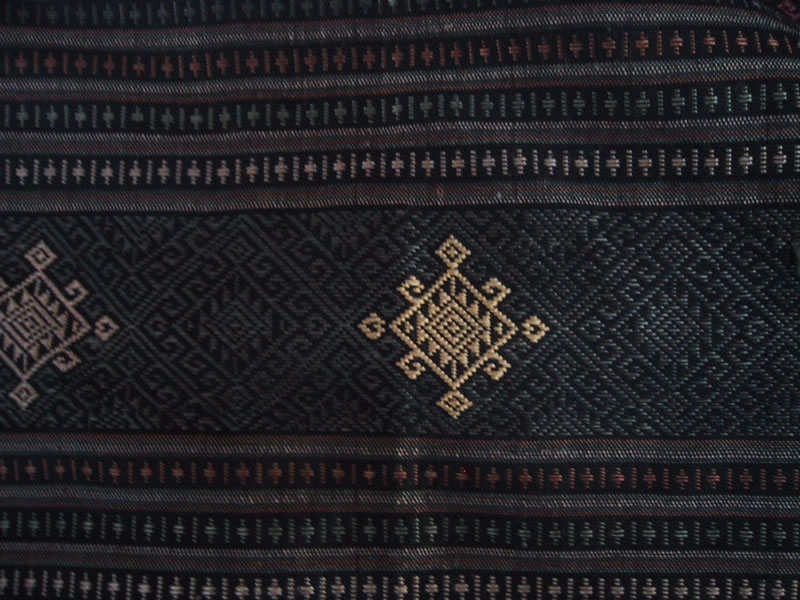 A piece of naturally-dyed, handwoven silk, 2 meters long, that I bought for $28.
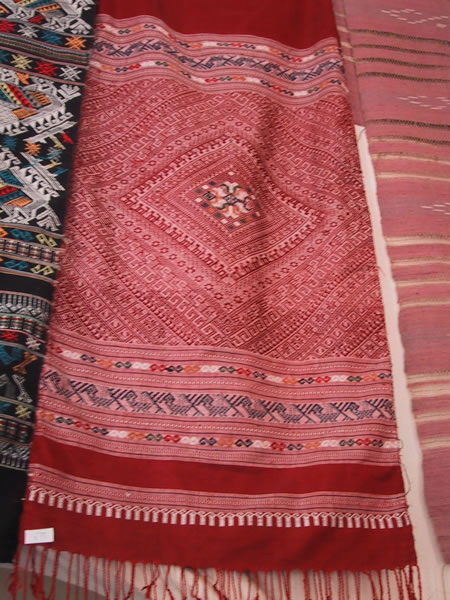 A piece of Tai tribe weaving, with the characteristic diamond pattern.
