I was privileged to spend four days studying spinning and weaving with an old Akha spinner/weaver, who was very excited to have a student, as the young Akha are largely not interested in the traditional arts. Here are some photos from my study of handspinning.
You can read more about my adventures with the Akha in the Thailand section of my travel blog.
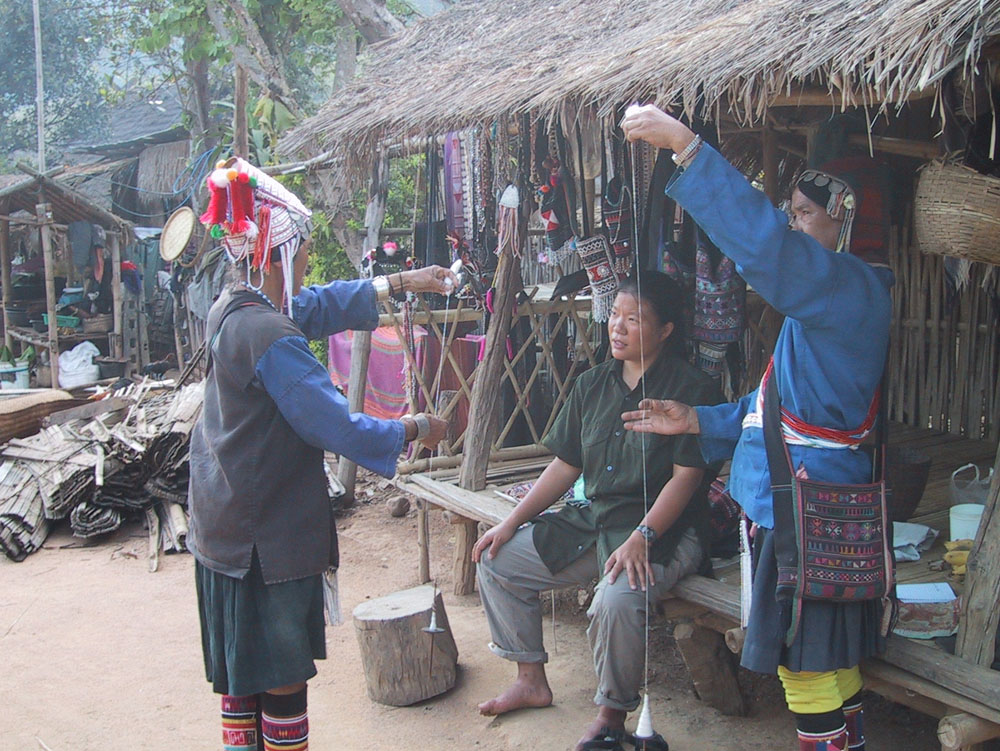 Ahta and a friend demo-ing spinning for me.
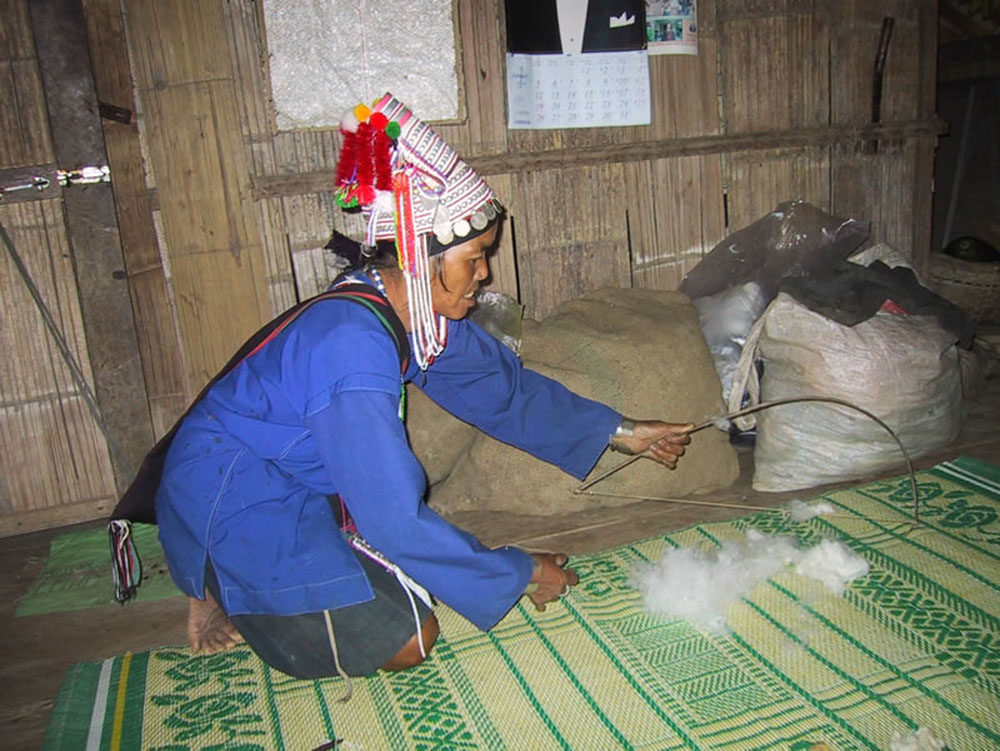 To fluff up the cotton for spinning, Ahta used a bow and plucked the string repeatedly to fluff it up. I tried it and the cotton promptly wrapped itself around the bowstring. It took quite a bit of practice before I could get it to fluff, not wrap.
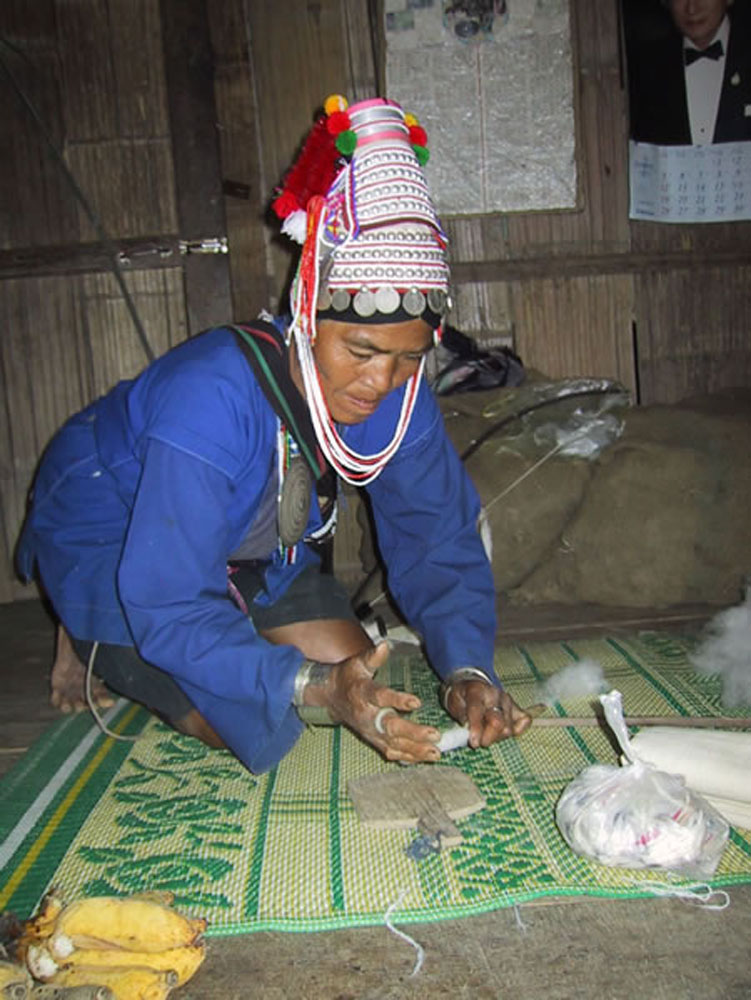 After fluffing, Ahta used a wooden stick and a small board to roll the cotton into punis.
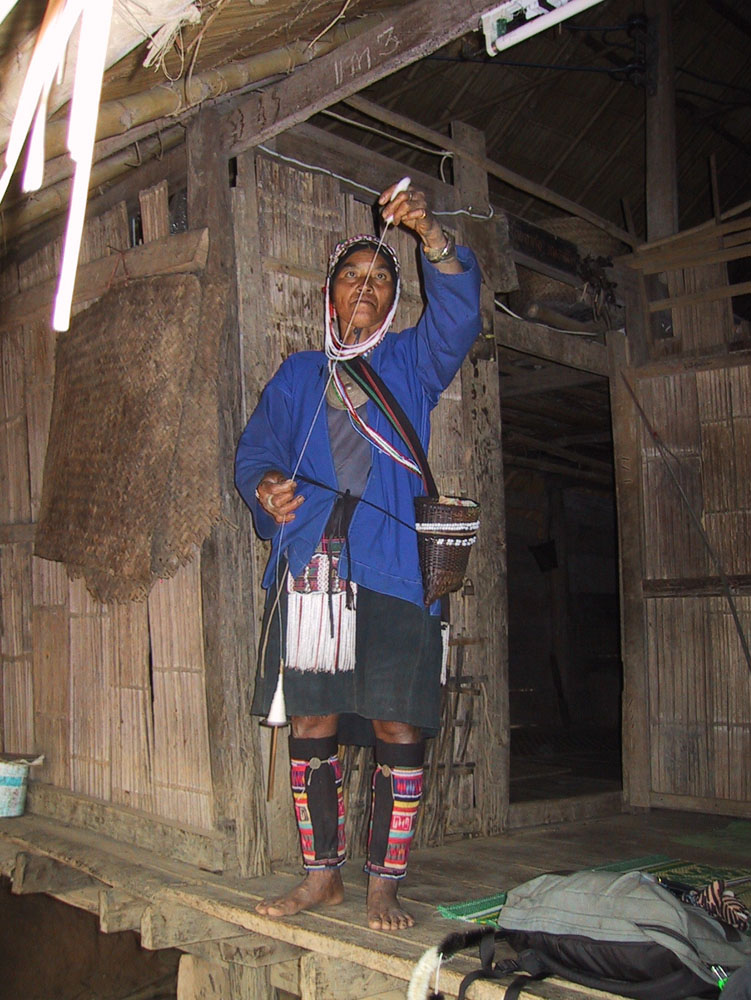 Ahta rolled the spindle down her thigh to start it spinning, then rapidly drew out the fiber, spinning it into yarn.
 After spinning it, she would un-spin very slightly, untwisting and smoothing out the slubs by hand as the spindle slowly rotated.
 Here Ahta is winding off the spun yarn into a ball. She says that when she spins all rainy season, it can get to be the size of a basketball (or larger!). The Akha weave with singles, so I didn't see anyone plying yarn.
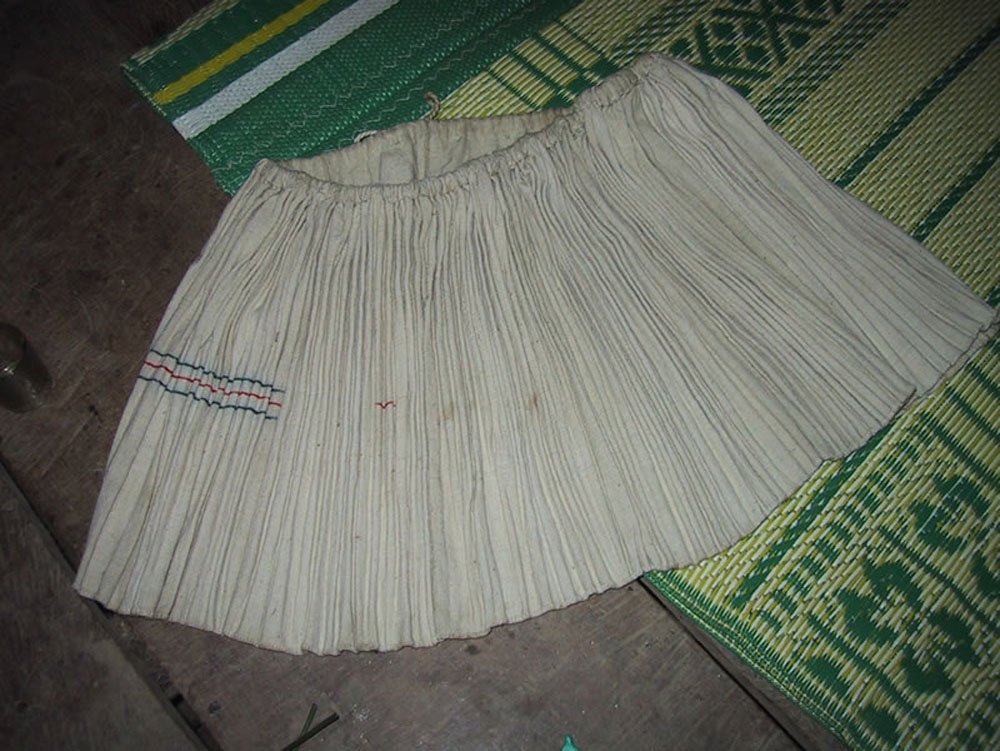 Ahta showed me her wedding-skirt. The colored lines have ritual significance. This was the only white clothing I saw while there - everything else is indigo-dyed.
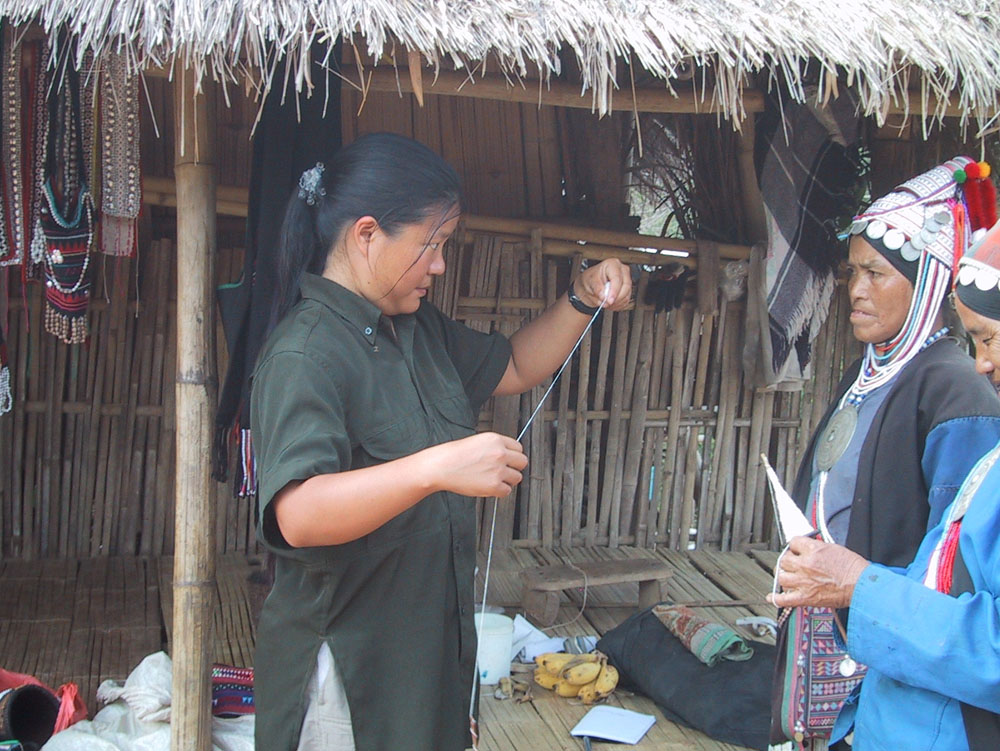 Ahta teaching me to spin.
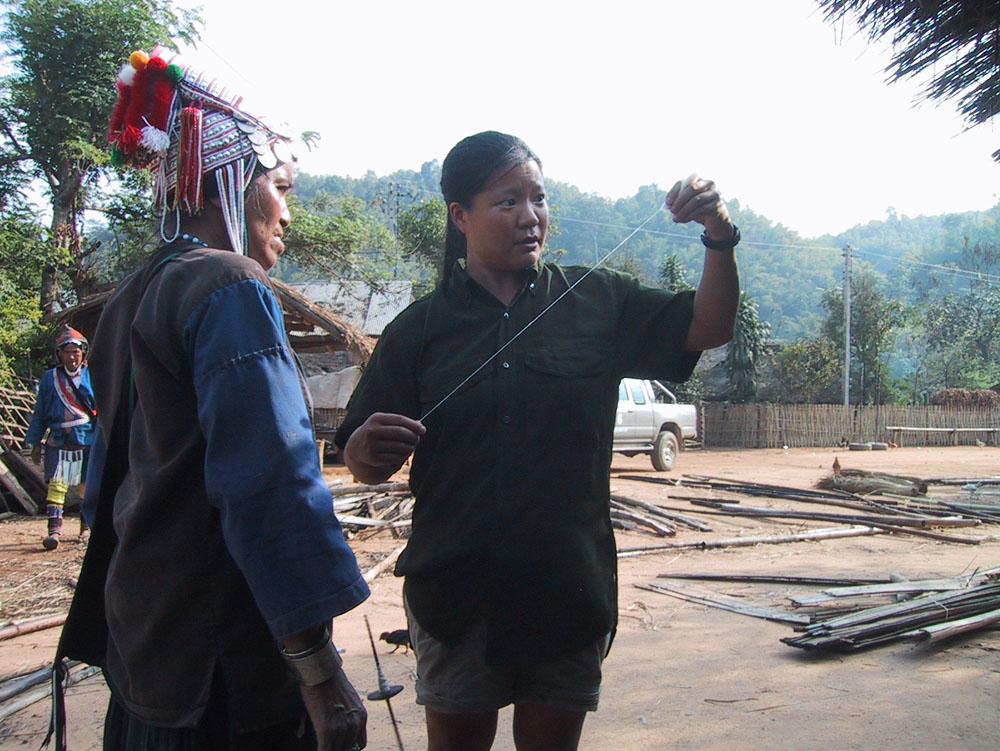 Me finally getting the hang of it.
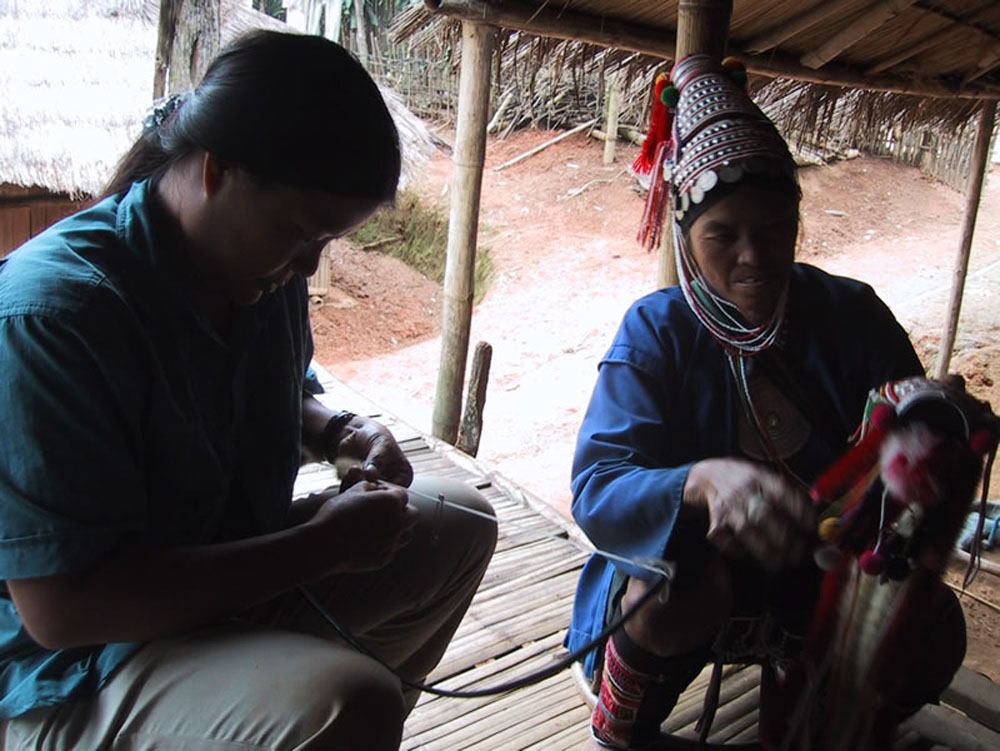 Making a feather lei. This is part of the traditional Akha costume.
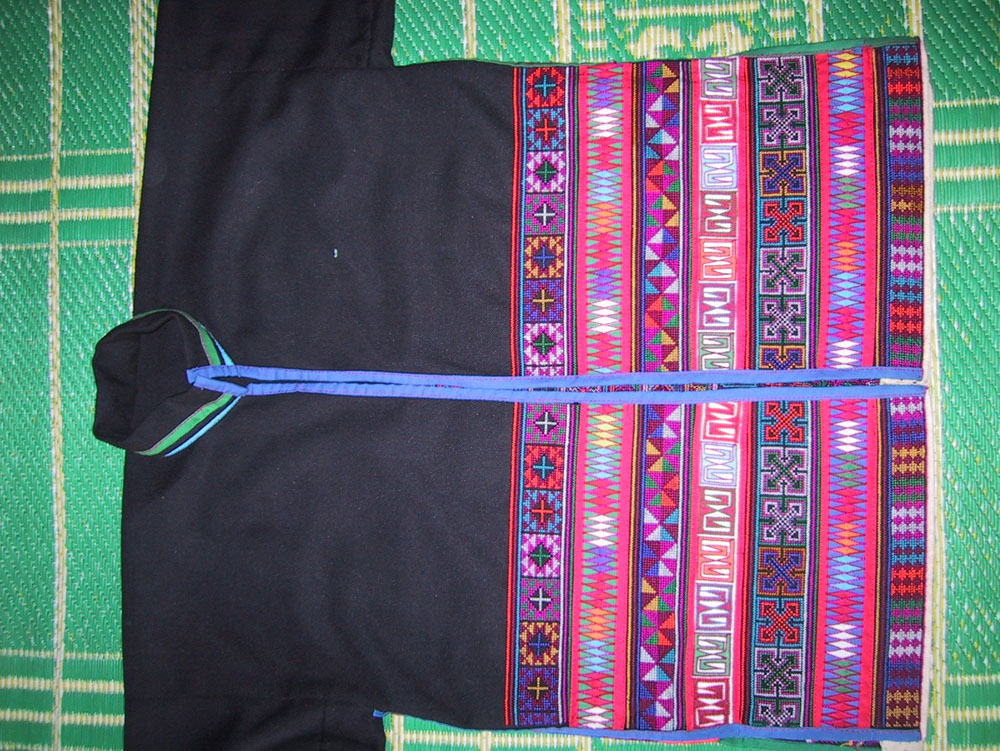 The front side of an Akha jacket. So far as I know, the Akha weave only plainweave, but they make up for it by fabulous decoration! The jacket is pieced kimono-style so as not to waste an inch of the precious fabric, then embellished.
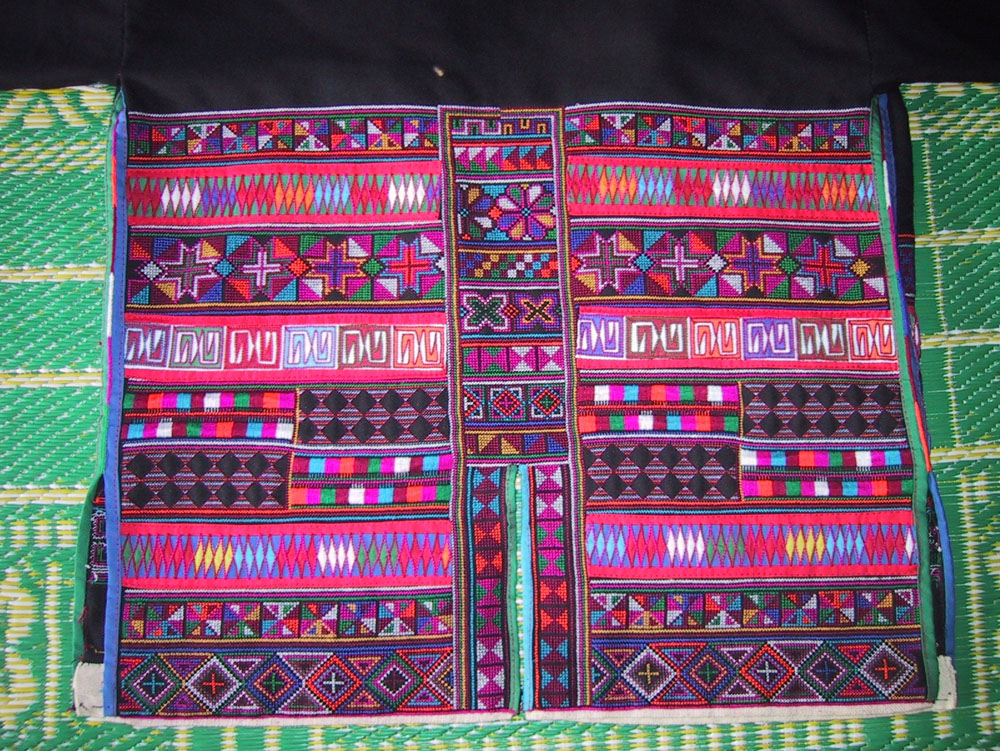 The back of the jacket. The cloth is indigo dyed.
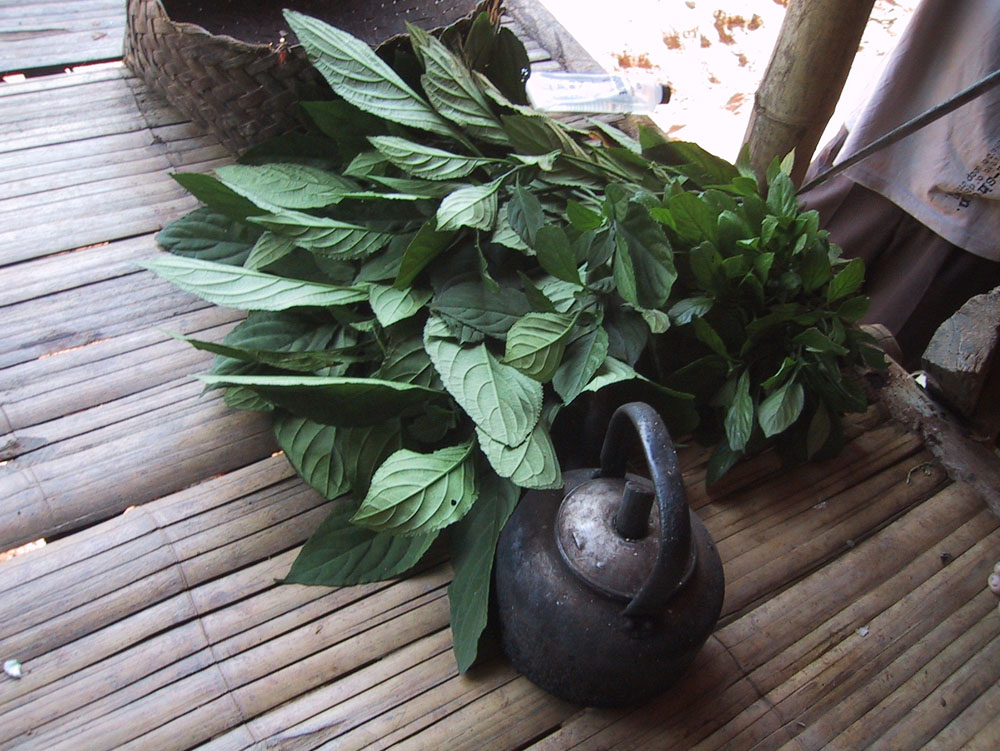 The indigo plant used by the Akha in their dyeing.
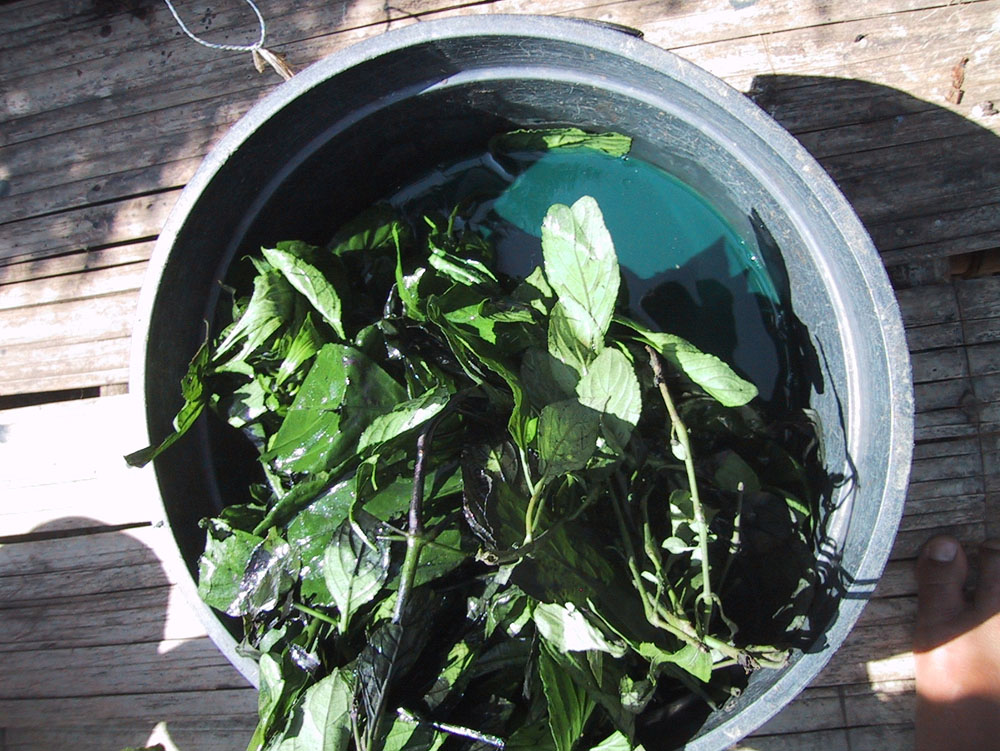 The indigo vat. It can be very powerful; Ahta dipped the fabric only once or twice to get a dark blue.
