When I was visiting northern Thailand, I wanted to learn how to spin using an Akha spindle, which of course meant finding someone from the Akha hilltribe to teach me. I asked around a bit, and finally wangled an opportunity to spend four days studying spinning and weaving with Ahta, my guide’s mother-in-law.
It was one of the best experiences of my entire trip. While I wasn’t a weaver at the time, I took copious photos of the weaving process, in hopes of being able to reproduce it someday. Now that I am a weaver, I appreciate it all the more.
The Akha loom is really interesting, and worth a closer look – the two final photos in the gallery show the entire loom.
As far as I know, the Akha only weave plainweave, in indigo and white – embellishments are made in embroidery afterwards.
You can read more about my adventures with the Akha in the Thailand section of my travel blog.
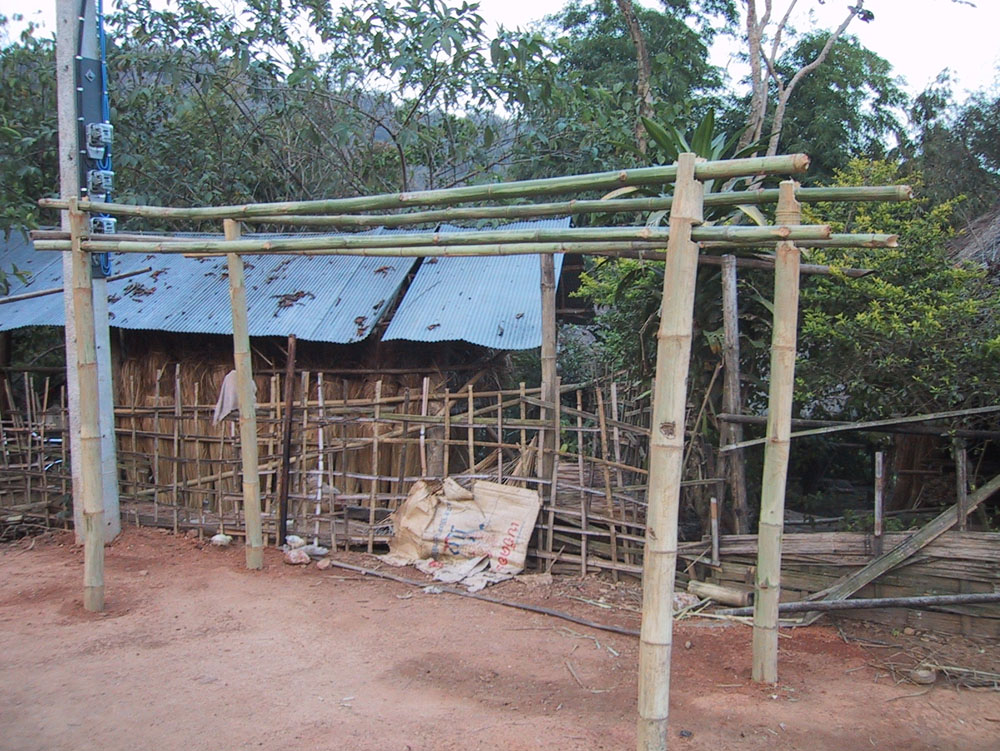 The frame of the loom, basically a set of bamboo posts set in the ground.
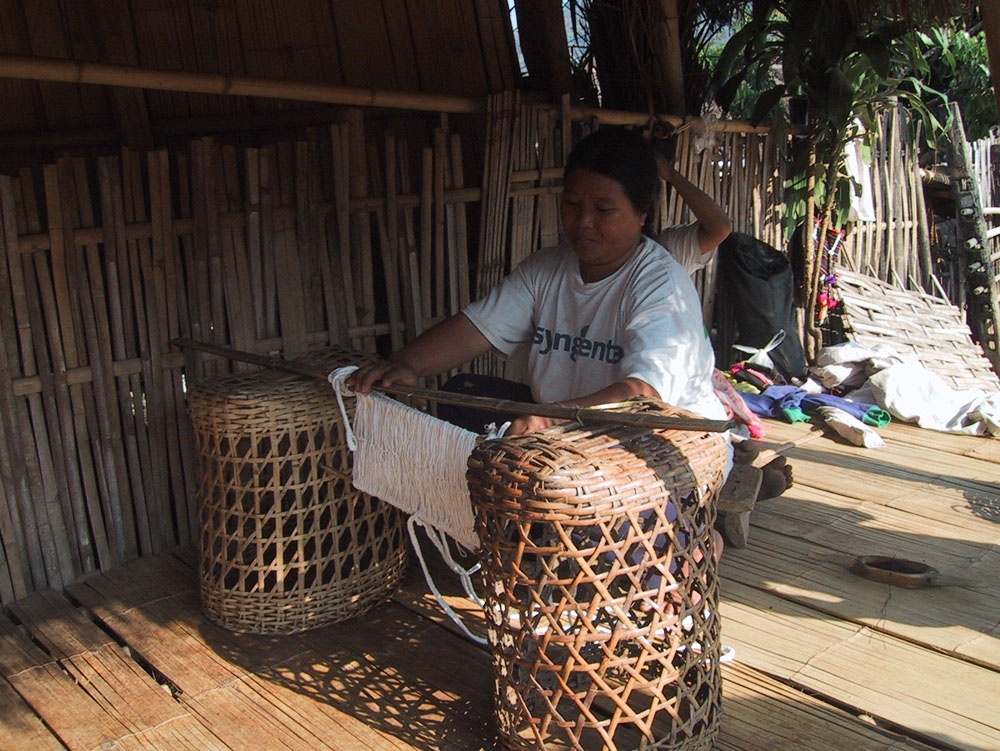 Here they are setting up the heddles for threading. The heddles are hand-tied out of cotton string.
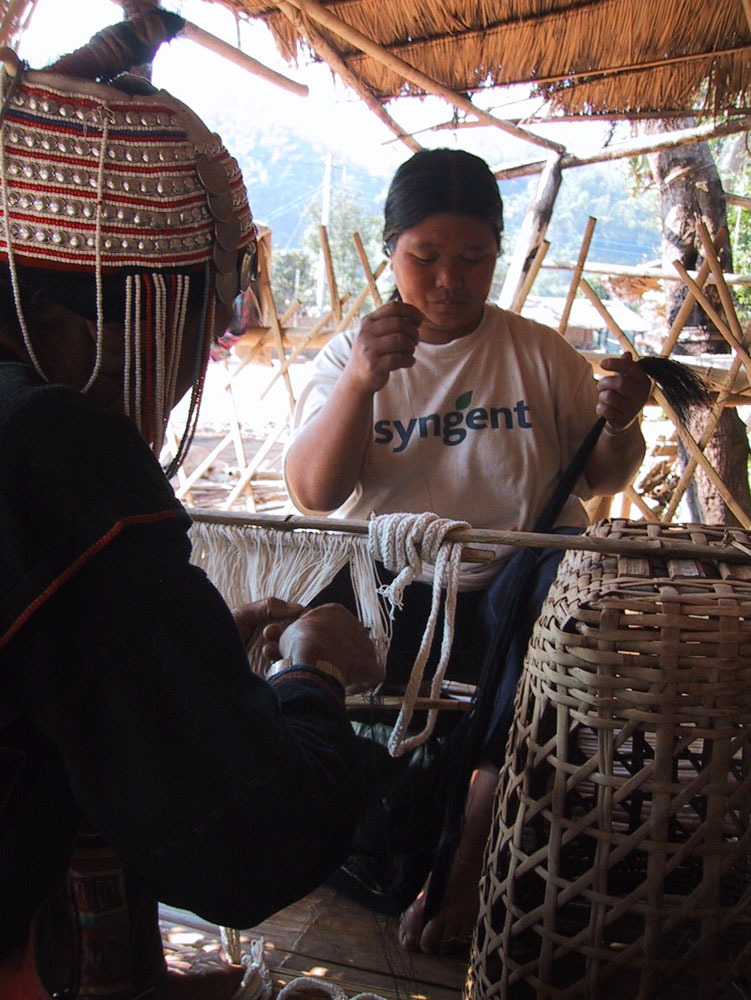 Starting to thread the heddles. One person opens the heddle and reaches through, the other person picks out a warp thread and gives it to the threader.
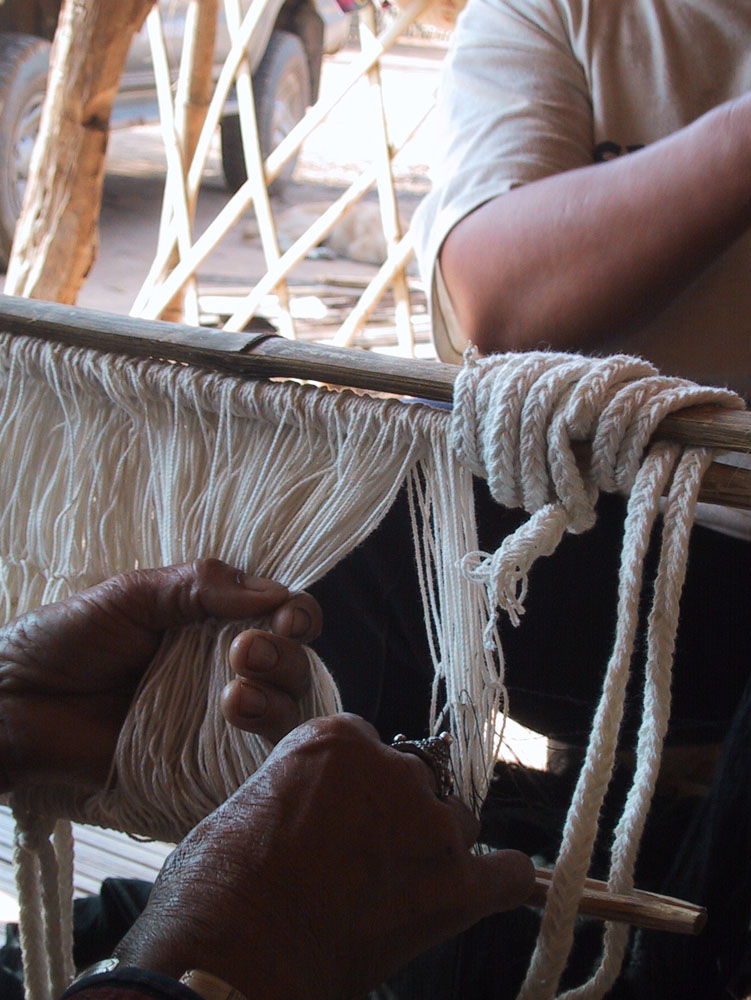 A closeup view of the threading process. This is all plainweave.
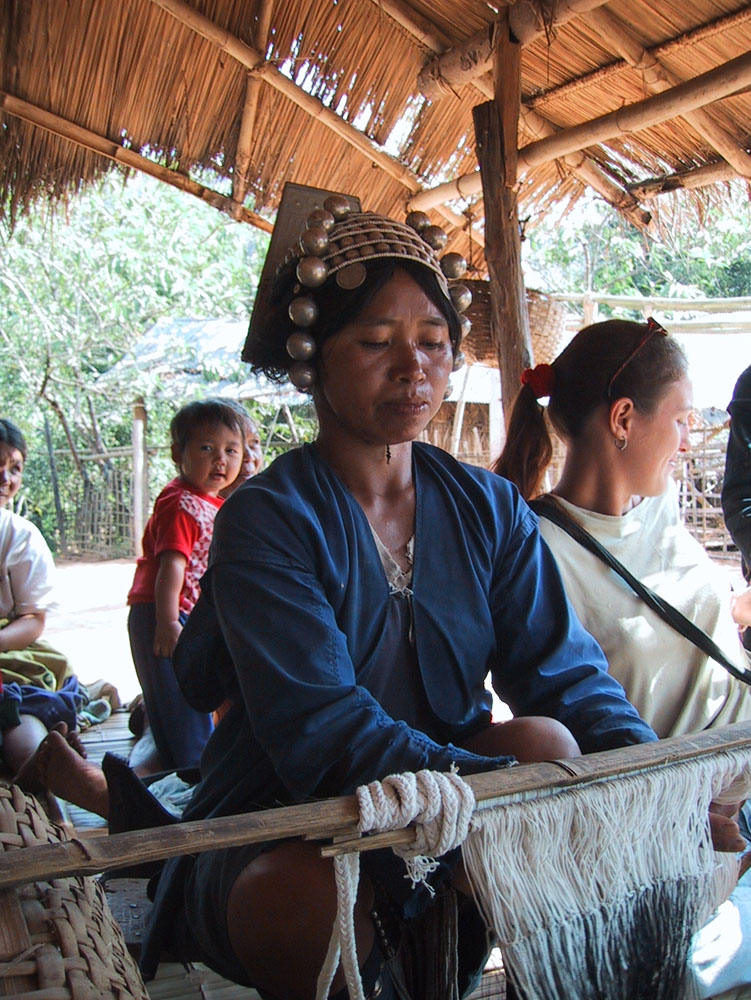 The threaded heddles.
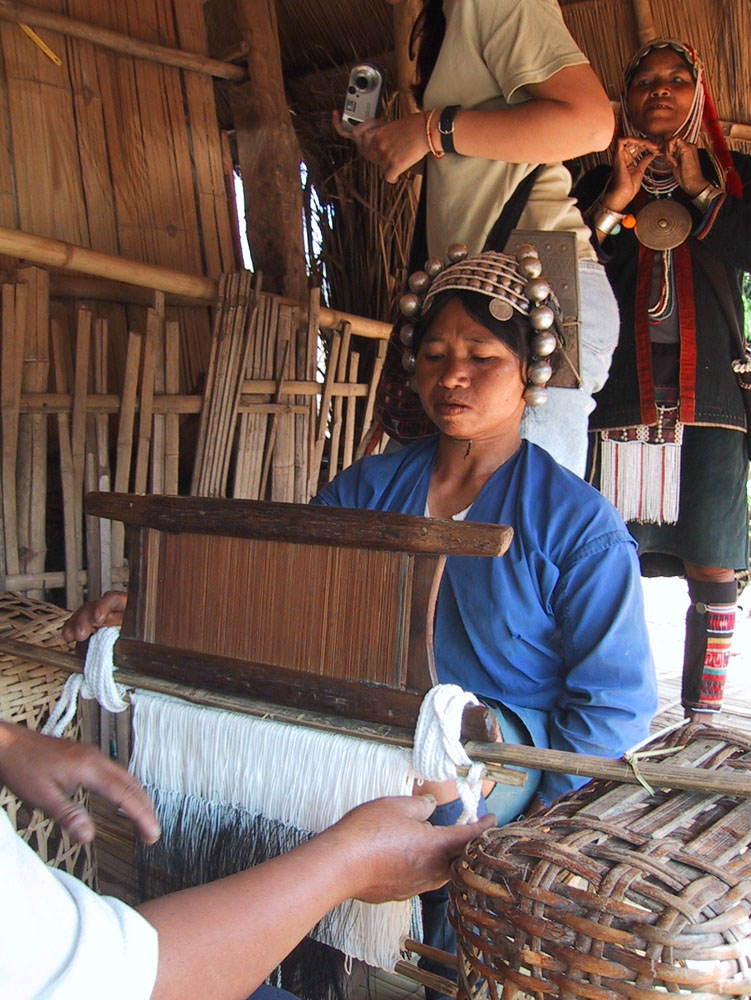 Setting up the reed for sleying. The reed is a wood frame with pieces of split bamboo or reed as separators.
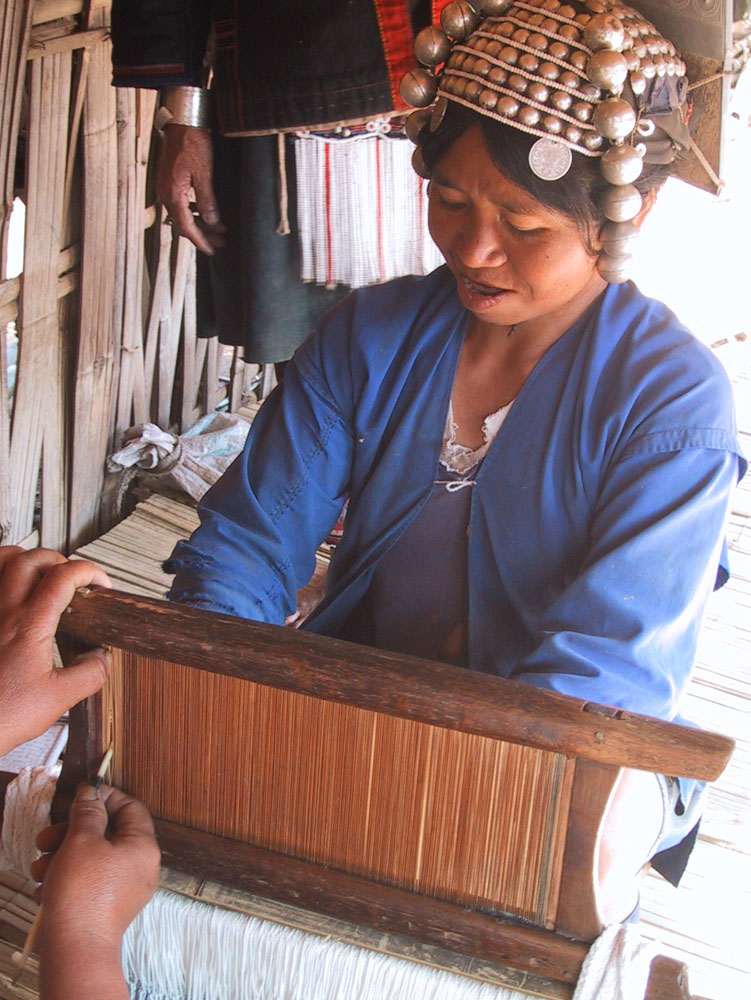 Beginning the sleying process.
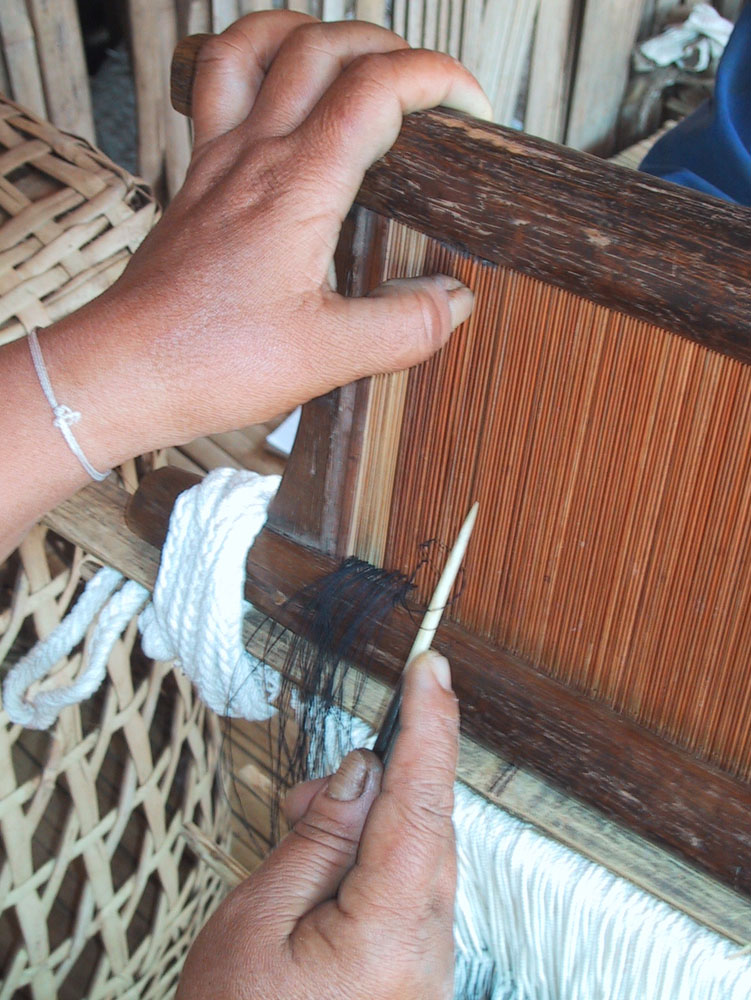 Sleying the reed using a large porcupine quill. One person puts the quill through the reed...
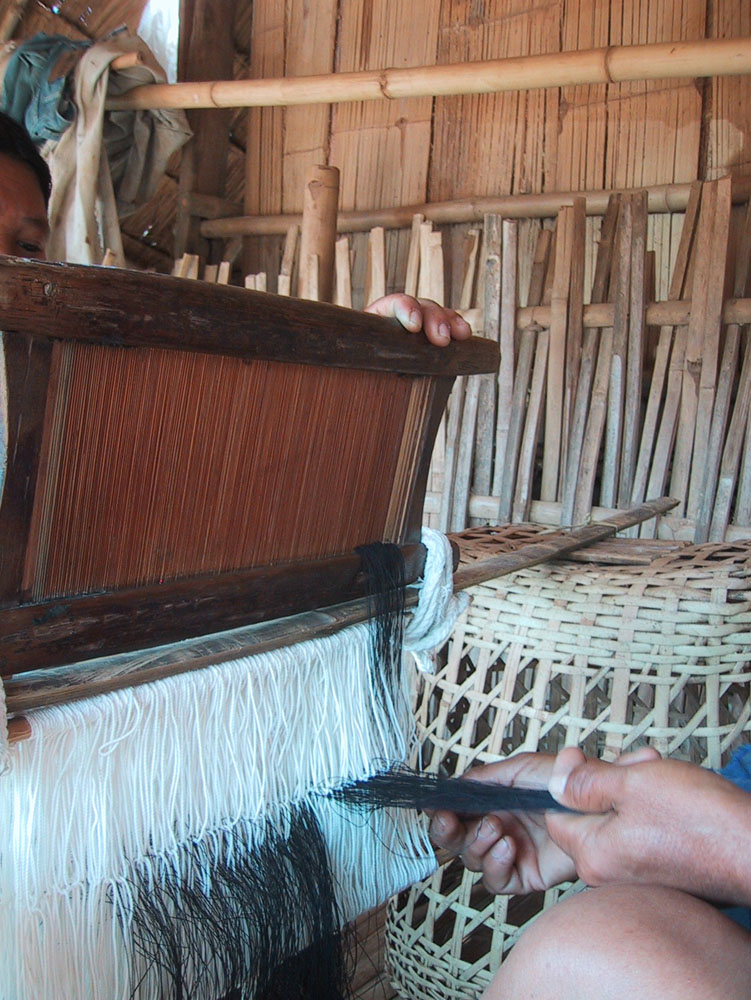 ...and another person sits on the other side holding the threads as they come up from the heddles...
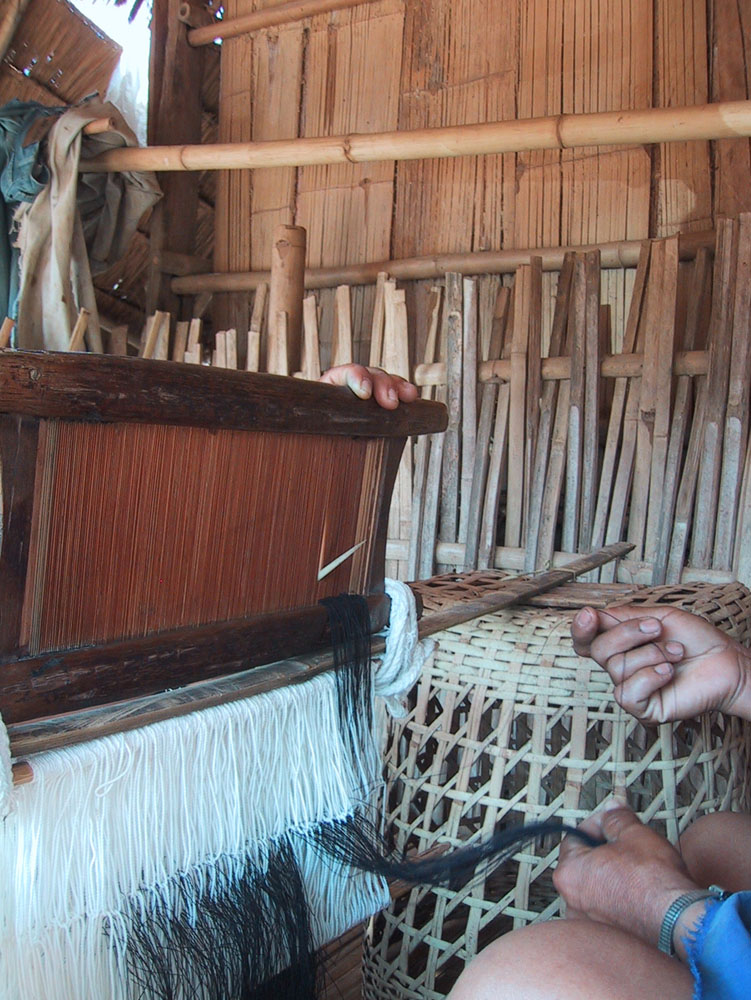 ...picks out the correct one, and...
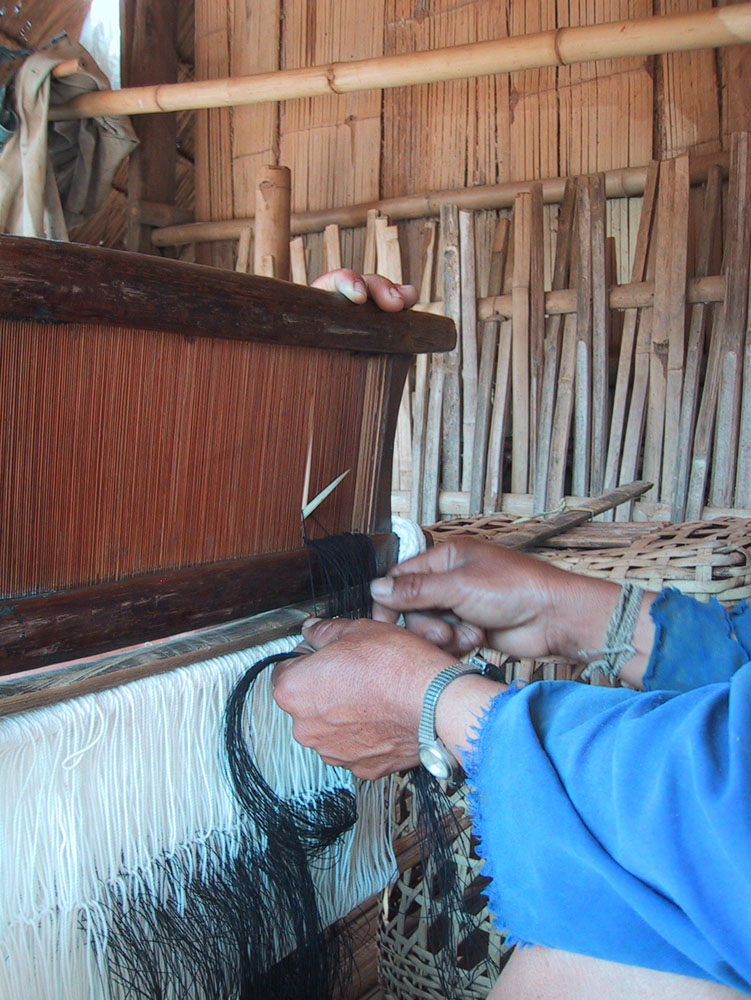 ...slips it over the quill so the first person can pull it through.
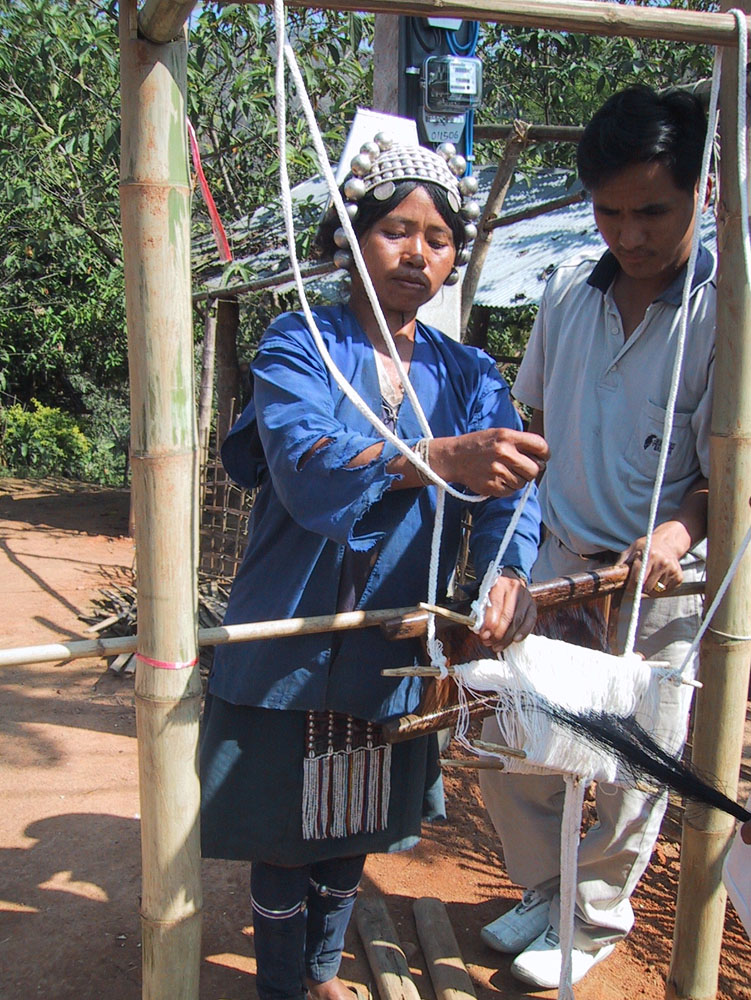 Setting the shafts, reed, and treadles into the loom.
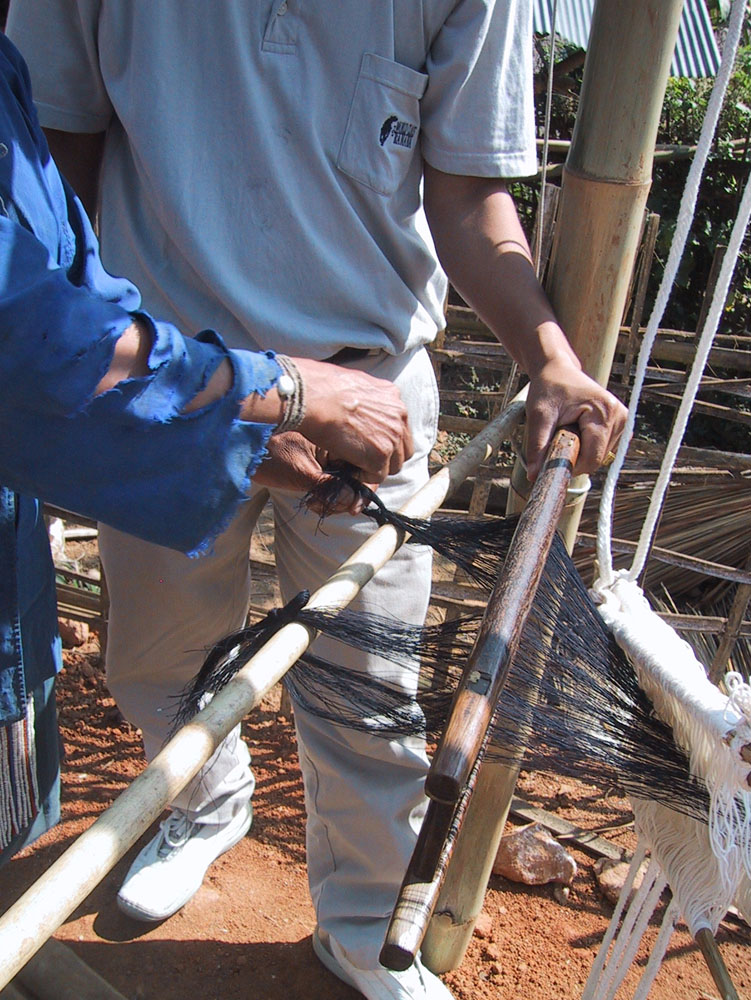 Tying onto the front beam.
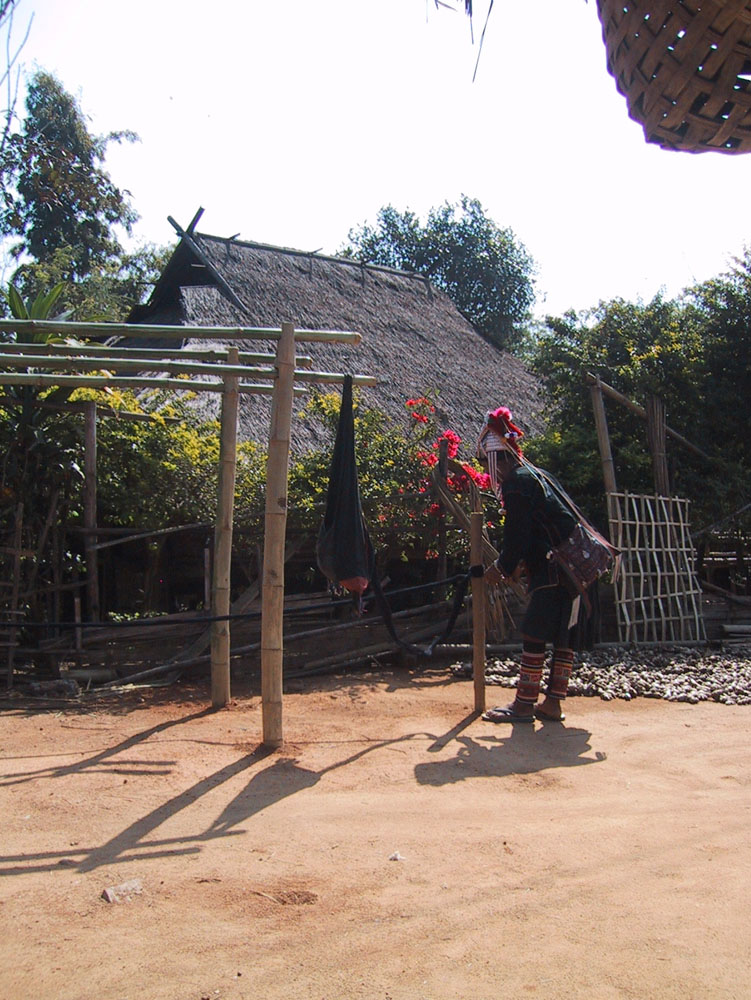 Tying onto the back beam. The Akha do not have a neatly wound warp beam; their warp is wound, then thrown into a bag for storage. When needed, more warp is drawn out of the bag and tied around a post stuck in the ground.
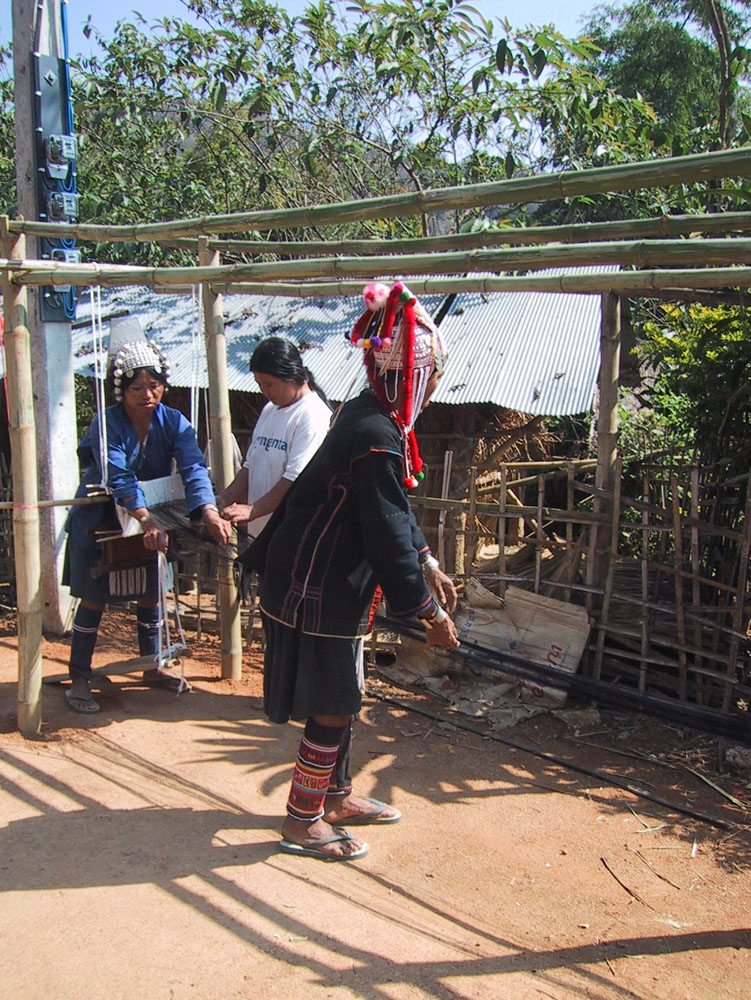 Of course, not having a neatly arranged warp leads to tangles. Here the weaver is starting to untangle the warp.
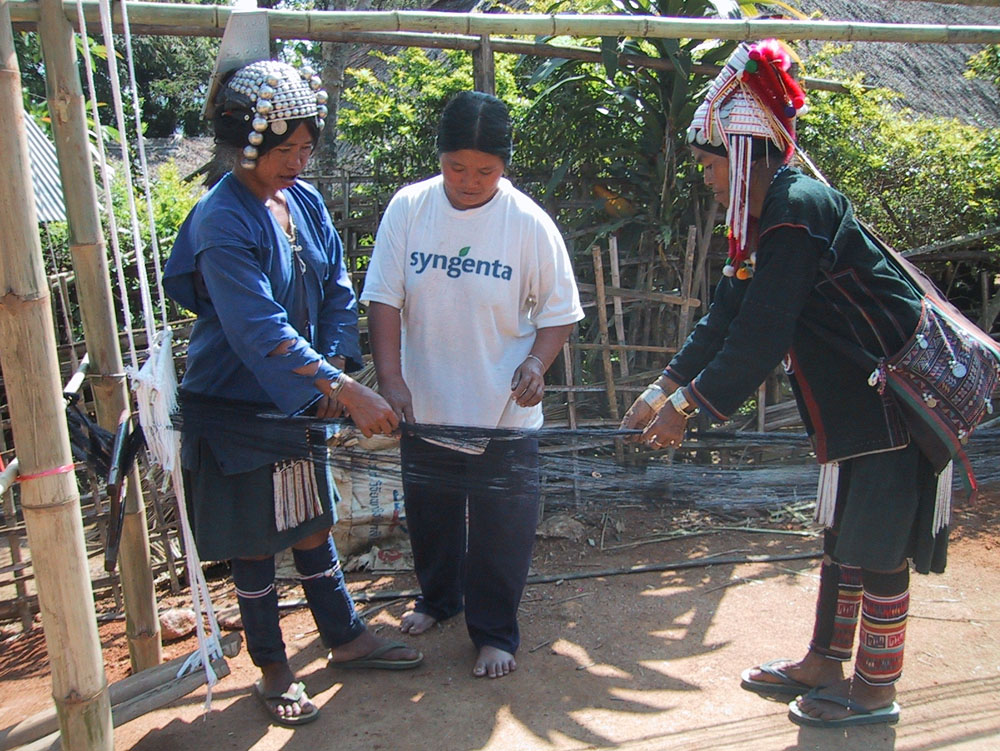 More hands make the work go faster. The warp is being loosened up and the tangles worked towards the back of the warp.
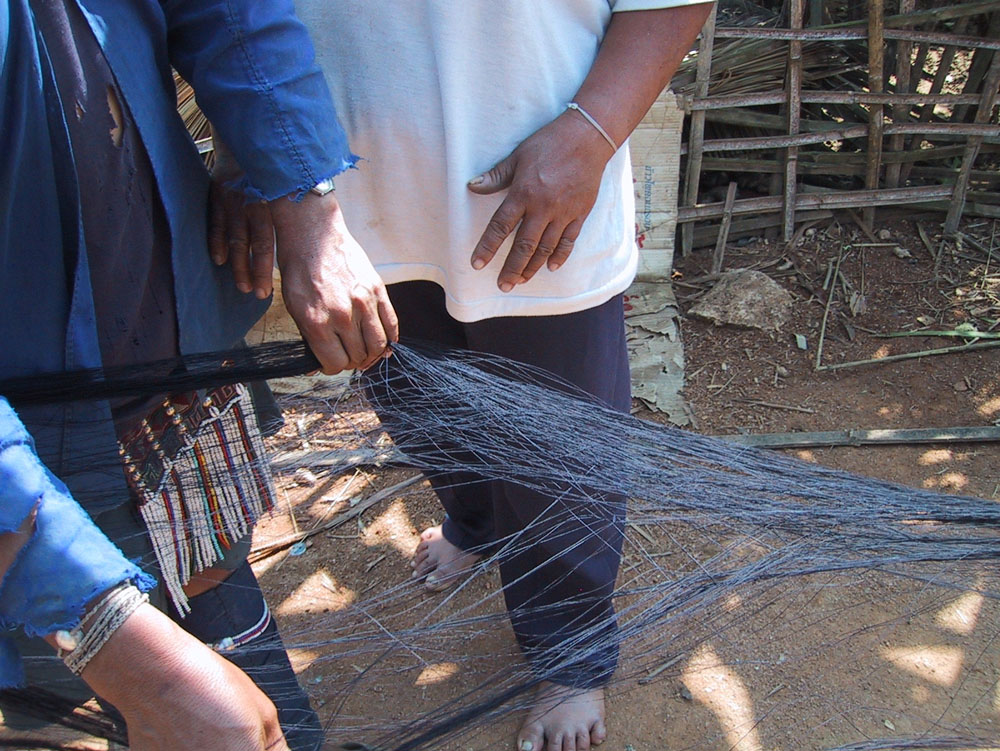 This warp would have a Western weaver in conniptions, with all the crossed threads - but it all seems to work out in the several yards between the heddles and the post to which the warp is tied.
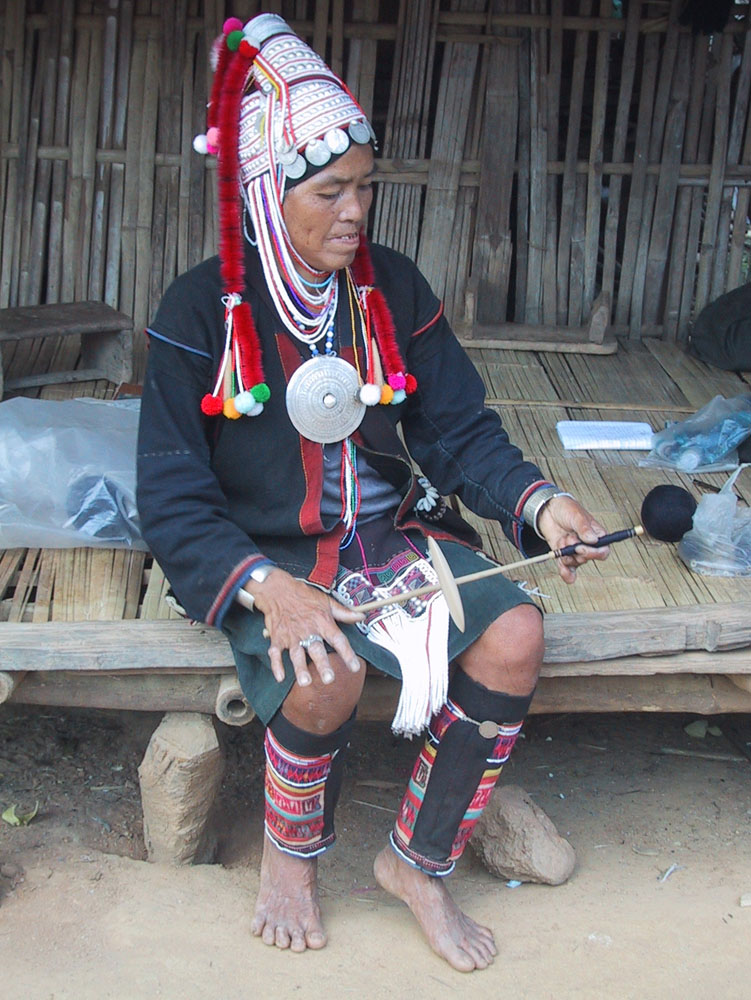 She was unbelievably fast at winding bobbins using the spindle against her thigh. I tried, but was much slower.
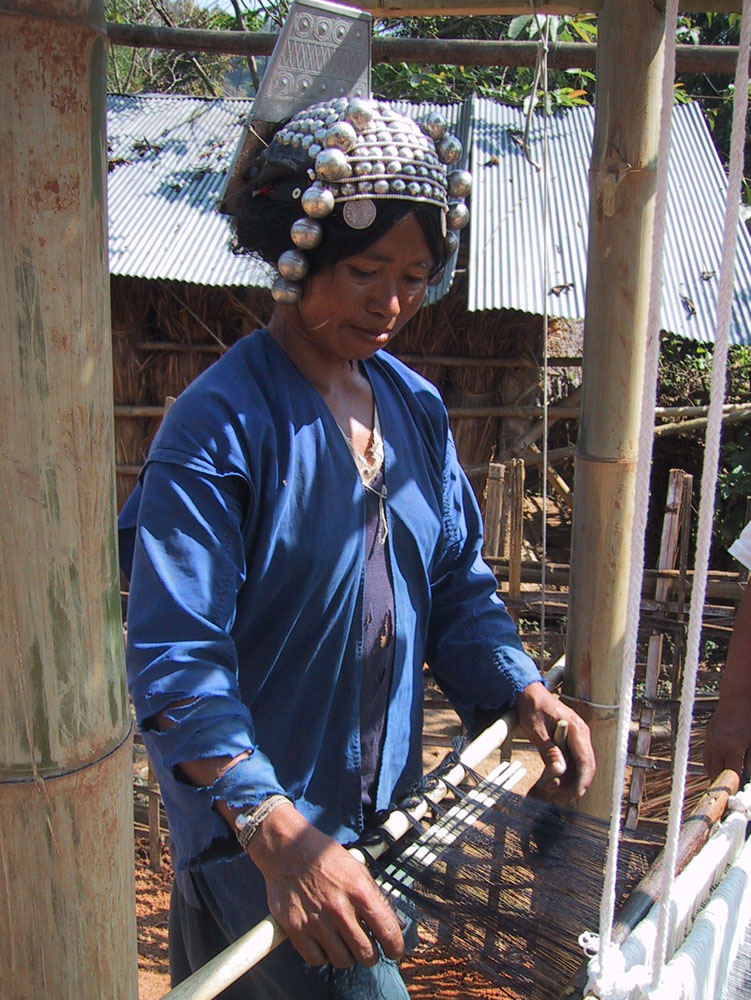 Starting the weaving, by weaving the stick header.
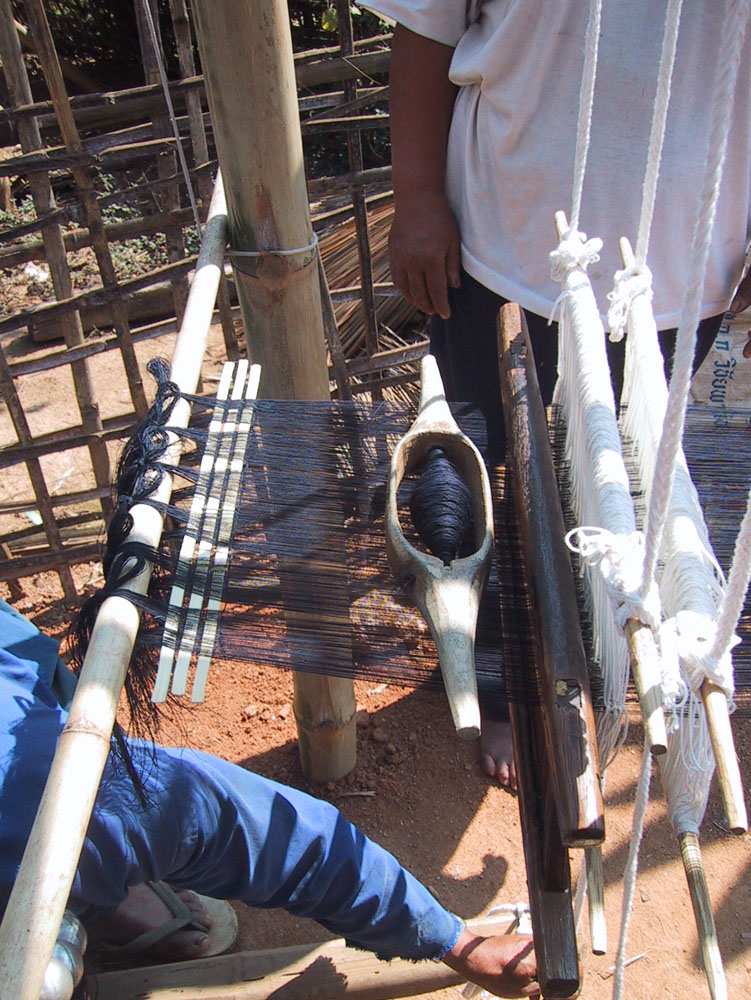 The shuttle, of hand-carved wood. I'm still kicking myself for not buying one.
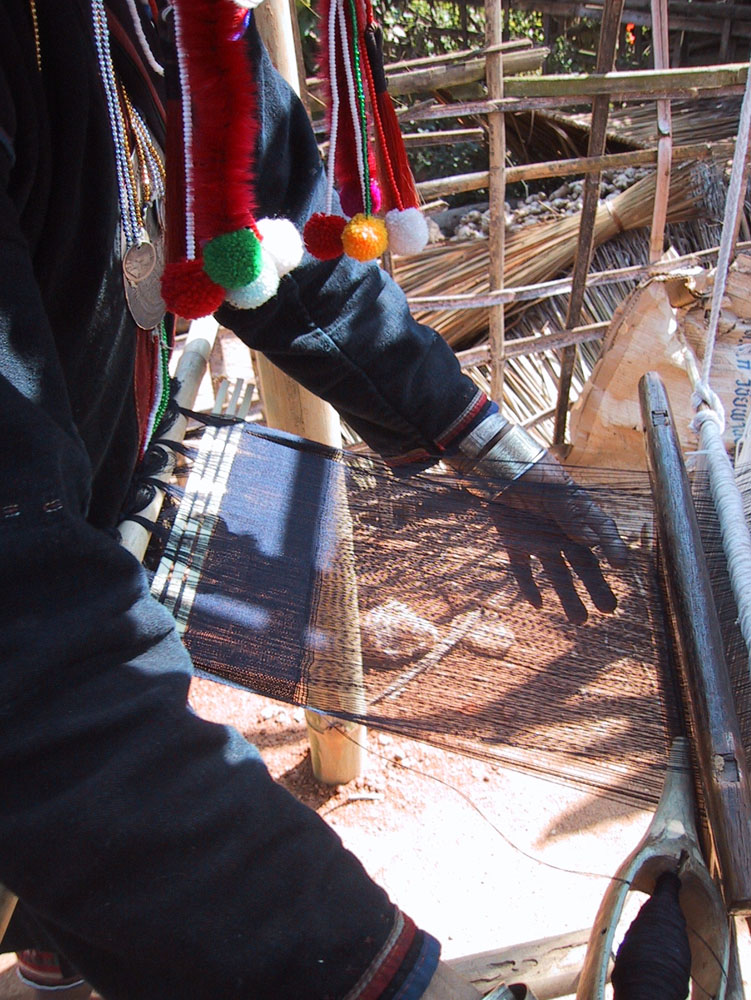 Throwing the shuttle through the shed.
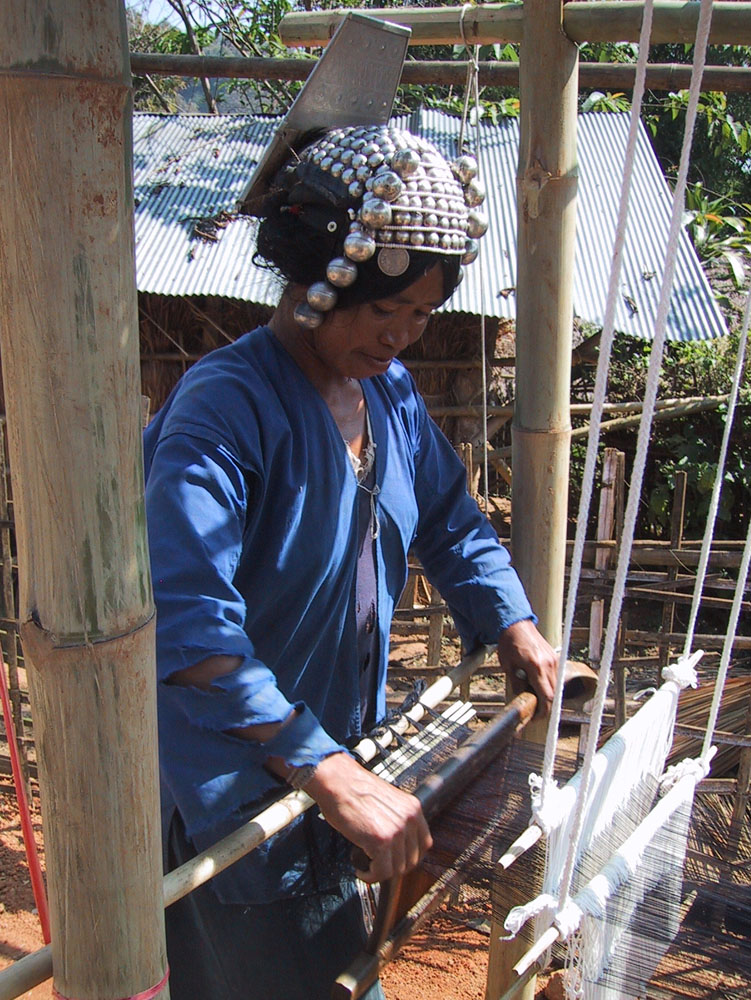 Weaving along. As the cloth grows longer, instead of advancing the warp the weaver simply moves forward along the loom. When it becomes inconvenient to weave any further, then the warp is advanced. Advancing the warp requires considerable fiddling because of the tangles, so it is done only every couple of feet.
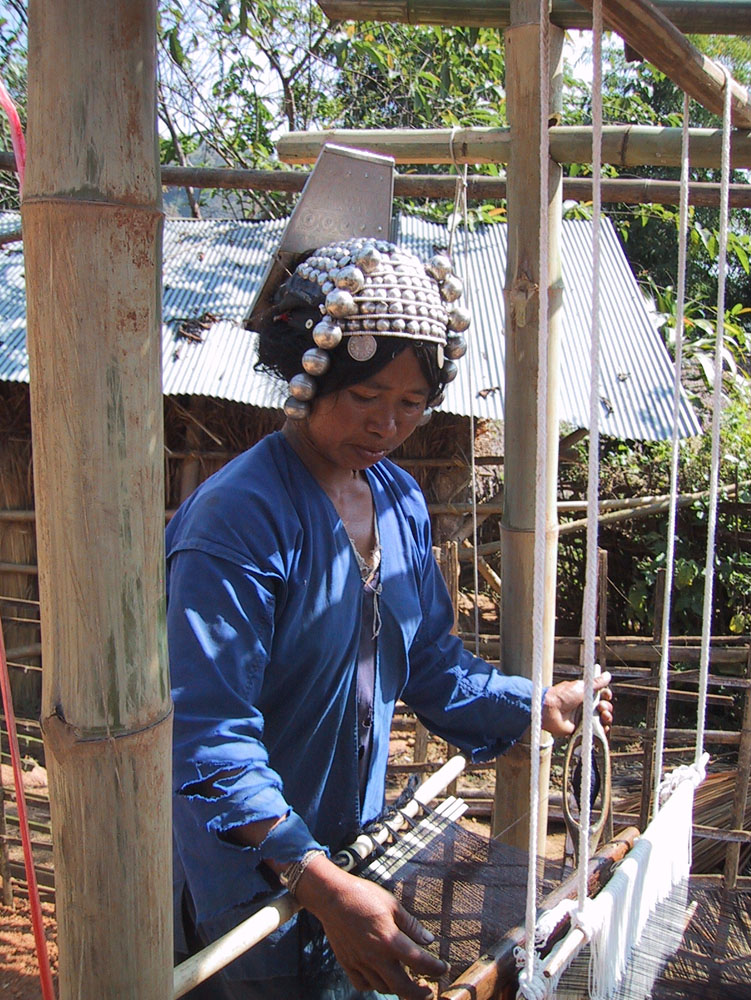 Another woman weaving on the same loom.
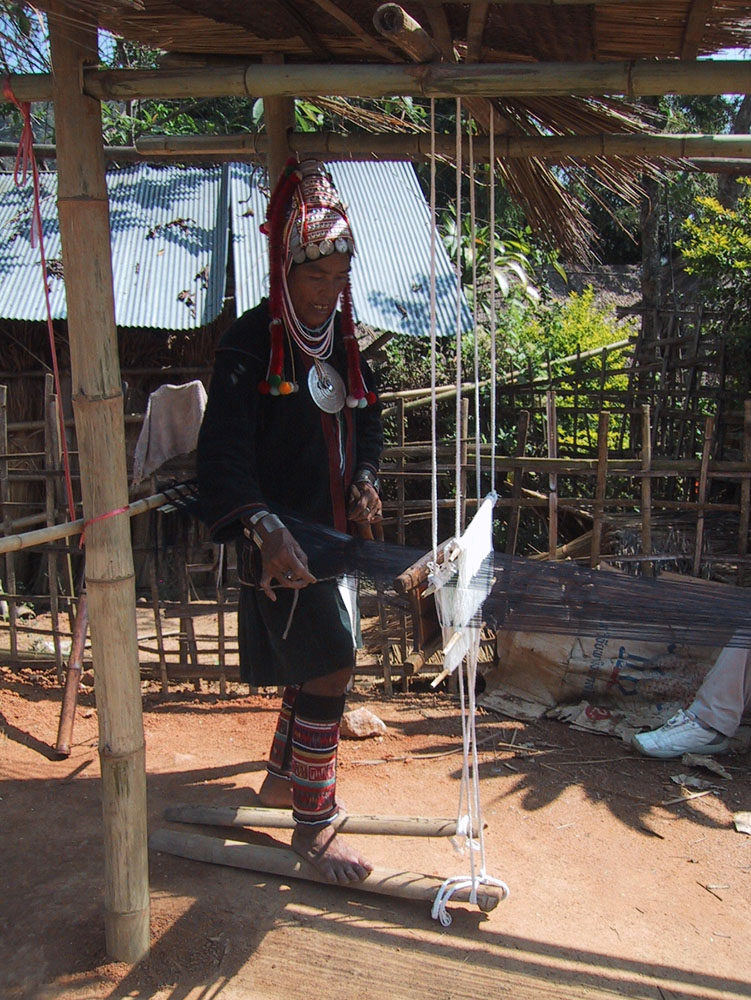 My teacher weaving on the loom.
